Key Points
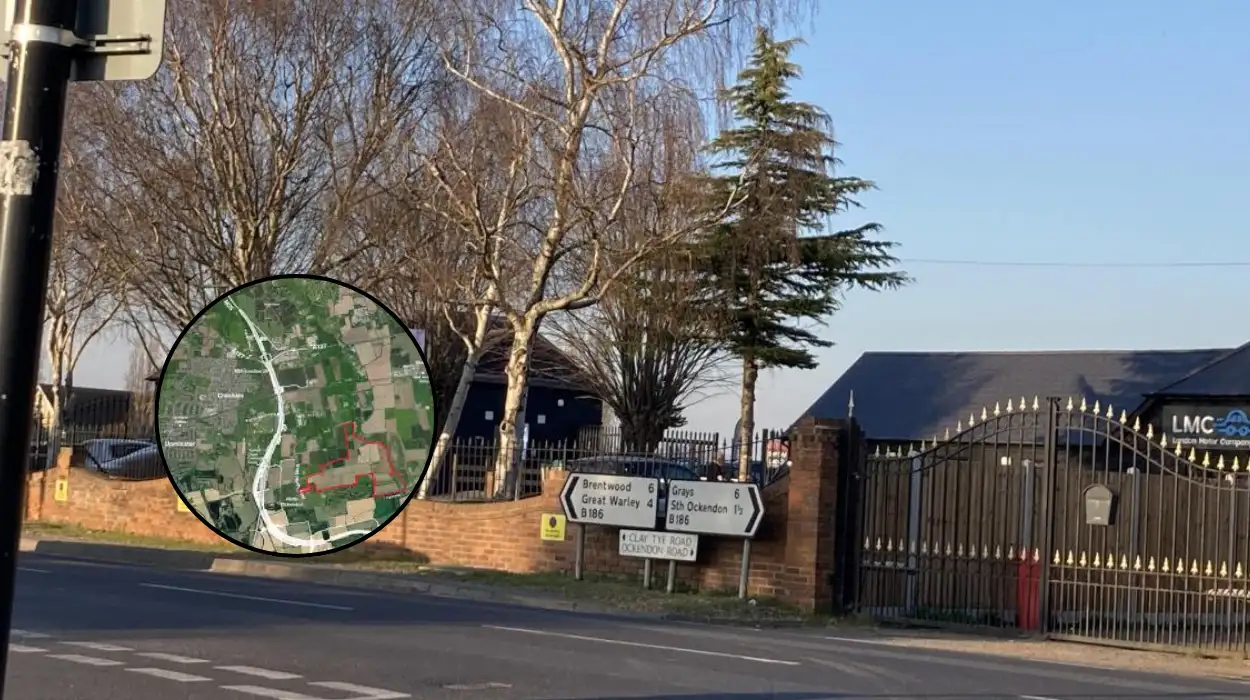
- A second-hand car dealership, London Motor Company (LMC), has been operating without planning permission from Whitepost Farm on Ockendon Road, Upminster, since November last year.
- Aveley Lake Holdings submitted a retrospective planning application in May this year to change the use of the green belt land at Whitepost Farm to a car sales site.
- Havering Council refused the application on December 5, deeming it “detrimental” to the surrounding area, with a “profound and material impact upon the character and openness of the green belt”.
- The council described the development as having an “urbanising effect” far removed from the site’s historic uses and detrimental to the setting of the locally-listed Whitepost Farmhouse.
- Previous developments, including vehicle storage, increased hard-standing, and works to structures, were highlighted as damaging, along with the scale, intensity, expansion into undeveloped areas, and number of vehicles.
- The applicant must cease operations or appeal to the Planning Inspectorate; failure to comply may lead to a planning enforcement notice.
- The site spans 17,300 sq m, featuring two office buildings, two workshops, two double-stacked cabin units, two parking areas, resurfaced gravel for car display, plus proposed extensions, recladding, landscaping, lighting columns, and a security barrier.
- LMC updated its office address to the Upminster site on November 4 via Companies House.
- The relationship between LMC and Aveley Lake Holdings remains unknown.
- A council spokesperson outlined the two options for the site owner and potential enforcement action.
What Led to the Retrospective Planning Application?
Aveley Lake Holdings lodged the retrospective application in May this year to formalise the change of use at Whitepost Farm from its previous state to a car sales site. As detailed in coverage by the Romford Recorder, LMC had already been operating from the farm without planning permission since November last year, prompting the need for retrospective approval.
- Key Points
- What Led to the Retrospective Planning Application?
- Why Did Havering Council Refuse the Application?
- What Does the Site at Whitepost Farm Include?
- What Are the Site Owner’s Options After Refusal?
- How Does This Impact the Green Belt and Local Area?
- What Is the History of Development at Whitepost Farm?
- Who Is Involved in the London Motor Company Operation?
- What Happens If the Owners Do Not Comply?
- Broader Context of Green Belt Protections in Havering
According to Companies House records referenced in the Romford Recorder article, LMC officially changed its office address to the Upminster site on November 4. This move marked the dealership’s unauthorised establishment on the green belt land.
The relationship between LMC and applicant Aveley Lake Holdings is not known, as noted across reporting on the issue. Planning documents submitted do not clarify how much infrastructure pre-existed LMC’s arrival, leaving questions about the baseline state of the site.
Why Did Havering Council Refuse the Application?
Havering Council formally refused the application on December 5, describing it as “detrimental” to the surrounding area. In the reasons for refusal, the council stated that the development gives rise to a “profound and material impact upon the character and openness of the green belt”.
The council further deemed the proposal to have an “urbanising effect” on the character of the site, which is “far removed from its historic and any former uses”. Previous development at the site, including vehicle storage, increased hard-standing, and works to existing structures, were described as “detrimental to the setting of the locally-listed Whitepost Farmhouse”.
Additionally, the scale and intensity of the proposal, along with expansion into previously undeveloped areas and the number of vehicles and related development, were all deemed damaging. These factors collectively justified the rejection, prioritising green belt protection.
What Does the Site at Whitepost Farm Include?
A planning statement drawn up by WSP, on behalf of Aveley Lake Holdings, details the site’s layout over 17,300 sq m. It includes two office buildings, two workshops, and two double-stacked cabin units.
There are also two parking areas and resurfaced gravel space in the centre for the display of cars for sale. The application sought permission for extensions and recladding of buildings, laying of gravel hardstanding, landscaping, lighting columns, and a security barrier.
It remains unclear from the planning documents how much of this was already present before LMC moved there, as per analysis in the Romford Recorder’s reporting.
What Are the Site Owner’s Options After Refusal?
The applicant must now either cease operations or appeal to the Planning Inspectorate. As reported by the Romford Recorder, a spokesperson for the council told the outlet: “Havering Council refused the application for retrospective planning permission at Whitepost Farm.
The site owner now has two options: either remove the unauthorised development or appeal the decision to the Planning Inspectorate.
“If the development is not removed, the council will consider issuing a planning enforcement notice to deal with the breach of planning rules.”
This statement underscores the council’s firm stance on compliance with planning regulations.
How Does This Impact the Green Belt and Local Area?
The refusal emphasises the council’s commitment to preserving the green belt’s openness and character. The “profound and material impact” cited highlights how car sales operations urbanise rural land, diverging from historic uses.
Damage to the setting of the locally-listed Whitepost Farmhouse was a key concern, with vehicle storage and hard-standing altering its context. Expansion into undeveloped areas amplifies these effects, setting a precedent for green belt enforcement in Havering.
What Is the History of Development at Whitepost Farm?
Prior to LMC’s operations, the site had seen previous development, including vehicle storage, increased hard-standing, and works to existing structures. These changes were already viewed as detrimental by planners.
The retrospective application aimed to regularise ongoing use, but the cumulative scale—from offices and workshops to car displays—proved too intensive for the green belt location.
Who Is Involved in the London Motor Company Operation?
London Motor Company (LMC) is the second-hand car dealership at the centre of the controversy, having shifted operations to Whitepost Farm without permission. Aveley Lake Holdings is the applicant and site owner, with a planning statement prepared by consultancy WSP.
No direct link between LMC and Aveley Lake Holdings has been disclosed in planning documents or Companies House filings. Havering Council remains the decision-making authority, with potential enforcement powers.
What Happens If the Owners Do Not Comply?
Non-compliance risks a planning enforcement notice from Havering Council. This could mandate removal of unauthorised structures, vehicles, and developments, with penalties for breaches.
The spokesperson’s warning, as quoted in the Romford Recorder, signals readiness to act: failure to remove the development prompts enforcement to address the planning rules violation.
Broader Context of Green Belt Protections in Havering
This case reflects ongoing tensions between development pressures and green belt safeguards in Havering. Upminster’s Ockendon Road location underscores rural preservation amid urban sprawl.
Similar refusals in the borough highlight councils’ roles in upholding national planning policy, which tightly restricts green belt changes except in exceptional cases.