Key Points
- Council Debate Reveals Disagreement on “Hexit”: An internal debate at Havering Borough Council has revealed that there is disagreement within the Reform UK administration about “Hexit” – a proposal to take Havering out of Greater London and put it back into Essex.
- Motion by HARA Criticized: Havering Aligned Residents’ Associations proposed an amendment, calling on the council to avoid spending any public resources on a Hexit referendum.
- Amendment to Reform’s Motion: Reform UK amended the motion to say that the council will not spend any resources on a Hexit referendum “in this council term”, which was their commitment made on May 27.
- Accusations Against the Opposition: The accepted amendment officially accused the opposition members of political games with the local authority’s time.
- Warning Against Immediate Action: Havering Council Leader Keith Prince has warned residents that it could put them under serious financial stress if Havering separates from Greater London without research.
- Discrepancy Between National/Parliamentary Politics and Local Issues: Prominent Reform-aligned politicians such as Romford MP Andrew Rosindell and the national leader Nigel Farage have been advocating voting right for the residents to return to Essex.
- Consequences of Leaving Greater London: Leaving Greater London will affect important services including Transport for
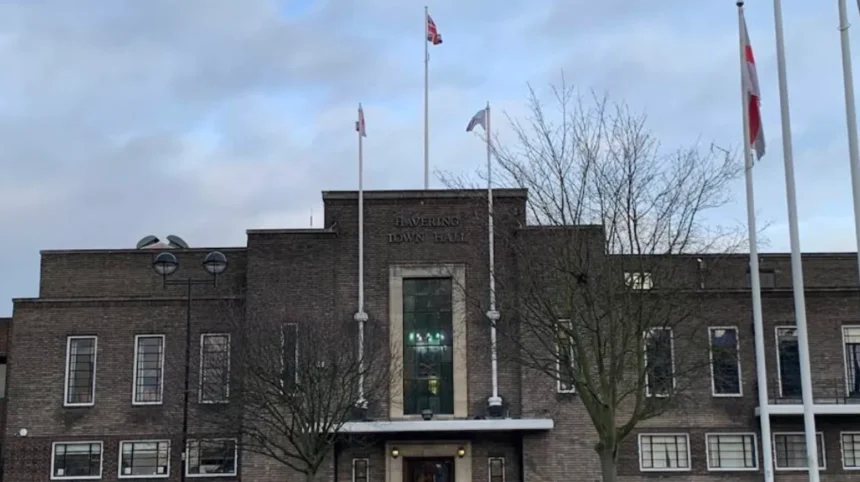
Havering (East London Times) September 5, 2026 — Differences of opinion have surfaced within Havering Council’s Reform UK administration following a Full Council debate over “Hexit”, the proposal to withdraw the borough from Greater London and strengthen its historic links with Essex. The debate, initiated by an opposition motion, forced local leadership to address whether the administration remains united on the borough’s territorial and administrative identity. Despite attempts by senior council leadership to downplay the issue, statements delivered during the chamber session demonstrated that the debate over Havering’s governance structure remains active among elected members.
- Key Points
- What Triggered the Recent Council Debate on Hexit?
- What is the Official Position of Havering Council Leadership?
- How Do National Reform Figures View the Hexit Proposal?
- What Are the Operational Realities of Leaving Greater London?
- What is the Background to Havering’s Administrative Identity?
- What is the Prediction for How This Development Will Affect Havering Residents and Local Politics?
What Triggered the Recent Council Debate on Hexit?
The discussion was brought to the chamber following a formal motion introduced by the Havering Aligned Residents’ Associations. The group urged the local authority to commit to taking no action on a potential referendum regarding an exit from London, arguing that public funds and council resources should not be diverted toward preliminary studies or public polls on the matter.
In response, the governing Reform UK group put forward an amendment to alter the motion’s binding language. The modified text specified that no council funds or staff time would be allocated to a Hexit referendum “in this Council term”. The amendment directly cited a public pledge delivered by Council Leader Keith Prince on May 27. Additionally, the revised text included a clause accusing opposition councillors of utilizing the debate for political manoeuvring rather than addressing core municipal affairs.
While the amendment secured passage, contributions from the floor indicated a clear divide in sentiment across the Reform UK benches. Several administration councillors spoke in favour of Havering’s historic cultural ties to Essex, arguing that a formal separation from London remains a valid long-term objective. Conversely, other Reform members aligned strictly with the executive leadership’s pragmatic approach, maintaining that current financial constraints make any immediate restructuring impossible.
What is the Official Position of Havering Council Leadership?
Council Leader Keith Prince reiterated his firm opposition to pursuing the proposal under present conditions. During his inaugural address as leader, Prince cautioned against acting on sentiment alone, highlighting the substantial financial risks associated with severing ties with the capital.
As reported by local political correspondents, Prince stated that
“while there are those who are emotionally attached to the attraction of leaving London, I and this administration are yet to be presented with a well-thought-out, researched and costed proposal that outlines the benefits to our residents.”
He further warned that without a clear, fully funded model, local tax paying residents could find themselves “significantly worse off financially.”
Prince emphasised that the administration’s immediate focus would remain on core civic management rather than exploratory boundary changes. As recorded in official council reports, Prince remarked that the cabinet would not waste time pursuing Hexit or leaving the Greater London Authority, promising instead to concentrate efforts on “getting Havering back on track.”
How Do National Reform Figures View the Hexit Proposal?
The cautious stance adopted by local council leadership contrasts with statements made by prominent parliamentary and national figures affiliated with Reform UK.
As documented in parliamentary reporting, Romford Member of Parliament Andrew Rosindell has long advocated for the recognition of Havering’s Essex identity. Rosindell has repeatedly championed the idea that the borough belongs both culturally and historically to the county of Essex rather than Greater London, supporting calls for structural governance changes.
Similarly, Reform UK national leader Nigel Farage has previously expressed support for the concept, stating that local residents ought to be granted the final say through a public referendum. This divergence between national figures and local municipal leaders highlights an ongoing debate within the party structure regarding whether ideological policy goals should take priority over municipal governance considerations.
What Are the Operational Realities of Leaving Greater London?
Withdrawing Havering from Greater London involves significant administrative and legal complexities that extend well beyond updating postal addresses or civic signage. A complete administrative separation would necessitate renegotiating or replacing foundational municipal services currently integrated with London-wide authorities.
- Public Transport Networks: Concessionary travel schemes, such as the Freedom Pass and local bus subsidies managed under Transport for London, would require complete restructuring or independent funding mechanisms.
- Emergency Services Integration: Policing and fire coverage are currently supplied by the Metropolitan Police Service and the London Fire Brigade. Reverting to Essex authorities would necessitate primary legislation and extensive inter-agency transfers.
- Strategic Planning and Development: Strategic housing targets and planning frameworks are tied directly to the Mayor of London’s London Plan.
- Taxation and Precepts: The Greater London Authority precept currently funds city-wide infrastructure, culture, and emergency management; removing this would alter the borough’s overall financial baseline.
Any dynamic change to boundary definitions or authority limits would ultimately require statutory action by Parliament, rendering any unilateral council decision legally unenforceable without national legislative backing.
What is the Background to Havering’s Administrative Identity?
Historically part of the ancient county of Essex, Havering was formally incorporated into Greater London as an outer London borough following the passage of the London Government Act 1963, which took full effect on April 1, 1965. The reorganization merged the Municipal Borough of Romford and the Hornchurch Urban District, transferring administrative jurisdiction from Essex County Council to the newly formed Greater London Council.
Despite more than six decades within Greater London, the borough has retained strong cultural, social, and commercial ties to Essex. Many residents continue to use Essex as their traditional postal address, a convention formally permitted by Royal Mail even after the administrative transition.
Over the decades, proposals to reverse the 1965 merger have surfaced periodically during municipal elections and local campaigns. Proponents often cite concerns over London-wide property taxes, strategic housing mandates, and low-emission traffic zones as key reasons to push for local autonomy. However, previous municipal studies have consistently pointed to the high financial costs and administrative hurdles of unscrambling integrated metropolitan services.
What is the Prediction for How This Development Will Affect Havering Residents and Local Politics?
The debate over Hexit is expected to shape local governance, party cohesion, and public policy across the borough in several distinct ways:
- Short-Term Policy Stability: For the remainder of the current council term, residents will not face any immediate structural changes or local tax increases associated with an administrative exit, as the council’s binding resolution prevents public spending on a referendum.
- Internal Party Friction: The distinction between ruling out a vote for “this Council term” rather than permanently rejecting the concept leaves room for ongoing division within the local Reform UK party. Council leadership may face continued pressure from backbenchers and national party figures to revisit the topic ahead of future electoral cycles.
- Focus on Core Local Services: By temporarily setting aside the Hexit debate, the local administration can direct its operational budget toward pressing municipal matters, such as social care costs, road maintenance, and local town centre management.
- Electoral Significance: The tension between traditional cultural identity and practical financial governance is likely to remain a central talking point in upcoming municipal campaigns. Opposition groups are expected to keep scrutinising the administration’s position, while pro-Essex campaign groups will continue to press for long-term commitments beyond the current term.