Key Points
- Councillor Keith Prince AM has been elected Leader of Havering Council after the local elections.
- He says the council is now “under new management” under Reform UK.
- Prince says the new administration has already begun work with council officers to understand the authority’s challenges.
- He highlights long-term financial pressure on the council, including underfunding, social care demand and temporary accommodation costs.
- The council leader says the Government has increased funding, but Havering still needs to balance its books within three years.
- A 100-day plan will focus on value for money, town centre pride and community standards.
- Prince says priorities also include roads, public spaces, housing, regeneration and customer support.
- He says he will continue to use his role in the London Assembly to hold Mayor Sadiq Khan and the Greater London Authority to account.
- He also raises concerns over policing costs and the Gallows Corner project.
- Prince ends by linking local leadership to wider community pride and future prospects for the borough.
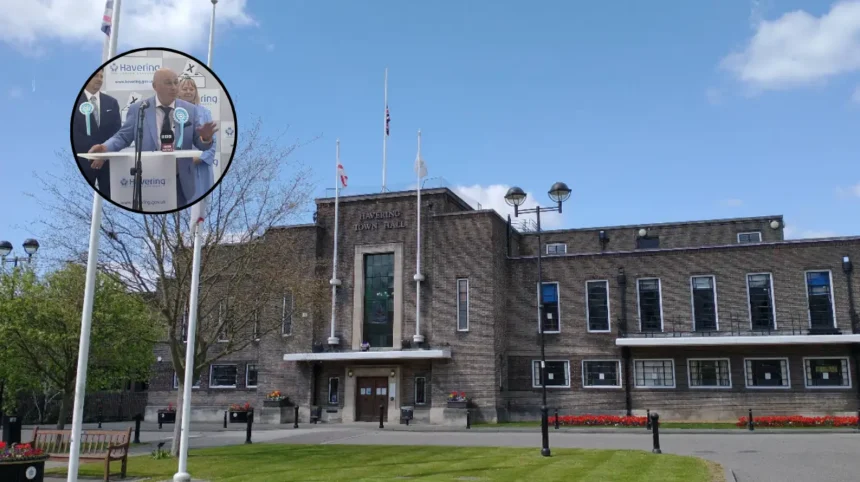
Havering (East London Times) June 30, 2026 – Councillor Keith Prince AM has said Havering Council is now under “new management” after Reform UK’s local election success, adding that the new administration has already started work on the borough’s finances and priorities.
- What has Keith Prince said about Havering Council’s new leadership?
- Why is Havering’s financial position under pressure?
- What is in the council’s 100-day plan?
- How does Prince want to change local services?
- What did Prince say about the London Assembly and policing?
- What is the significance of the local election result?
- Background of the development
- Prediction: how could this affect Havering residents?
What has Keith Prince said about Havering Council’s new leadership?
As reported by Keith Prince of Havering Daily, Prince said it was an honour to be elected as Leader of the borough where he grew up and went to school, but stressed that “the hard work begins” now that he is in office.
He said the new team has “hit the ground running” and is spending time with officers to understand the main challenges facing the council. Prince also thanked everyone who supported and voted for Reform UK, describing the council as being under new management.
He said the authority is dealing with years of underfunding and growing pressures from social care and temporary accommodation.
In his view, those pressures have had a serious effect on the council’s finances. He added that although Government funding has increased, the council still faces the difficult task of balancing its books within three years.
Why is Havering’s financial position under pressure?
Prince says the borough has been hit by what he describes as long-term financial strain, mainly linked to social care and temporary accommodation.
These are areas that often create heavy cost pressures for local councils because demand can rise quickly while budgets remain tight. He argued that Havering now needs “radical and honest” decisions if it is to turn its finances around.
The leader said the Government has increased funding, but that this does not remove the need for the council to close its budget gap.
That point suggests the new administration will have limited room for spending on new projects unless it can find savings or improve value for money. The financial challenge is therefore likely to shape most of the council’s early decisions.
What is in the council’s 100-day plan?
Prince said the new administration will deliver a 100-day plan aimed at the issues residents care about most. He said this will focus on better value for money and restoring a sense of pride in town centres and communities. That suggests the leadership wants to show early progress rather than waiting for longer-term reforms.
He also said the council wants to raise standards across key services, including roads, public spaces, housing, regeneration and customer support.
Those areas are often visible to residents, so improvements there may be used by the council to demonstrate that the new leadership is making a practical difference.
The comments indicate that the administration wants to combine financial discipline with visible service improvements.
How does Prince want to change local services?
Prince said the council is committed to making improvements happen across day-to-day services. Roads and public spaces were mentioned as part of his focus, alongside housing and regeneration, which are likely to remain major concerns in a borough dealing with budget pressure and housing demand. Customer support was also included, suggesting the administration wants to improve how residents deal with the council.
He also said the wider goal is to build a stronger sense of community across the borough. According to Prince, it does not matter whether people voted for Reform UK;
what matters is creating a borough where residents are proud to live, can access jobs, skills and education, and feel they have a positive future. That statement places community development alongside administrative reform.
What did Prince say about the London Assembly and policing?
Prince said he will continue using his role as a London Assembly Member to challenge Mayor Sadiq Khan and the Greater London Authority.
He said Havering is often the “forgotten borough in London”, and pointed to what he sees as unfair treatment in funding and oversight.
He also raised concern about plans to double the cost of Section 92 police officers, which he described as “outrageous”.
He further criticised the Gallows Corner project, calling it a “botched and never-ending job”. Those remarks suggest that his leadership will not be limited to local council administration, but will also include political pressure on London-wide bodies.
For residents, this may mean more public criticism of the GLA and the Mayor if Havering feels it is not getting a fair deal.
What is the significance of the local election result?
Prince’s remarks show that Reform UK wants to present the change in administration as a clear break from the previous leadership.
By saying the council is under new management, he is signalling both political change and a shift in tone. The focus on hard work, financial realism and early delivery is likely intended to build public confidence.
The statement also suggests that the council will be judged quickly on whether it can improve visible services while managing a strained budget.
Residents are likely to look for evidence in everyday issues such as roads, waste, housing and customer service. If the new administration cannot show progress, the promise of new management may be harder to sustain.
Background of the development
Havering Council has faced repeated pressure over finances and service delivery, with social care and temporary accommodation among the biggest cost areas for many local authorities. Prince’s comments place those long-running pressures at the centre of the new administration’s agenda.
His first public message as leader is designed to explain both the scale of the challenge and the direction he wants to take.
The political context is also important. Reform UK’s control of the council represents a change in local leadership and may shape debate around spending, accountability and relations with London-wide institutions.
Prince’s dual role as council leader and London Assembly Member gives him a platform to raise borough-level issues more widely.
That could bring Havering’s concerns greater attention, but it may also increase scrutiny of how quickly the new leadership can deliver results.
Prediction: how could this affect Havering residents?
For Havering residents, the most immediate effect is likely to be a stronger focus on visible local services and financial discipline.
If the new leadership follows through on its 100-day plan, residents may see changes in town centre upkeep, customer service, and attention to roads and public spaces.
However, because the council also faces serious financial pressures, any improvement is likely to be gradual rather than immediate.
The borough could also see more political tension with London-wide bodies if Prince continues to challenge City Hall and the GLA.
That may help keep Havering’s concerns in the spotlight, especially on policing and infrastructure. At the same time, residents will probably judge the new administration mainly on whether it can improve day-to-day services without weakening the council’s financial position.