Key Points
- Two Conservative councillors in Havering, Christine Vickery and Robert Benham, have defected to Reform UK, joining former Conservative councillor Keith Prince who defected in October 2024.
- This brings the total number of Reform councillors in Havering Borough Council to three, enabling them to form an official group in the council chamber for the first time.
- The defections were unveiled by Reform UK leader Nigel Farage ahead of a large rally in Romford.
- Councillor Christine Vickery, who has been with the Conservatives for 25 years, stated the party is “not what it was when I joined” and that Reform would “make Britain great again”.
- Vickery criticised the Conservatives for failing to deliver on Brexit promises, including closing borders and prioritising residents, saying: “We had Brexit and nothing happened with the Conservative Party. We were going to close the borders and look after people who live here – all cultures, everybody. And what did they do? Nothing. Look at the state we’re in now.”
- She accused the Tories of letting people down, citing “overflowing” hospitals as evidence of post-Brexit failures.
- Six former Tory members have also been unveiled as new Reform UK members, though specific names and locations were not detailed in initial reports.
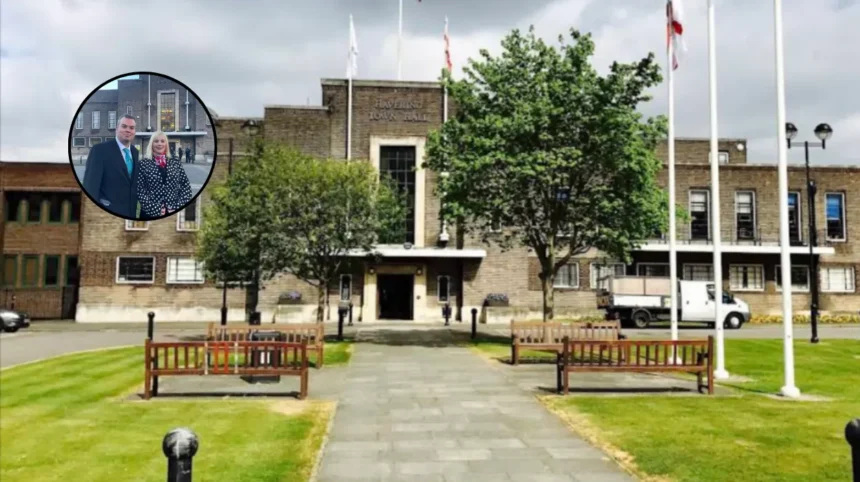
- The announcements occurred outside Romford Town Hall last week, as reported ahead of Farage’s rally.
Havering (East London Times) February 24, 2026 – Two longstanding Conservative councillors from Havering have dramatically defected to Reform UK, marking a significant shift in local politics and boosting the party’s presence in the borough to three members. Councillors Christine Vickery and Robert Benham join Keith Prince, who switched allegiance last October, allowing Reform to establish its first official group on Havering Borough Council. The move, announced by Reform leader Nigel Farage outside Romford Town Hall, comes amid rising tensions within the Conservative Party and ahead of a major rally in the area.
- Key Points
- Why Did Havering Councillors Defect from Conservatives to Reform UK?
- Who Are the Defecting Councillors and What Is Their Background?
- What Impact Does This Have on Havering Borough Council?
- How Does Nigel Farage’s Involvement Shape Reform’s Local Push?
- Who Are the Six New Reform Members from Former Tories?
- What Are the Broader Political Implications for Conservatives in East London?
- How Have Local Residents and Parties Responded?
- What Lies Ahead for Reform in Havering and Romford?
This defection underscores growing dissatisfaction among traditional Tory voters in outer London boroughs, where Reform UK is making inroads on issues like immigration and public services. As reported by Beth Martin of MyLondon, the trio’s decision enables them to speak as a formal bloc in council debates, potentially influencing key votes on local budgets and services.
Why Did Havering Councillors Defect from Conservatives to Reform UK?
Councillor Christine Vickery, speaking outside Romford Town Hall last week as covered by Beth Martin of MyLondon, expressed deep disillusionment with the Conservative Party after 25 years of membership.
“The Conservative party was not what it was when I joined 25 years ago,”
she said, adding that Reform UK would “make Britain great again”.
Vickery told the Local Democracy Reporting Service, as quoted in MyLondon:
“We had Brexit and nothing happened with the Conservative Party. We were going to close the borders and look after people who live here – all cultures, everybody. And what did they do? Nothing. Look at the state we’re in now.”
She highlighted perceived failures in improving the country post-Brexit, specifically pointing to “overflowing” hospitals as a stark example of how the Tories had “let the people down”.
Councillor Robert Benham’s specific reasons were not detailed in initial coverage, but his alignment with Vickery and Prince suggests shared frustrations over immigration, border control, and public service delivery—core Reform UK platforms. Keith Prince, the first to defect in October 2024, had similarly cited national party shortcomings, though exact statements from that time emphasise a pattern of local discontent.
This trio’s unity now formalises Reform’s voice in Havering, a borough long dominated by Conservatives but facing challenges from Labour and independents in recent elections.
Who Are the Defecting Councillors and What Is Their Background?
Councillor Christine Vickery represents a ward in Havering and has served the Conservative Party for 25 years, bringing significant experience to her new Reform affiliation. Her public remarks outside Romford Town Hall, reported by Beth Martin of MyLondon, reflect a personal evolution from Tory loyalist to Reform advocate.
Councillor Robert Benham, also from Havering Borough Council, joins Vickery in this high-profile switch. While specific biographical details on Benham were not elaborated in MyLondon’s coverage, his defection alongside Vickery indicates a coordinated move within the council’s Conservative group.
Keith Prince, the pioneer defector, left the Conservatives in October 2024, paving the way for this expansion. As the three now form an official Reform group, they gain procedural advantages in council proceedings, such as allocated speaking slots and opposition status recognition.
Havering Borough Council, with 36 seats, saw Conservatives hold a slim majority post-2024 locals, but such defections erode that edge, potentially forcing coalition talks.
What Impact Does This Have on Havering Borough Council?
The formation of an official Reform UK group marks a first for the party in Havering, as noted in MyLondon’s report by Beth Martin. Previously, isolated members like Keith Prince operated independently, limiting influence. Now, with three voices united, Reform can table motions, question leaders, and rally on issues like local taxes and housing.
This shift comes at a pivotal time for the council, grappling with budget pressures, fly-tipping complaints, and NHS strains—echoing Vickery’s hospital critiques. Conservatives, already under fire nationally, face local embarrassment, with opposition parties like Labour likely to capitalise.
Reform’s growth here mirrors wider trends in Essex and outer London, where Farage’s party polls strongly among disaffected voters. The defection could sway marginal wards in upcoming by-elections.
How Does Nigel Farage’s Involvement Shape Reform’s Local Push?
Party leader Nigel Farage personally unveiled the defections outside Romford Town Hall last week, as detailed by Beth Martin of MyLondon. This high-visibility announcement precedes a large Reform rally in Romford, amplifying the news in a Tory heartland.
Farage’s strategy targets Red Wall and outer suburban seats, positioning Reform as the true heir to Brexit promises. By courting figures like Vickery—a 25-year Conservative— he signals inclusivity for Tory defectors. No direct quote from Farage appears in the MyLondon piece, but his presence underscores the party’s ambition to challenge Conservative dominance locally.
Romford, with its market town vibe and working-class base, serves as fertile ground. Past rallies have drawn crowds protesting net zero policies and migration, aligning with the councillors’ rhetoric.
Who Are the Six New Reform Members from Former Tories?
Beyond the Havering defections, Reform UK announced six former Conservatives as new members, unveiled alongside Vickery and Benham. MyLondon’s Beth Martin reported this expansion, though specific names, locations, or statements from these individuals were not provided in the initial coverage.
This cohort bolsters Reform’s grassroots, potentially seeding candidates for future elections. It reflects a broader haemorrhage from Tories, with over 30 councillors nationwide switching to Reform since 2024, per party claims.
The lack of named individuals in reports suggests a strategic rollout, possibly tied to Farage’s Romford event.
What Are the Broader Political Implications for Conservatives in East London?
Havering’s defections signal cracks in Conservative strongholds east of London. The party, reeling from national defeats, loses seasoned councillors like Vickery, eroding local expertise and voter trust.
As Vickery noted to the Local Democracy Reporting Service via MyLondon: the Tories promised border closure and resident prioritisation post-Brexit but delivered “nothing”, leaving the country in a dire state with “overflowing” hospitals.
Reform’s rise threatens to split the right-wing vote, aiding Labour in locals. In Havering, where Conservatives clung to power narrowly, this could trigger leadership contests or pacts.
Nationally, Farage eyes general election gains, using such stories to portray Reform as dynamic versus Tory stagnation.
How Have Local Residents and Parties Responded?
Reactions from Havering residents and politicians remain unreported in initial MyLondon coverage by Beth Martin, but the timing—outside Town Hall pre-rally—suggests public interest. Conservative leaders have not issued statements in available reports, though private dismay is likely.
Labour and Greens may welcome the dilution of Tory numbers, while independents watch warily. Vickery’s border and NHS comments resonate with voters facing A&E waits and housing shortages.
Reform supporters, energised by Farage, view this as validation.
What Lies Ahead for Reform in Havering and Romford?
With an official group secured, the trio eyes influence on council priorities like waste collection and planning. Farage’s rally could draw hundreds, testing Reform’s mobilising power.
By-elections or the 2026 locals loom, where Reform might contest more seats. Vickery’s longevity lends credibility, potentially swaying undecideds.