Key Points
- Licence Review Date: Havering Council’s licensing sub-committee is scheduled to review the premises licence of the Berwick Manor Hotel on Berwick Pond Road in Rainham on Thursday, 6 August 2026, at 10:30 am.
- Reason for Review: Public protection officer George Pater formally requested the review following persistent noise complaints, thumping outdoor music, swearing over public address (PA) systems, and alleged breaches of a noise abatement notice.
- Previous Adjournment: A previous hearing on 15 July 2026, chaired by Councillor Christine Vickery, was adjourned to allow a representative from the hotel to respond to allegations, after no venue representative attended.
- Resident Impact: Local residents reported severe disruption to their daily lives, describing loud music audible from 0.3 miles away, offensive language, traffic congestion, street urination, and parking issues.
- Public Officer Findings: Council officers recorded noise control breaches in August 2025 and May 2026. Licensing officer Oisin Daly also reported finding drug paraphernalia in an adjacent field and a small bag of cannabis in the hotel car park.
- Proposed Remedies: Officer George Pater is requesting a formal licence condition to ban regulated outdoor entertainment, while officer Oisin Daly expressed concern that additional management controls might not fully mitigate the ongoing outdoor nuisance.
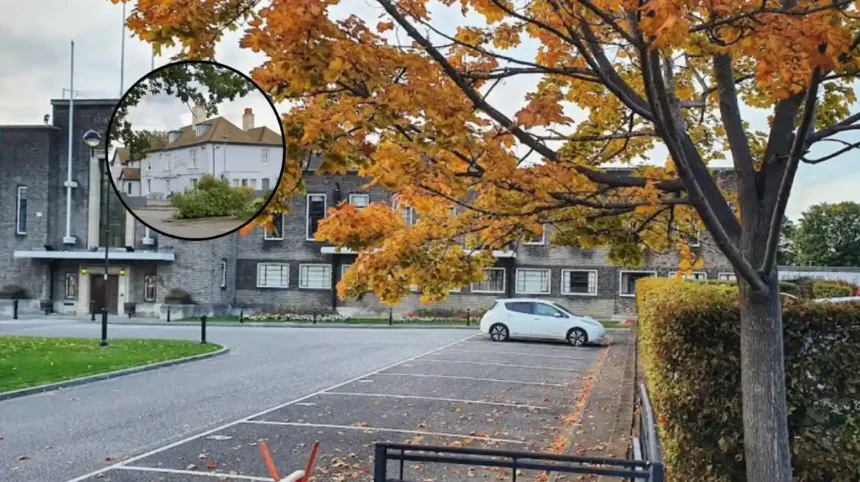
Rainham (East London Times) August 5, 2026 – The Berwick Manor Hotel, located on Berwick Pond Road in Rainham, is set to face a critical premises licence review by Havering Council’s licensing sub-committee following years of ongoing residential complaints regarding excessive outdoor noise, thumping music, abusive language over loudspeakers, and anti-social behaviour. The formal hearing, scheduled for 10:30 am on Thursday, 6 August 2026, follows an initial session on 15 July 2026 that was adjourned when no representative from the hotel appeared to respond to the allegations. The review was formally initiated by public protection officer George Pater, who cited a “persistent and unacceptable nuisance to local residents” that has continued despite years of council intervention and environmental health monitoring.
- Key Points
- What Claims and Direct Testimony Were Presented by Local Residents at the Initial Committee Hearing?
- What Specific Findings and Evidence Were Submitted by Havering Council Enforcement Officers?
- What is the Background Behind the Licensing and Planning Issues at Berwick Manor Hotel?
- How Will the Licence Review Impact Local Residents, Council Policy, and the Hotel’s Operation?
What Claims and Direct Testimony Were Presented by Local Residents at the Initial Committee Hearing?
During the licensing sub-committee meeting chaired by Councillor Christine Vickery, local residents living in close proximity to the Berwick Manor Hotel outlined the extensive impact venue operations have had on their families and living conditions.
As reported by local media coverage of the council proceedings, resident Natalie Crisp stated directly to the committee that neighbours could no longer tolerate the ongoing disruption stemming from outdoor events.
“We are subjected to anti-social behaviour, urinating in streets, drugs left in cars and cars parked over driveways,” Ms Crisp told the committee. “These events cause so much traffic, so many people. We can’t sit in our own gardens because we’re subjected to the swearing, the abuse, the screaming and the music that just thumps. We just can’t cope with it anymore. We’ve worked with the environmental health team, we’ve worked with the police, we’ve worked with everybody to try and get this situation sorted and I’m really pleading for you to please help us.”
Ms Crisp recounted a recent summer Saturday when, due to warm weather, she had her home doors open and could hear “every single word that the MC was saying over the microphone” across the neighborhood.
Similarly, resident James Eaton explained to the committee how the noise level has adversely impacted his household’s physical and mental health.
“It has a massive impact mentally and physically on me and my family,” Mr Eaton stated. “I don’t want to walk out in my garden and hear rude words all the time, I don’t want to hear fireworks after 11 o’clock, I don’t want to hear things I don’t even understand which have been translated to me that are awful. Every weekend we go out to get away from the events now. It’s one of those things where we can’t keep living like this.”
Mr Eaton added that around the time of his son’s birth a year prior, his wife considered temporarily moving in with her parents to escape the disturbance caused by events held at the venue.
Formal written submissions delivered to the committee further detailed the scope of the noise propagation. One written submission noted that music played during outdoor functions could be clearly heard and understood “word for word across an approximately 0.3-mile field,” accompanied by “persistent swearing and sexual innuendos” over the PA system. Another resident submitted that the nuisance prevents their family from relaxing in their garden, watching television, opening windows during warm weather, or obtaining reasonable sleep.
What Specific Findings and Evidence Were Submitted by Havering Council Enforcement Officers?
The formal review request submitted by public protection officer George Pater details a history of officer visits, complaints, and non-compliance dating back to 2021.
According to documentation presented to the licensing sub-committee, a noise management plan and an electronic sound limiter were implemented at the venue in November 2021 to control amplification levels. However, Mr Pater reported that noise nuisance complaints continued uninterrupted. By August 2025, licensing officers inspected the site and discovered that the mandatory sound limiter was not operational, with audio levels being controlled solely through an uncalibrated mixing desk.
Consequently, Havering Council issued a formal noise abatement notice on 10 September 2025. During a follow-up inspection on 16 September 2025, officers observed that the full sound system was likely still not operating within required noise limits. Subsequent site monitoring in May 2026 recorded music clearly audible within nearby residential zones, including amplified vocals from a female event host.
Public protection officer Oisin Daly also filed evidence supporting the licence review. Mr Daly documented finding drug paraphernalia in an adjacent field neighboring the hotel property. Furthermore, Mr Daly stated that he personally recovered a small bag containing cannabis in the venue’s primary car park, which was believed to have been left following weekend event activities. The substance was subsequently handed over to hotel staff for secure disposal inside the venue’s designated drugs safe.
In terms of regulatory outcome, Mr Pater has advised the committee not to revoke the hotel’s operating licence entirely, but rather to insert a strict new condition prohibiting all regulated outdoor entertainment. Mr Pater indicated that this measure represents a “fair and proportionate response to the public nuisance occurring” while preserving indoor hospitality operations. Conversely, Mr Daly expressed reservations in his submission, stating that “neither additional licence conditions nor further management controls are likely to adequately mitigate the risk of continued nuisance” stemming from outdoor events at the premises.
The Berwick Manor Hotel’s current premises licence permits several regulated activities, including music, films, and late-night refreshment. Alcohol sales and music for non-residents are permitted until 1:30 am, while alcohol service for resident hotel guests is authorized 24 hours a day. Hotel management has been contacted for public comment regarding the committee proceedings but has not issued a statement.
What is the Background Behind the Licensing and Planning Issues at Berwick Manor Hotel?
The upcoming licensing sub-committee review represents the culmination of multi-agency enforcement efforts involving Havering Council, Environmental Health, local police, and regional parliamentary representatives.
The venue, situated at 64 Berwick Road (RM13 9QL), has been the subject of long-standing community concerns involving noise, parking congestion, and planning control breaches. As reported by regional media detailing parliamentary statements, Margaret Mullane, Member of Parliament for Dagenham and Rainham, previously intervened by contacting Havering Council’s Chief Executive on behalf of affected constituents.
“I have brought these issues to the attention of the Council’s Chief Executive because local residents believed that their enquiries were getting nowhere,” MP Margaret Mullane stated in an official updates release. “The nuisances have gone on for far too long and action is needed. I understand that a marquee had been erected in breach of planning rules, so I have asked the Council to get to grips with that. I also want the Environmental Health team to step up their involvement to control the level of noise nuisance.”
In addition to licensing control under the Licensing Act 2003, the property has undergone planning enforcement proceedings. In March 2022, the London Borough of Havering issued a formal planning enforcement notice against the hotel regarding unauthorized roof works and structural additions that created visual intrusion and loss of privacy for neighboring residential properties.
The hotel ownership appealed the planning enforcement notice to the Planning Inspectorate. On 1 September 2023, the Planning Inspector issued a decision that partially allowed and partially dismissed the hotel’s appeal, upholding council requirements to remedy visual intrusion and privacy harm while modifying specific technical directives. The persistent combination of planning disputes, noise abatement enforcement, and resident petitions ultimately led public protection officers to trigger the formal premises licence review set for determination on 6 August 2026.
How Will the Licence Review Impact Local Residents, Council Policy, and the Hotel’s Operation?
The decision reached by Havering Council’s licensing sub-committee on 6 August 2026 will directly influence three key stakeholders: nearby residents, the hotel’s commercial operations, and local government enforcement policy.
Impact on Local Residents
If the licensing committee accepts officer George Pater’s recommendation to ban all outdoor regulated entertainment, nearby households are expected to experience a substantial reduction in late-night sound propagation, amplified speech, and outdoor bass vibration. Restricting events to enclosed indoor spaces would alleviate the primary source of disruption cited by residents, allowing surrounding households to use outdoor garden spaces and keep windows open during summer months without ambient noise interference. Furthermore, prohibiting outdoor PA systems and outdoor DJ setups could reduce large crowd gatherings in exterior courtyard areas, potentially curtailing associated anti-social behaviour, littering, and dangerous residential parking. However, if the committee decides to maintain outdoor permissions with modified conditions rather than a total ban, residents may continue to monitor sound compliance and register formal complaints if noise breaches persist.
Impact on Berwick Manor Hotel Operations
A decision to strip outdoor entertainment permissions would significantly alter the hotel’s business model regarding large summer weddings, outdoor receptions, marquee bookings, and open-air functions. The venue would be required to reconfigure its event offerings exclusively indoors, potentially lowering maximum guest capacities for multi-stage entertainment events. Compliance with modified licence conditions would also require strict adherence to internal sound limiters, physical soundproofing upgrades, and tighter security oversight of car parks to prevent illicit activity. Should the venue fail to comply with any newly imposed licence conditions or existing noise abatement notices, it faces potential prosecution under environmental protection legislation or subsequent revocation proceedings that could compromise its primary alcohol and late-night refreshment licences.
Impact on Local Council Policy and Regional Enforcement
The outcome of this high-profile review will set a regulatory precedent for how Havering Council manages mixed-use hospitality venues operating adjacent to residential zones. A decisive ruling prohibiting outdoor music after repeated noise abatement breaches would signal a lower tolerance for non-compliance regarding noise limiters and unauthorized event expansions in suburban areas. It also underscores the weight council committees place on joint evidence submitted by public protection officers and local residents. Conversely, the proceedings highlight the statutory balancing act councils must perform between supporting local hospitality businesses and protecting residential amenity under the four core licensing objectives.