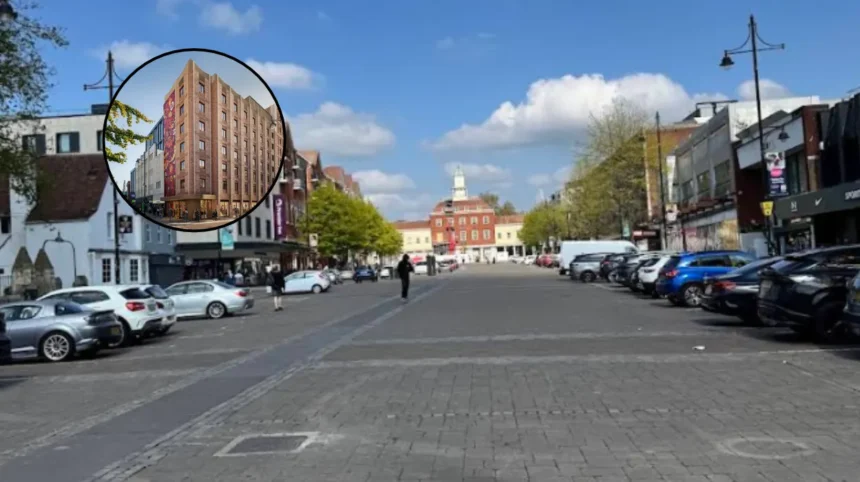
- Planning Approval Granted: Joint venture partners Legendre UK and Urban Sketch have officially secured planning consent to redevelop the former Atik nightclub in Romford town centre into a 285-bed co-living residential development.
- Site and Structure Features: The proposed nine-storey building located at Havana Close will offer private en-suite studios along with extensive shared communal areas, a ground-floor coffee shop, and a new public realm adjacent to Romford railway station.
- Amenity Provision: The architectural plans incorporate 10,280 square feet of internal amenity space and three dedicated roof terraces, featuring facilities such as a gymnasium, wellness studio, communal dining areas, and co-working spaces.
- Acquisition and Planning Timeline: Urban Sketch sourced the venue with assistance from specialist London real estate agents Henshall and Partners, purchasing the site unconditionally in August ahead of securing planning permission. Detailed planning applications were formally submitted to Havering Council in the following October.
Romford (East London Times) November 9, 2026 – A former entertainment venue in East London will be transformed into high-density residential accommodation following the approval of major redevelopment plans for Romford town centre. Joint venture partners Legendre UK and Urban Sketch have received full planning consent from Havering Council to convert the site of the former Atik nightclub into a nine-storey co-living development comprising 285 studio apartments. Situated on Havana Close, directly adjacent to Romford railway station, the multi-million-pound regeneration project aims to convert a prominent nightlife spot into a modern residential hub designed for single-occupancy living.
What Are the Key Design and Planning Details of the Havana Close Scheme?
As outlined in official planning documentation and joint statements issued by the developer partners, the approved architectural scheme replaces the vacant venue with a purpose-built structure focused on communal urban living. The nine-storey building will provide 285 self-contained private en-suite studios. To complement the individual living quarters, the design includes 10,280 square feet of internal communal amenity space alongside three landscaped roof terraces.
The internal amenities are engineered to foster community interaction and provide working space for residents. Facilities specified within the approved plans include a fully equipped gymnasium, a wellness studio, shared dining areas designed for communal meals, and flexible co-working spaces suited for remote and hybrid workers. At ground level, the scheme will introduce a public coffee shop alongside an updated public realm area designed to improve pedestrian connectivity between Havana Close and the neighboring Romford station transport interchange.
How Was the Property Acquired and Navigated Through Planning Consent?
As detailed by urban regeneration sources and real estate advisors, the acquisition of the former Atik nightclub was executed on an unconditional basis prior to securing consent. Urban Sketch identified and sourced the prime town centre location, collaborating with London property advisory firm Henshall and Partners to finalize the purchase in August.
Following the acquisition, the joint venture partners finalized architectural blueprints and town planning documents, formally lodging the planning application with Havering Council in October. The planning approval clears the way for site preparation and demolition works, marking the end of the site’s history as a regional music and nightlife venue and transitioning it into high-density housing stock.
Background of the Havana Close Redevelopment
The site at Havana Close has historically served as a core element of Romford’s regional economy and nightlife sector. For decades, the venue operated as a major entertainment destination, undergoing several rebranding phases before operating as the Atik nightclub. However, changing consumer habits, increased operational costs, and shifting demographics across suburban London town centres led to the eventual closure of large-scale venue operations at the location.
Concurrently, the London Borough of Havering and wider Greater London authorities have faced sustained pressure to meet stringent residential housing targets, particularly for young professionals, key workers, and single occupants seeking accessible transport links into central London. The opening of the Elizabeth Line at nearby Romford station dramatically increased the location’s connectivity and land value, making town centre commercial sites prime targets for high-density residential repurposing. The shift from a late-night venue to a co-living scheme reflects broader regional urban planning trends, where underutilized leisure sites near key transit nodes are converted to address housing supply shortages.
What Does This Development Mean for Romford Residents and Local Businesses?
The conversion of the former Atik nightclub into a 285-bed co-living scheme will directly alter the local commercial and social landscape in Romford town centre, bringing distinct implications for various local stakeholders.
Young Professionals and Renters
For single occupants, local key workers, and young professionals searching for accommodation along the Elizabeth Line corridor, the development introduces a significant volume of non-traditional housing stock. Co-living offers lower barrier-to-entry rental terms with inclusive amenities, providing an alternative to traditional private rented flats or shared houses (HMOs) in Havering. However, the high-density studio model may not suit long-term residents seeking family-sized housing.
Local Business Owners and High Street Retailers
Town centre traders, food establishments, and local service providers stand to benefit from a consistent influx of nearly 300 permanent residents situated directly off the main shopping parade. Unlike nightlife patrons who visited primarily on weekend evenings, permanent residents will generate sustained daily footfall and localized expenditure during daytime and weekday evening hours, supporting the daytime and early-evening economy.
Romford Nightlife and Cultural Sector
Conversely, the permanent loss of the Atik venue marks a further reduction in the area’s historical late-night leisure infrastructure. Local music enthusiasts and venue operators will note the ongoing contraction of large-scale nightlife spaces across East London, as commercial property uses transition permanently from entertainment to residential housing.