Key Points
- Havering Council Leader Councillor Keith Prince has issued Transport for London (TfL) an end-of-October deadline to complete remaining roadworks at Gallows Corner.
- TfL says Essex and Suffolk Water (ESW) is still carrying out complex work on a major water main beneath the junction and now expects to hand the site back by the end of August.
- Even after ESW’s handover, TfL will need further time for its own final construction and safety checks, meaning no confirmed full reopening date has been set.
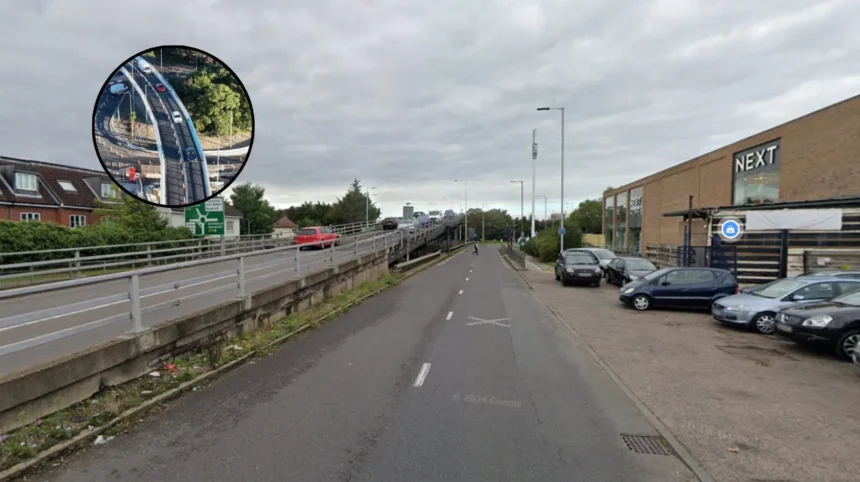
- Parts of the junction have reopened, but the westbound flyover and several key access routes on and off the roundabout remain closed, sustaining congestion across local roads.
- Residents and businesses report months of “unbearable” daily traffic delays and growing frustration, with many questioning why the project has taken so long.
- TfL has apologised for the continued disruption and says it will only announce a full reopening date once utility works are completed and its final checks are finished.
Havering (East London Times) July 7, 2026, residents’ patience with the ongoing disruption at Gallows Corner is wearing increasingly thin, as months of delays, diversions and daily gridlock continue to affect commuters and local trade.Transport for London has revealed that Essex and Suffolk Water is continuing complex work on a major water main beneath the junction and now expects to hand the site back to TfL by the end of August. TfL will then need additional time to complete its own work before the junction can fully reopen, meaning there is still no confirmed date for the project to be completed.
- Key Points
- What has Havering’s council leader said about the latest Gallows Corner delay?
- Why is Gallows Corner still partially closed in July 2026?
- How have residents and businesses described the impact of the Gallows Corner works?
- What do TfL and Essex and Suffolk Water say about the current timeline?
- What parts of the junction remain closed and what traffic restrictions are still in force?
- How has Havering Council responded to the repeated delays at Gallows Corner?
- What is the history of the Gallows Corner flyover refurbishment project?
- Background: How did the Gallows Corner development reach this point?
- Prediction: How could this development affect commuters, businesses and residents in Havering?
What has Havering’s council leader said about the latest Gallows Corner delay?
The announcement has sparked further frustration among residents and businesses who have endured months of traffic congestion, lengthy delays and disruption. Havering Council Leader Councillor Keith Prince has now made his position clear, saying residents have simply had enough.
Councillor Prince has given TfL until the end of October to complete the works, warning that the people of Havering have shown remarkable patience but that the delays cannot continue indefinitely.
As reported by Peter Barrett of Havering Daily, Councillor Prince stated that “residents have simply had enough” and stressed that while understanding of complex utility work is possible,
Why is Gallows Corner still partially closed in July 2026?
While parts of the junction have reopened, significant restrictions remain in place. The westbound flyover is still closed, along with several key access routes onto and off the roundabout, continuing to cause congestion across the local road network.
TfL has apologised for the continued disruption and says it will only announce a full reopening date once the remaining utility works have been completed and its own final construction and safety checks have been carried out.
For many Havering residents, however, the latest update offers little reassurance. After months of delays, diversions and daily gridlock, there is growing hope that the end of October will finally mark the end of one of the borough’s most frustrating road projects.
How have residents and businesses described the impact of the Gallows Corner works?
Residents have repeatedly voiced their anger over the prolonged roadworks, with many describing the daily traffic as unbearable and questioning why the project has taken so long to complete.
Local reporting has highlighted sustained congestion on diversion routes and mounting pressure on side streets that were not designed for such volumes.
Earlier coverage from the East London Times noted that a leak in the new ESW main, detected during final pressure testing in late April 2026, halted a planned full reopening at the end of that month, despite TfL having completed most flyover and resurfacing works by mid‑April.
That incident pushed the timeline further into summer and fed into the current frustration expressed by Councillor Prince.
What do TfL and Essex and Suffolk Water say about the current timeline?
TfL’s position, as set out in its latest updates, is that it cannot confirm a full reopening until ESW finishes its water main works and hands the site back. Once that happens, TfL must carry out its own final construction and safety checks before lifting all remaining restrictions.
According to previous updates referenced by the Upminster & Cranham Residents’ Association, ESW has been dealing with “technical difficulties” and unforeseen problems with its adjacent works to renew major pipes, which are being carried out at the same time to avoid a separate, lengthy future closure of the A127.
Those complications have been cited repeatedly as a key reason for the slippage past earlier target dates.
TfL has previously stated that it now expects to complete Gallows Corner junction works by spring 2026, with the flyover reopening to general traffic first and the roundabout and surrounding roads reopening in the following weeks.
However, subsequent delays connected to the ESW main have pushed the practical completion into the summer and now beyond, with no firm final date yet confirmed as of early July 2026.
What parts of the junction remain closed and what traffic restrictions are still in force?
While some lanes and approaches have reopened, the westbound flyover remains closed, alongside several key access routes onto and off the roundabout.
This partial configuration continues to funnel large volumes of traffic through a reduced layout, sustaining queues on the A127, A118 and surrounding residential roads.
Earlier TfL guidance described a full closure of Gallows Corner junction, both roundabout and flyover, to all traffic except emergency services, black cabs and TfL buses from late June 2025, with local access maintained on some arms of the A127 and A12.
Although some restrictions have since been eased, the continued closure of the westbound flyover and several slip roads means the junction is still not operating at full capacity.
How has Havering Council responded to the repeated delays at Gallows Corner?
Havering Council has been increasingly vocal in its criticism of the delays. Earlier statements from the council’s chief executive described the situation as “unacceptable” after the April 2026 slippage connected to the ESW leak.
The council has urged TfL and ESW to coordinate more tightly and has pressed for phased or partial reopening options where safety allows.
Councillor Keith Prince’s latest intervention, setting an end‑of‑October deadline, marks a clear escalation in political pressure.
As reported by Havering Daily, he warned that residents’ patience has limits and that the borough cannot tolerate indefinite disruption to a critical transport link.
What is the history of the Gallows Corner flyover refurbishment project?
The Gallows Corner flyover, a grade‑separated junction where the A127 Southend Arterial Road crosses the A118, was originally built in the 1960s and has long been identified as needing major structural renewal.
TfL launched a major refurbishment project to replace the ageing concrete deck and upgrade bearings and expansion joints, with the aim of securing several more decades of safe service.
Initial plans involved a series of lane closures from March to June 2025, followed by a full closure of the junction from June until September 2025 to allow the main structural works to take place.
However, the programme was delayed by unforeseen problems with simultaneous utility works by Essex and Suffolk Water, which is renewing major pipes beneath and alongside the junction to avoid a separate lengthy closure in future.
By November 2025, TfL had formally shared a revised timeline with the council, indicating that the junction could remain fully closed until completion in spring 2026. Subsequent issues, including a leak in the new water main detected during pressure testing in April 2026, pushed the effective completion further into the summer and beyond, leading to the current situation in July 2026 where only partial reopening has been achieved and the westbound flyover remains closed.
Background: How did the Gallows Corner development reach this point?
The Gallows Corner development arose from long‑standing structural concerns about the 1960s flyover, which had begun to show significant concrete spalling and reinforcement corrosion.
TfL classified the structure as a priority within its wider bridges and flyover maintenance programme, allocating substantial funding to replace the deck and key components rather than undertaking repeated short‑term repairs.
Coordinating the flyover replacement with major utility upgrades was intended to reduceoverall disruption in the long term by avoiding two separate multi‑month closures of the A127 corridor.
However, the complexity of working simultaneously on the highway and on high‑pressure water mains, combined with unforeseen ground conditions and technical difficulties on the ESW scheme, has led to multiple delays beyond the original target dates.
Each delay has been accompanied by updated timelines from TfL and ESW, but the absence of a fixed final completion date has eroded public confidence and intensified local frustration, culminating in Councillor Prince’s end‑of‑October deadline.
Prediction: How could this development affect commuters, businesses and residents in Havering?
If the end‑of‑October deadline set by Councillor Prince is met and the junction fully reopens by then, commuters and local businesses can expect a gradual return to more normal journey times and a reduction in congestion on diversion routes across Havering and into neighbouring Essex.
A fully operational flyover and roundabout should ease peak‑time delays on the A127 and A118, benefiting daily commuters, freight operators and public transport services that rely on the corridor.
However, if further slippage occurs beyond October, the impact on the local economy and quality of life could deepen. Prolonged disruption risks continued loss of trade for businesses near the junction, sustained pressure on residential roads used as diversions, and ongoing commuter stress.
It could also harden public scepticism towards large‑scale infrastructure projects in the borough, making future consultation and cooperation between TfL, utility companies and local authorities more difficult.
For TfL and its partners, meeting the October deadline would be important not only for restoring traffic flow but also for rebuilding trust with Havering’s residents and council after a protracted and contentious programme of works.