Key Points
- Two HMO Applications Rejected: Havering Council has refused two planning applications for Houses in Multiple Occupation (HMOs) on Oldchurch Road and Hamlet Road in Romford.
- Existing HMO at Hamlet Road: The property at 4 Hamlet Road was already operating as an HMO when the retrospective planning application was considered.
- Minimum Space Requirements Not Met: Both properties fell below the 120-square-metre minimum gross internal floor space required under the Havering Local Plan 2021.
- Loss of Family Housing: Planning officers said approving the conversions would lead to an unacceptable loss of single-family housing in the borough.
- Impact on Residential Areas: The applications were also refused over concerns about noise, general disturbance and impractical parking arrangements that could increase congestion on nearby residential streets.
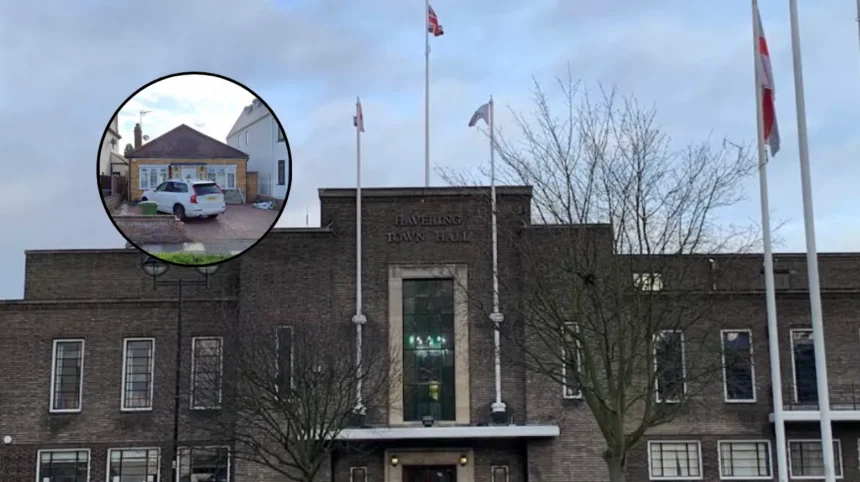
Romford (East London Times) August 28, 2026 – Havering Council has formally rejected planning applications for two residential properties in Romford intended for conversion into Houses in Multiple Occupation (HMOs), despite one of the locations already being operational as a multi-let residence.
As reported by local media, council officers issued formal refusal notices for proposals located at 173 Oldchurch Road and 4 Hamlet Road within five days of each other, citing strict local planning policy non-compliance, spatial deficits, and anti-social disturbances to neighbouring residents.
The planning refusal at 173 Oldchurch Road was submitted on behalf of the applicant, Mr Akhtar, with professional planning agency services provided by Mr Haider Karim. Following assessment by local authority planning officers, the proposal was formally turned down on August 14.
Local authority assessment officers determined that the existing single-dwelling layout offered a gross internal floor space beneath the statutory 120-square-metre benchmark set out under the terms of the Havering Local Plan 2021. Officers emphasised in their official ruling that converting the site would trigger an “unacceptable loss of a much needed family home within the borough.”
Beyond basic floor area shortfalls, municipal officials raised specific concerns regarding internal living conditions and broader community disturbance. Planning assessment logs confirmed that an internal bedroom and the proposed kitchen layout were classified as unacceptably small to support multi-occupancy standards safely.
Furthermore, local authorities voiced serious reservations regarding regional traffic pressure, recording: “It is considered that the development is likely to result in an increased parking congestion in surrounding streets,” alongside predictions of an “unacceptable impact on neighbouring residential occupiers in terms of noise and general disturbance.”
What Specific Issues Led to the Refusal of the Operational Retrospective HMO at Hamlet Road?
Following the decision on Oldchurch Road, Havering Council issued a second refusal notice on August 19 for a retrospective HMO planning application at 4 Hamlet Road. The application was brought forward by applicant Mr L Lawrence, represented by planning agent Mr Ian Coward.
Despite the house already actively operating as a multi-let unit without prior permission, officers refused the application to legitimise its residential status.
In alignment with the earlier decision on Oldchurch Road, local planning officers established that the retrospective Hamlet Road conversion fell short of the mandatory 120-square-metre minimum gross internal floor area necessary for HMO authorization. Officers highlighted the disruption caused by continuous movement into and out of the residence throughout all hours of the day and night.
In their formal assessment documentation, council officers wrote: “The proposal would generate a significant amount of vehicle movement and the coming and goings of residents throughout the day and night, which would result in an intensification of the site and result in significant harm to residential amenity from noise, disturbance.
“The car parking arrangements for the proposal are not usable or practical and as such, it would be likely to result in an undesirable increase in on-street parking to the detriment of highway safety and residential amenity.”
Background of Local HMO Developments and Planning Enforcement
The dual refusal of the Oldchurch Road and Hamlet Road applications occurs amidst an escalating policy drive by Havering Council to enforce urban planning regulations and curb unlicensed or overcrowded HMOs across Romford and the wider borough. Under the Havering Local Plan 2021, strict thresholds regarding floor space, communal facilities, waste storage, and local parking capacity are maintained to prevent single-family housing stock from being excessively fragmented.
Local councils across Greater London have increasingly faced a delicate balance between catering to high demands for affordable multi-tenant private rented housing and preserving long-term residential housing stock for families. In Havering, unauthorized or undersized conversions have faced heightened enforcement from council inspectors.
In recent months, municipal authorities have won several planning appeals brought before the Secretary of State’s Planning Inspectorate, allowing the council to issue enforcement notices requiring landlords operating unapproved conversions to reverse building alterations and restore properties to single-family use.
Additionally, the council has actively moved towards expanding borough-wide planning protections—such as Article 4 Directions—to eliminate legal loopholes that historically allowed certain detached and semi-detached properties to transition into HMOs under permitted development rights without formal planning scrutiny.
Explore More Romford News
Havering Council Launches Major Deep Clean in Romford 2026
Free Bank Holiday Events Staged in Romford 2026
Prediction: How Will This Planning Decision Affect Landlords, Tenants, and Local Residents?
This double planning refusal sends a clear operational signal to property developers, landlords, tenant communities, and local residents across the London Borough of Havering.
- Impact on Private Landlords and Developers: Property owners in Romford attempting retrospective planning approvals for non-compliant multi-let developments face a heightened risk of swift refusal and subsequent council enforcement action. Landlords will need to invest in ensuring candidates for conversion comfortably exceed the 120-square-metre threshold and offer off-street parking before converting properties, as unauthorized conversions risk forced closure, tenant eviction orders, and mandatory restoration costs.
- Impact on Private Tenants: For lower-income renters and single occupants reliant on affordable rooms in shared housing, strict HMO policing may temporarily constrain the immediate supply of low-cost rental units in central Romford. However, for existing tenants, enforced spatial standards ensure better protection against cramped living conditions, substandard room dimensions, and inadequate shared facilities.
- Impact on Local Residents and Communities: Neighbouring householders in residential roads across Romford stand to benefit from protected residential amenity. By curbing high-density conversions in properties with limited parking infrastructure, local streets are less likely to experience severe on-street parking congestion, excessive noise pollution, and high tenant turnover rates, preserving the overall structural character of single-family housing neighborhoods in the borough.