Key Points
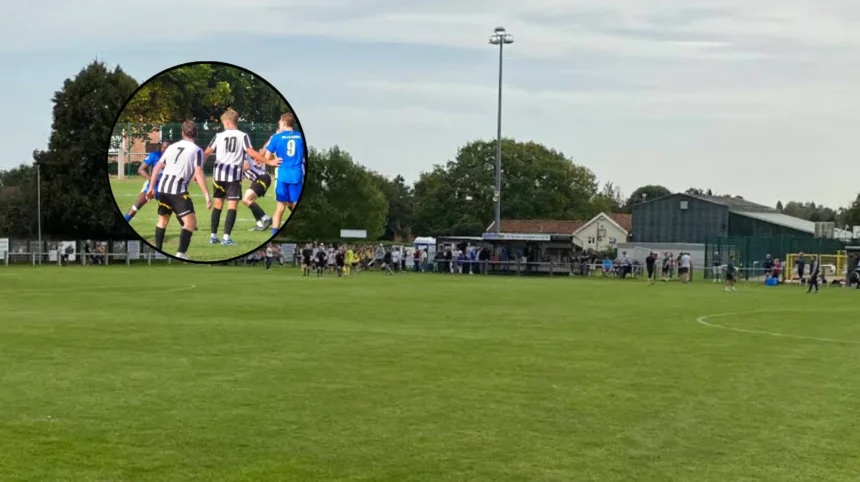
- Harleston Town managed to win 3–1 against Romford FC in the FA Cup First Qualifying Round held at The Recreation Ground, thus making club history by qualifying for the Second Qualifying Round.
- The home team made the breakthrough early on in the game, scoring three times within the first 20 minutes.
- The opening goal came through a goal from Joel Wilson in the seventh minute, which found its way past the goal line courtesy of a touch from Jake Reed, before he scored his own second goal four minutes later from a George Barber pass.
- Josh Durham completed Harleston’s hat trick in the 19th minute by putting the ball into the back of the net from a penalty situation that had resulted after Jake Reed had been fouled inside the 18-yard box.
- However, Romford FC improved their game during the second half of the match, managing to score one consolation goal through their substitute Prince Sikiru in the 68th minute after a corner kick.
- Harleston Town remained tough during the second half, creating chances for themselves out of counter attacks by Jake Reed and Tyler Halliday.
Harleston (East London Times) September 8, 2026 – Three early goals inside the opening 20 minutes condemned Romford FC to a 3–1 defeat against Harleston Town at The Recreation Ground, ending their Emirates FA Cup campaign in the First Qualifying Round.
- Key Points
- How Did Harleston Town Take Early Control Of The Match?
- How Did The Hosts Extend Their Advantage To 3–0 Before Half-Time?
- How Did Romford FC Respond In The Second Half?
- What Were The Key Late Chances Before The Final Whistle?
- Background Of The FA Cup Qualification Stages
- Prediction: How Will This Result Impact Both Clubs And Their Supporters?
As reported by the media team of Harleston Town FC, the host side secured their place in the Second Qualifying Round for the first time in their history after an explosive start to the match left the visiting side with too much ground to make up.
How Did Harleston Town Take Early Control Of The Match?
The fixture opened with both teams attempting to establish control during a competitive opening spell. As detailed by the official match report from Harleston Town FC, host manager Adam Gusterson introduced several selection changes, including handing a competitive debut to new goalkeeper Joe Rose and bringing Joel Wilson into the starting line-up.
The opening breakthrough arrived after seven minutes of play. Joel Wilson struck an initial effort from distance toward the target. Romford goalkeeper Lamar Johnson attempted to track the shot, but the strike deflected off the knee of Harleston forward Jake Reed, altering its direction and settling into the net. Although the goal was initially attributed to Wilson, subsequent confirmation confirmed that Reed had received the final touch before the ball crossed the goal line.
How Did The Hosts Extend Their Advantage To 3–0 Before Half-Time?
Harleston Town capitalized on their momentum to score a second goal four minutes later. As documented by the sports reporting staff at Football Web Pages, winger George Barber advanced down the left flank before placing a low cross into the penalty area, allowing Jake Reed to score his second goal of the match from close range in the 11th minute.
The home side continued to press forward, winning a penalty in the 19th minute. As noted by Harleston Town FC’s match coverage, Jake Reed was brought down inside the penalty area after initial contact outside the box. Midfielder Josh Durham stepped up to take the spot-kick, sending Lamar Johnson the wrong way to make the score 3–0 within the opening 20 minutes.
Harleston created further opportunities before the interval to increase their lead. As reported by Harleston Town FC, Josh Durham delivered a cross to Bertie Oliver, who placed his effort wide of the target. Shortly before the break, a combination between Durham and Reed set up the striker for a chance to complete a first-half hat-trick, but his effort was saved by Lamar Johnson. Defensive pairings Connor Deeks and team captain Shane Cox kept Romford’s attacking players contained throughout the first half, preserving the three-goal margin at the interval.
How Did Romford FC Respond In The Second Half?
Romford made tactical adjustments during the second period in an attempt to alter the course of the tie. As reported by the news team at The Havering Daily, Romford introduced substitutes to bolster their attacking options after the interval.
The visiting side found a response in the 68th minute. As recorded by Football Web Pages, a Romford corner kick was flicked on at the near post, allowing substitute Prince Sikiru to arrive at the back post and convert from short range, reducing the deficit to 3–1.
Following the goal, Romford maintained sustained territorial pressure during the final 20 minutes. However, Harleston Town’s defensive line contained the visiting attacks without conceding further goals.
What Were The Key Late Chances Before The Final Whistle?
During the closing stages of the fixture, Harleston Town threatened to add a fourth goal on counter-attacking transitions. As outlined in the official match summary by Harleston Town FC, Josh Durham released Jake Reed through on goal with five minutes remaining, but the striker’s left-footed effort passed wide of the far post.
Moments later, substitute Tyler Halliday generated another attempt for the home team, striking just wide of the target. The match concluded with a 3–1 victory for Harleston Town, confirming their progression to the next phase of the tournament.
Background Of The FA Cup Qualification Stages
The Emirates FA Cup First Qualifying Round represents a key juncture in the English non-league football calendar, where regional clubs from various steps of the National League System compete for progression into the main draw of the competition. For non-league clubs, advancing through the qualifying rounds provides essential financial prize money distributed by the Football Association, alongside elevated public visibility and matchday gate receipts.
Romford FC have historically maintained a strong reputation at this level of non-league football, having recorded competitive runs in past cup competitions and established a solid league footprint. Conversely, Harleston Town’s victory marks a milestone in the club’s development, securing their first-ever appearance in the Second Qualifying Round of the FA Cup. Progression to this stage places lower-tier non-league teams into contention to draw larger regional clubs from higher divisions in subsequent rounds.
Prediction: How Will This Result Impact Both Clubs And Their Supporters?
The outcome of this First Qualifying Round tie carries distinct implications for the players, management, and supporter bases of both clubs as the 2026–27 football season progresses.
For Harleston Town and their fanbase, reaching the Second Qualifying Round provides both momentum and valuable financial revenue via FA prize money and potential future attendance increases at The Recreation Ground. The victory is likely to boost squad confidence under manager Adam Gusterson, validating recent squad additions such as goalkeeper Joe Rose and forward Jake Reed. The excitement surrounding a historic cup run can stimulate local community engagement, driving merchandise sales and sponsorship interest while providing a competitive lift for their upcoming league fixtures.
For Romford FC and their supporters, an early exit from the FA Cup redirects the team’s entire operational and athletic focus toward their domestic league campaign. While missing out on the financial incentives and publicity associated with the cup, the removal of midweek fixture congestion allows the squad to concentrate fully on squad health, tactical consistency, and securing points in their primary league competition. Managerial staff will likely use the second-half performance as a baseline to address the defensive vulnerabilities exposed during the opening 20 minutes at Harleston.