Key Points
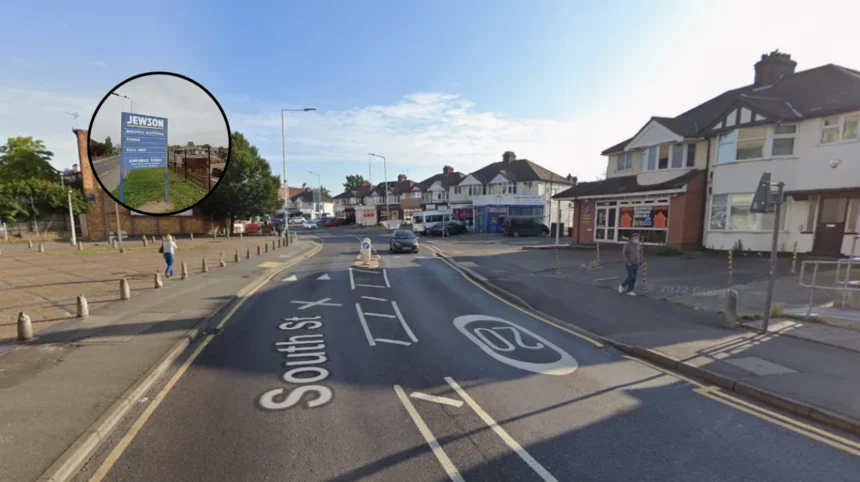
- Havering Council has granted planning permission for the demolition and redevelopment of Jewson’s builders’ merchants warehouse on South Street, Romford.
- The scheme, application P0867.25, involves replacing the existing branch with a new builders’ merchants facility including sales area, warehouse, tool hire, offices, external racking, loading areas and upgraded parking and landscaping.
- Planning officers recommended approval, and the elected strategic planning committee gave the final go‑ahead after considering resident objections and a former councillor’s concerns.
- Opponents raised issues about impact on nearby homes, traffic, noise and the scale of the development in the St Albans ward.
- Jewson applied for the permission to modernise its branch and maintain operations in Romford under an updated layout.
Romford (East London Times) July 13, 2026 –Havering Council has approved the demolition and redevelopment of Jewson’s builders’ merchants warehouse on South Street in Romford, clearing the way for a new branch on the same site.
- Key Points
- What exactly is the Jewson South Street redevelopment plan?
- Who applied for the Romford Jewson warehouse redevelopment and why?
- What objections were raised by residents and a former councillor?
- How did Havering Council’s planning process reach this decision?
- What are the next steps for the Jewson South Street site in Romford?
- Background to the Jewson South Street Romford warehouse redevelopment
- Prediction: how might this development affect local residents, businesses and the council?
The decision follows a recommendation from the council’s planning department that the scheme should be green‑lighted, despite objections from local residents and a former Havering councillor.
As reported by the Romford Recorder, the final decision was taken by the elected strategic planning committee after officers set out their case for approval.
What exactly is the Jewson South Street redevelopment plan?
The approved proposal, registered as planning application P0867.25, is for the
“Redevelopment of the existing Builders Merchants to provide a new Builders Merchants branch”.
According to the public notice, the scheme includes demolition of the existing building and construction of a new branch building with a sales area, warehouse, tool hire and associated offices.
It also provides for cantilever racking, an external storage area and racking, a dedicated loading and unloading area, plus car and cycle parking, fencing and landscaping.
The council classed the project as a major development because it creates 1,000 square metres or more of new floor space.
Who applied for the Romford Jewson warehouse redevelopment and why?
Jewson, the national builders’ merchants chain, applied for permission to demolish its South Street premises and rebuild a modernised branch on the same site.
In its application, the company set out the operational case for updating the facility to meet current trading and logistics needs while retaining its Romford presence.
The public notice lists Jewson’s address as 307–309 South Street, Romford, and identifies the proposal as a replacement builders’ merchants branch rather than a change of use.
What objections were raised by residents and a former councillor?
Local democracy reporters noted that residents and a former Havering councillor opposed the redevelopment, citing concerns about its impact on nearby homes.
As highlighted by The Havering Daily, opponents focused on the effect the scheme could have on neighbouring properties in the St Albans ward, including issues around scale, traffic movements and noise.
The Romford Recorder previously reported that the planning department still recommended approval notwithstanding these objections, before the committee took the final vote.
How did Havering Council’s planning process reach this decision?
The application was processed through Havering Council’s planning system, with officers assessing the proposal against local and national planning policies.
Havering’s planning department recommended the scheme for approval, setting out the professional view that the development was acceptable in planning terms.
The elected strategic planning committee then considered the report, the objections and any statements from interested parties before reaching its decision.
The outcome was formally recorded as an approval, allowing Jewson to proceed subject to any conditions attached to the permission.
What are the next steps for the Jewson South Street site in Romford?
With planning permission granted, Jewson can move towards discharging any pre‑commencement conditions and preparing the site for demolition and rebuild.
The public notice advised that application details and plans can be viewed on the council’s website, and that the decision notice will set out the full list of conditions and any required legal agreements.
In practice, this typically leads to a phased programme of decanting, demolition, construction and commissioning of the new branch, with logistics managed to limit disruption on South Street.
Background to the Jewson South Street Romford warehouse redevelopment
The South Street site has long operated as a Jewson builders’ merchants branch serving trade customers across Romford and east London. Over time, the existing layout and buildings became dated relative to modern distribution and customer service models used by national merchants.
Jewson’s application sought to replace the old structure with a purpose‑built facility designed around current operational requirements, including improved loading arrangements, external storage and updated parking.
The proposal sits within a wider context of regeneration activity in Romford, where Havering Council has been advancing town centre masterplanning and supporting the renewal of commercial and retail sites. Recent years have seen several large proposals in the borough, from mixed‑use town centre schemes to major housing‑led redevelopments of former retail parks, reflecting ongoing pressure to refresh older commercial stock.
Prediction: how might this development affect local residents, businesses and the council?
For local residents in the St Albans ward and along South Street, the main effects are likely to be felt during the construction phase, with temporary increases in construction traffic, noise and dust as the existing warehouse is demolished and the new building erected.
Once operational, the updated branch could alter patterns of heavy vehicle movements compared with the previous layout, depending on how loading bays, external racking and access points are used under the new design.
For local trade customers and small builders, a modernised Jewson branch may mean improved service, stock availability and site logistics, potentially supporting productivity for businesses that rely on timely materials supply.
For Havering Council, the approval reinforces its strategy of enabling the refurbishment of existing commercial sites rather than losing them to alternative uses, while also demonstrating how planning committees balance economic arguments against resident concerns about amenity.
Over the longer term, the way conditions are enforced on hours of operation, transport management and landscaping will be central to whether the development is experienced as a net improvement or a continued source of friction for those living closest to the site.