Key Points
- Developers Yaelwood Ltd, in collaboration with Claridge Architects, have submitted planning proposals to Havering Council to demolish the former Debenhams store in Romford’s Market Place and redevelop the site.
- The ambitious scheme includes three new buildings: a 118-room hotel fronting Market Place with a rooftop bar above it offering panoramic views of the town.
- Additional features comprise 155 new flats across two residential blocks, new retail units, cafés, a gym, and other commercial spaces at ground level.
- The plans also incorporate a public plaza, shared gardens, and a community building to boost footfall and enhance the town centre’s appeal.
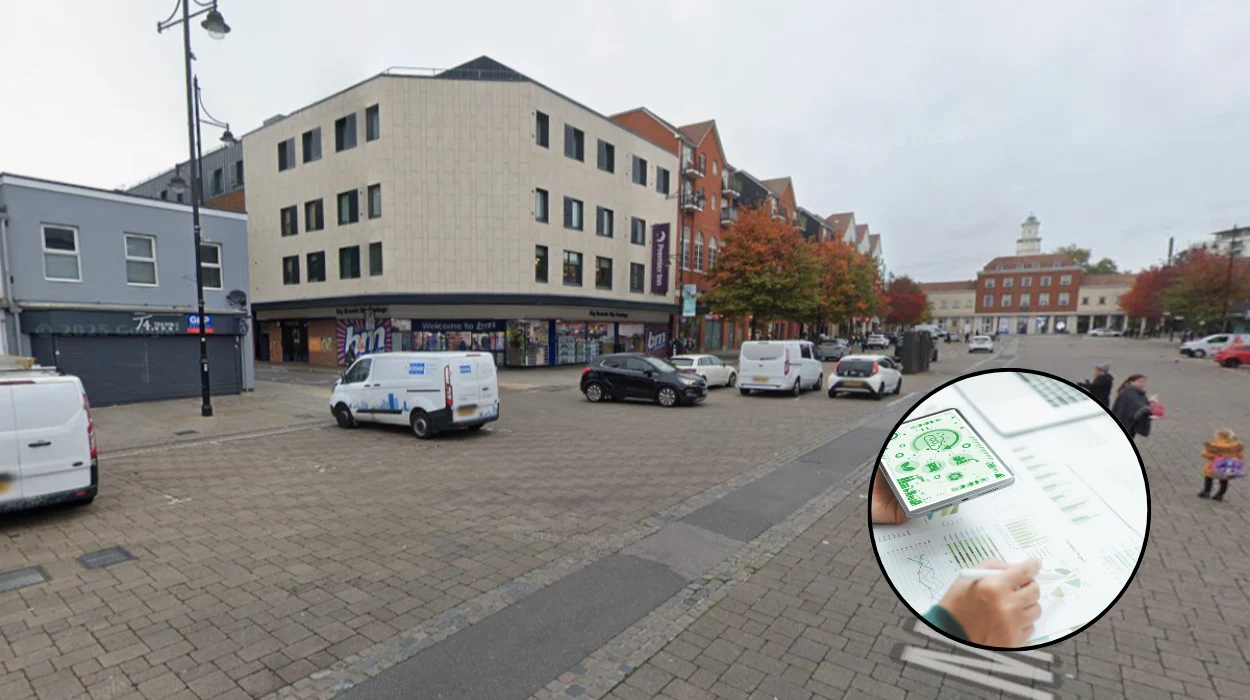
- The site, vacant since Debenhams closed, has long been branded an “eyesore” by locals, symbolising decline in Romford town centre.
- During October 2025 consultation, approximately 90 per cent of responses supported the proposals, indicating strong local backing.
- Residents express mixed views: excitement over revitalisation versus concerns about building heights, traffic congestion, and whether a rooftop bar suits Romford’s character.
- Local shopper Mandy described the building as “ugly and lifeless,” welcoming the change to bring life back to the area.
- Jamie, another resident, noted it could transform a criticised site into a desirable destination, questioning if Romford should “aim higher.”
- Developers claim the project will improve retail and commercial quality, access, and movement around Swan Walk and Market Place.
Romford (The Havering Daily) January 14, 2026 – Developers Yaelwood Ltd have submitted bold plans to Havering Council to demolish the derelict former Debenhams store in Romford’s Market Place, replacing it with a mixed-use development featuring a 118-room hotel topped by a rooftop bar, 155 flats, retail spaces, and leisure facilities. The proposals, crafted with Claridge Architects, aim to eradicate a long-standing “eyesore” that has blighted the town centre since the store’s closure. During public consultation in October 2025, around 90 per cent of respondents backed the scheme, fuelling hopes of regeneration.
- Key Points
- Is Romford Ready for a Rooftop Bar?
- What Does the Full Development Plan Entail?
- Why Has the Debenhams Site Become an Eyesore?
- What Do Residents Think About the Proposals?
- What Challenges Might the Plans Face?
- How Will This Impact Romford Town Centre?
- Who Are the Key Players Behind the Plans?
- When Might Construction Begin?
- Could This Transform Romford’s Image?
Is Romford Ready for a Rooftop Bar?
The standout element of the proposals—a rooftop bar perched above the Market Place hotel—has ignited debate about whether Romford is prepared for such an upscale leisure addition. As outlined in the planning documents submitted to Havering Council, the bar would provide stunning vistas across the town, introducing a novel nightlife option to an area traditionally dominated by high street retail. Local reactions, gathered during the October 2025 consultation, reveal enthusiasm tempered by scepticism.
As reported by journalists at The Havering Daily, resident Mandy, a frequent shopper, stated:
“People have complained for years about how ugly and lifeless that building looks. It’s been an eyesore in the heart of Romford. If this brings life back into the town centre, then it has to be a good thing.”
Her sentiment echoes widespread frustration with the vacant structure, which has stood empty post-Debenhams’ collapse, deterring visitors and undermining the area’s vibrancy.
Jamie, another local, remarked:
“This could finally turn one of Romford’s most criticised sites into a place people actually want to visit. A rooftop bar might sound a bit much for us, but why shouldn’t Romford aim higher?”
Developers Yaelwood Ltd emphasise that the venue would complement broader leisure enhancements, including a gym and cafés, positioning the site as a destination rather than a void.
What Does the Full Development Plan Entail?
The comprehensive redevelopment spans three buildings, blending residential, commercial, and hospitality elements to revitalise Romford’s core. Fronting Market Place, the primary block houses the 118-room hotel with the rooftop bar atop it, while two adjacent residential towers accommodate 155 flats. Ground-level activation includes new shops, cafés, a gym, and diverse commercial spaces designed to draw pedestrians.
Beyond buildings, the vision incorporates public realm improvements: a welcoming public plaza, shared gardens for residents and visitors, and a dedicated community building to foster social interaction. As detailed in submissions to Havering Council, these features aim to enhance connectivity between Swan Walk and Market Place, streamlining pedestrian movement and access.
Yaelwood Ltd and Claridge Architects assert the project will elevate retail and commercial standards in the locality. The plans promise increased footfall, countering years of stagnation since Debenhams vacated the site, which had anchored bustling trade but latterly symbolised retail decline.
Why Has the Debenhams Site Become an Eyesore?
For years, the hulking empty shell in Market Place has epitomised Romford’s town centre struggles, drawing regular ire from residents and visitors alike. Once a thriving retail hub, Debenhams’ departure left a vast void, its shuttered facade and unkempt appearance repeatedly labelled an “eyesore” that repels investment and erodes civic pride.
As chronicled by The Havering Daily, the building’s deterioration has amplified perceptions of neglect amid broader regeneration efforts in Romford. Locals have voiced exasperation over its “ugly and lifeless” state, with Mandy noting it as a persistent blight “in the heart of Romford.” This criticism aligns with ongoing pushes to modernise the area, where empty units signal economic malaise.
The proposed demolition addresses this head-on, with developers arguing the site demands transformation to halt decline and inspire renewal. Historical context underscores urgency: Debenhams’ 2021 administration left multiple high street scars nationwide, but Romford’s prime location heightens expectations for swift action.
What Do Residents Think About the Proposals?
Public feedback from the October 2025 consultation underscores robust support, with 90 per cent of responses favouring the scheme, as reported across coverage by The Havering Daily. Enthusiasm stems largely from desires to revive a moribund landmark, with comments highlighting potential for increased vitality and modern amenities.
Mandy’s endorsement captures optimism:
“If this brings life back into the town centre, then it has to be a good thing.”
Similarly, Jamie envisions elevation:
“A place people actually want to visit… why shouldn’t Romford aim higher?”
These voices reflect a yearning for progress after prolonged dissatisfaction.
Yet dissent persists. Concerns centre on towering structures potentially overwhelming the skyline, exacerbating traffic congestion, and introducing a rooftop bar mismatched to Romford’s suburban ethos. While not dominant—given the 90 per cent approval—such worries prompt questions about integration with local character.
What Challenges Might the Plans Face?
Opposition, though minority, flags practical hurdles: building heights could clash with Romford’s low-rise profile, straining infrastructure and altering vistas. Congestion fears loom large, given the influx of hotel guests, bar patrons, and new residents alongside retail traffic.
The rooftop bar itself provokes scrutiny—does it align with a town centre geared towards families and shoppers rather than late-night revellers? Developers counter that careful design mitigates impacts, with enhanced public spaces offsetting density.
Havering Council’s deliberation will weigh these against regeneration benefits. Strong consultation support bolsters the case, but scrutiny of traffic assessments, heritage considerations, and economic projections remains essential.
How Will This Impact Romford Town Centre?
Proponents view the project as pivotal to Romford’s regeneration narrative, converting a symbol of decline into an “icon” drawing visitors and investment. Enhanced retail, leisure, and housing should sustain footfall, benefiting neighbouring businesses in Swan Walk and beyond.
Yaelwood Ltd highlight improved “quality of retail and commercial uses,” alongside better access and movement. The public plaza and gardens promise communal hubs, fostering inclusivity.
Long-term, success could catalyse adjacent renewals, positioning Romford as a vibrant Essex hub. Failure to approve risks perpetuating stagnation, underscoring the stakes.
Who Are the Key Players Behind the Plans?
Yaelwood Ltd leads as developer, partnering with Claridge Architects for design expertise. Their submission to Havering Council reflects collaborative ambition, blending commercial nous with architectural flair.
No specific journalists beyond The Havering Daily’s team are named in available coverage, but attribution underscores their role in amplifying resident voices like Mandy and Jamie. Havering Council holds decision-making power, with public input shaping outcomes.
When Might Construction Begin?
Timelines hinge on council approval, post-January 2026 submission. Consultation’s positive tilt suggests progress, but statutory processes—consultations, assessments—could span months. Demolition and building would follow swiftly if greenlit, targeting operational spaces within years.
Developers eye rapid delivery to capitalise on momentum, though no firm dates emerge from plans.
Could This Transform Romford’s Image?
Absolutely, if realised: from “eyesore” to “icon,” as The Havering Daily posits. The rooftop bar emblemises aspiration, potentially rebranding Romford as dynamic. With 90 per cent support, locals seem primed for this shift, answering affirmatively whether the town stands ready to “look at its town centre from the top.”