Key Points
- Romford Shopping Hall is promoting flexible retail units available from £150 per week plus VAT to help small businesses secure physical premises.
- The scheme targets home-based and online sellers whose operations have outgrown kitchens, spare rooms or garages.
- Unlike traditional commercial leases, the initiative offers short-term, low-commitment terms with minimal start-up costs.
- Prospective tenants need only provide three forms of identification before collecting keys.
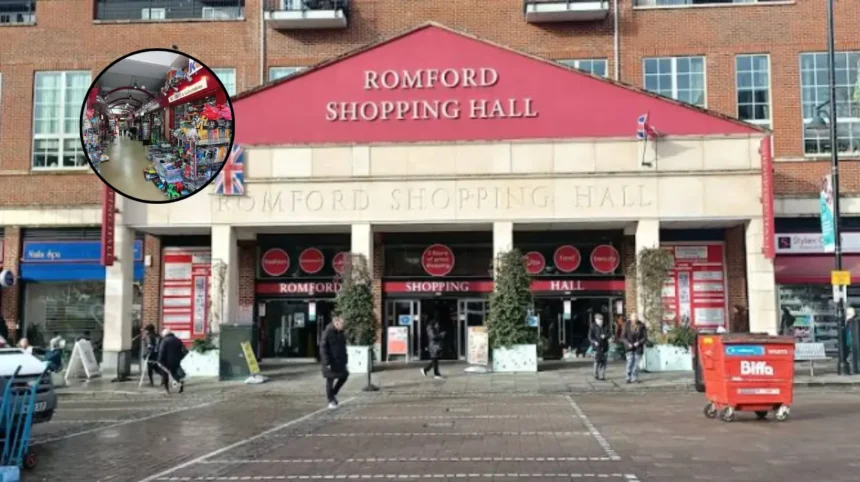
- The Shopping Hall, located in central Romford, already hosts a range of independent retailers and positions itself as a hub for local enterprise.
- The campaign encourages traders in handmade goods, crafts, beauty, collectables, home décor and similar sectors to consider taking a unit to expand their reach.
Romford (East London Times) July 8, 2026 –Romford Shopping Hall has announced a new flexible leasing initiative designed to lower the barriers for small and start-up businesses seeking high street premises.
- Key Points
- Why are flexible leases being promoted for Romford retailers now?
- Who can apply for a unit at Romford Shopping Hall?
- How does the application process work for Romford Shopping Hall units?
- What types of businesses are targeted by the Romford Shopping Hall scheme?
- Where is Romford Shopping Hall located and what is its retail mix?
- Background to Romford Shopping Hall’s flexible leasing development
- Predictions: How might this development affect small businesses and Romford’s retail scene?
The scheme makes retail units available from £150 per week plus VAT, with short-term commitments and reduced upfront costs compared with conventional commercial leases.
According to the campaign details issued by Romford Shopping Hall, the offer is aimed at entrepreneurs whose businesses have “outgrown the kitchen table, spare bedroom or garage” and who are ready to take the next step by opening a shop of their own. The centre says the flexible terms are intended to allow traders to
“test the market without committing to significant financial risk”.
As outlined in the Shopping Hall’s promotional material, prospective tenants are required to provide three forms of identification before they can collect the keys to their new premises.
The centre states that this streamlined process is part of its effort to make entry to the high street “easier for entrepreneurs”.
Located in the heart of Romford, the Shopping Hall describes itself as home to a
“wide range of independent retailers”
and says it has “built a reputation for supporting local businesses”. For many existing traders, the centre says it has provided the opportunity to
“establish a permanent presence, attract new customers and become part of a thriving retail community”.
The campaign specifically invites people who sell handmade gifts, clothing, crafts, beauty products, collectables, home décor or who operate other growing businesses from home to consider taking on a retail unit. The Shopping Hall suggests that doing so could help traders
“raise your profile and expand your customer base”.
Why are flexible leases being promoted for Romford retailers now?
The push for flexible leasing comes as many small business owners cite high rents, long leases and large upfront costs as obstacles to opening physical shops.
The Shopping Hall’s campaign argues that these factors often put the idea of a premises “out of reach” for start-ups, online sellers and home-based businesses.
By offering units from £150 per week plus VAT, the centre says it is providing an “affordable route into the high street” for those who might otherwise remain operating solely from home or online.
The promotional text states that the initiative is intended to encourage local entrepreneurs to “think differently” about how they access retail space.
The centre’s messaging highlights that, unlike many traditional commercial leases, its flexible terms involve “low start-up costs and no lengthy lease commitments”.
This structure, it says, makes it
“easier for entrepreneurs to test the market without committing to significant financial risk”.
Who can apply for a unit at Romford Shopping Hall?
The Shopping Hall indicates that the scheme is open to a broad range of small traders, including start-ups, online sellers and home-based businesses that are ready to expand.
It specifically mentions operators in sectors such as handmade gifts, clothing, crafts, beauty products, collectables and home décor.
According to the campaign, the main criterion is that the business has outgrown informal premises such as a kitchen table, spare bedroom or garage and is ready to open a shop.
The centre says the flexible leasing model is designed to suit those who want to grow but are wary of long-term financial commitments.
Prospective tenants are told they need to provide three forms of identification before they can collect the keys.
The Shopping Hall presents this as a straightforward requirement compared with the more complex documentation often associated with traditional commercial leases.
How does the application process work for Romford Shopping Hall units?
The Shopping Hall outlines a simplified process for accessing its flexible units. After expressing interest, prospective tenants are required to submit three forms of identification. Once these are verified, the centre says tenants can collect the keys to their new premises.
The promotional material does not set out a detailed step-by-step application form, but it emphasises the reduced administrative burden compared with conventional leases. The centre states that the process is designed to help entrepreneurs move quickly from decision to opening.
What types of businesses are targeted by the Romford Shopping Hall scheme?
The campaign explicitly targets businesses that operate from home or online and are looking to establish a physical presence. Sectors mentioned include handmade gifts, clothing, crafts, beauty products, collectables and home décor, as well as “another growing business from home”.
The Shopping Hall suggests that taking on a retail unit can help such businesses
“raise your profile and expand your customer base”.
It positions the scheme as a way for small traders to move beyond informal settings and enter a more visible, footfall-driven environment.
Where is Romford Shopping Hall located and what is its retail mix?
Romford Shopping Hall is located in the centre of Romford, in the London Borough of Havering. The centre describes itself as being “in the heart of Romford” and says it is home to a “wide range of independent retailers”.
According to its own description, the Shopping Hall has built a reputation for supporting local businesses and has enabled many traders to
“establish a permanent presence, attract new customers and become part of a thriving retail community”.
The centre presents itself as a hub for independent retail rather than large chain stores.
Background to Romford Shopping Hall’s flexible leasing development
Flexible and short-term retail leases have become more common in UK town centres as landlords and market operators seek to adapt to changing trading patterns and the growth of online retail.
Traditional long leases with high rents and substantial fit-out costs have often deterred small and start-up businesses from taking physical premises.
Romford Shopping Hall’s initiative follows a broader trend in which market halls and shopping centres offer pop-up units, short lets and low-commitment terms to attract independent traders and diversify their retail mix. Such schemes are often promoted as a way to test new concepts, support local entrepreneurship and maintain occupancy in a challenging retail environment.
The Romford scheme explicitly frames its offer as a response to the
“high rents, long leases and large upfront costs”
that many small business owners cite as barriers to entry. By advertising units from £150 per week plus VAT and minimising lease length, the centre is positioning itself as a lower-risk option for traders who are scaling up from home-based operations.
Predictions: How might this development affect small businesses and Romford’s retail scene?
If the flexible leasing model attracts a steady flow of new small traders, it could increase the diversity of retail offers in Romford town centre and provide more opportunities for local entrepreneurs to test physical retail without long-term risk.
For home-based and online sellers, the scheme may lower the threshold for opening a shop, allowing them to reach footfall customers and build brand presence in a traditional high street setting.
For the Shopping Hall itself, successful uptake could help stabilise occupancy and reinforce its identity as a centre for independent businesses.
A growing cluster of small, flexible tenants may also create a more dynamic retail environment, with frequent new entrants and a rotating mix of products and services.
However, the impact will depend on demand from suitable small businesses, the affordability of the weekly rates once VAT and other costs are included, and whether traders can generate sufficient turnover from short-term units to sustain and grow.
If the model proves viable, it may encourage similar approaches in other parts of Romford and the wider east London area, potentially reshaping how small retailers access high street space in the borough.