Key Points
- Local residents have put forward fresh proposals for the regeneration and diversification of Romford town centre.
- Key suggestions include a Boxhall-style food court, independent non-fast-food dining options, and a canteen-style restaurant.
- Visual and infrastructure proposals include creative paving across Market Place to enhance public spaces.
- Romford currently hosts three major commercial hubs in close proximity: Romford Shopping Hall, The Mercury Shopping Centre, and The Liberty Shopping Centre.
- Community feedback highlights a demand for experiences beyond standard retail and national fast-food chains.
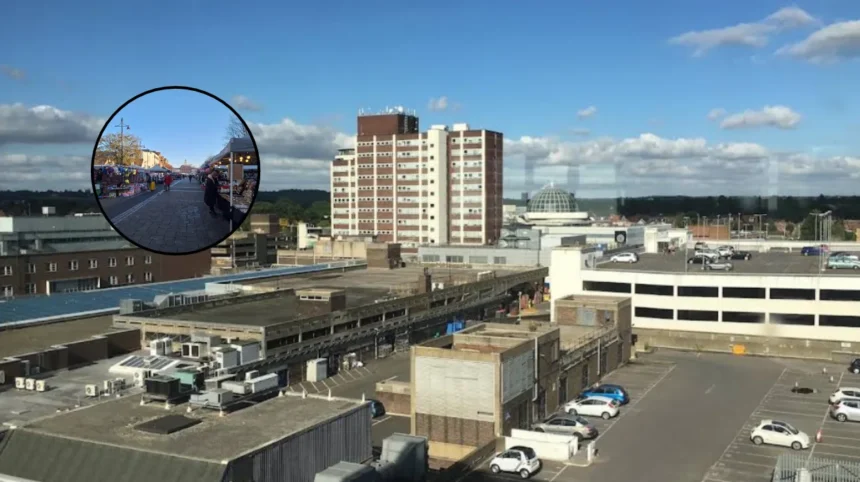
Romford (East London Times) November 7, 2026 – Local residents and community members have voiced a strong desire for structural and cultural additions to Romford town centre, urging for a shift towards independent dining options and enhanced public spaces. Despite the town centre currently featuring three major retail hubs operating within close proximity—Romford Shopping Hall, The Mercury Shopping Centre, and The Liberty Shopping Centre—community members maintain that the area requires further diversification to complement its current commercial footprint.
- Key Points
- Why Are Local Residents Calling for Changes in Romford Town Centre?
- What Dining Options Have Been Suggested for the Area?
- How Could Infrastructure and Public Spaces Be Enhanced?
- Background of Romford Town Centre’s Commercial Landscape
- Prediction: How Will These Proposed Changes Affect Romford Residents and Local Businesses?
Why Are Local Residents Calling for Changes in Romford Town Centre?
The commercial landscape of Romford remains anchored by its core retail centres, yet public discussion has increasingly focused on expanding the scope of what the town offers to visitors and local shoppers. The existing infrastructure provides extensive retail coverage, but local voices indicate a growing appetite for community-oriented spaces, alternative dining formats, and aesthetic enhancements to public walkways.
The emphasis of the community suggestions centers on moving away from reliance on standard high-street chains and towards public realm improvements that encourage footfall and social gathering.
What Dining Options Have Been Suggested for the Area?
Among the specific proposals for the local food scene, community member Jude Beddoe highlighted the potential for a modern communal dining hub within the existing footprint of the commercial district. Beddoe stated that a Boxhall-style food hall would work well, suggesting a potential location adjacent to the Liberty entrance on Western Road.
In addition to communal dining formats, there is a clear demand for greater variety in food offerings. Beddoe further noted a strong preference for establishing local food places that do not fall into the fast-food chain category. Complementing these ideas, other resident contributions included requests for a traditional canteen-style restaurant to broaden the accessibility and variety of sit-down meal options within the town.
How Could Infrastructure and Public Spaces Be Enhanced?
Beyond hospitality and dining suggestions, public input has extended to the aesthetic and physical layout of Romford’s public realm. Suggestions regarding physical infrastructure focused on visual integration, with specific calls for the introduction of creative paving throughout Market Place.
Proponents of visual upgrades suggest that incorporating decorative or distinctive surface treatments in key pedestrian areas like Market Place would improve spatial cohesion, enhance the character of the open-air market, and create a more inviting environment for pedestrians navigating between the primary shopping centres.
Background of Romford Town Centre’s Commercial Landscape
Romford has long served as a major commercial hub in North East London within the London Borough of Havering. The town centre’s retail footprint is uniquely defined by the close coexistence of three prominent shopping venues: Romford Shopping Hall, The Mercury Shopping Centre, and The Liberty Shopping Centre.
Historically, Romford developed around its historic market, established in the 13th century, which remains a focal point of Market Place today. Over the late 20th and early 21st centuries, large-scale retail developments consolidated the town’s position as a regional shopping destination. However, shifting consumer habits across the UK—driven by the growth of online retail and a rising preference for experiential leisure—have led many suburban town centres to re-evaluate their reliance on traditional retail anchors. The community feedback reflects wider national trends where towns seek to balance established shopping infrastructure with independent leisure, hospitality, and civic space enhancements.
Prediction: How Will These Proposed Changes Affect Romford Residents and Local Businesses?
If local planning authorities and commercial property operators act upon these community suggestions, the delivery of specialized dining halls and public realm improvements could significantly alter the economic and social dynamics of Romford town centre.
For local residents, the introduction of independent dining venues and a Boxhall-style food space would provide increased leisure options that cater to evening and weekend social gatherings, reducing the need for residents to travel into central London for communal dining experiences. Creative paving and public realm upgrades in Market Place would improve general pedestrian accessibility and make public spaces more engaging for families and visitors.
For existing retail businesses and shopping center operators, diversifying the high street beyond traditional retail and fast-food outlets could increase footfall and extend the average dwell time of shoppers. Independent hospitality venues typically attract a broader demographic, which could generate positive spillover effects for nearby shops in Romford Shopping Hall, The Liberty, and The Mercury. Conversely, failure to adapt the town centre’s offerings to align with modern preferences for experiential dining and improved public spaces could risk declining footfall in competition with neighboring commercial developments.