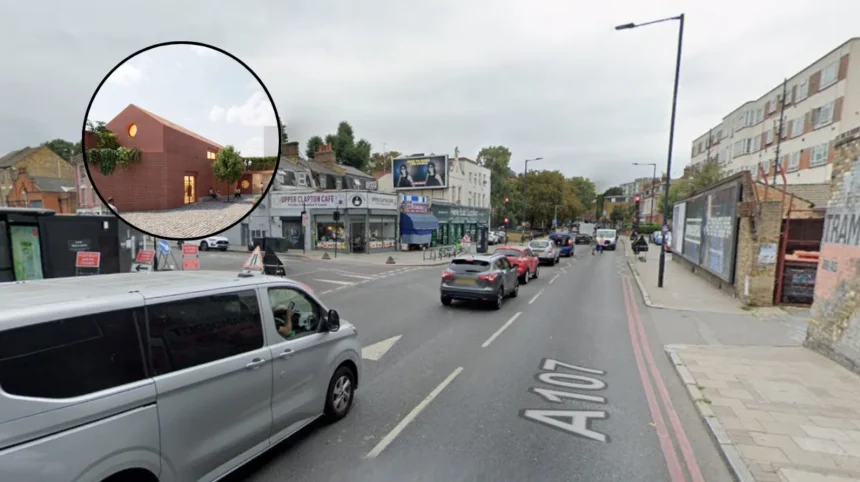
One of East London’s most historic transport landmarks is set for a new chapter after plans were unveiled to transform the Clapton Tram Depot into a vibrant creative neighbourhood. The Victorian depot, which has survived multiple demolition attempts over the past two decades, will be refurbished to provide affordable workspace for artists, makers and creative businesses while preserving its unique industrial heritage.
The redevelopment is being led by Gilini Group, which plans to restore the historic depot rather than replace it. The project will create 34 creative business units, offering space for furniture makers, photographers, artists, designers and small manufacturers, alongside new public areas and a handful of family homes.
Located in Clapton, the depot is one of the last surviving horse-drawn tram depots in London. Built during the 1870s, it originally housed horses on its upper floor while the ground level contained tram tracks and carriage washing facilities serving routes between Clapton, Aldgate and Moorgate. The final horse-drawn tram departed in 1907, after which the site evolved into a bus depot, workshops for tradespeople and later artists’ studios.
Over the years, the depot has become a cherished local landmark, valued not only for its Victorian architecture but also for its role in supporting East London’s creative community. Since 2008, campaigners have successfully opposed two major redevelopment proposals that would have demolished the historic buildings in favour of flats and offices.
The new masterplan has been designed by Yellow Cloud Studio, with an emphasis on retaining the depot’s original industrial character. Historic shed structures will be preserved, the double-height warehouse interiors maintained and original tram-track features reinstated where possible. Architects say the approach balances heritage conservation with modern commercial use.
In addition to creative workspaces, the scheme includes a public courtyard, an upper terrace and five family homes. Existing tenants, including the popular BLOK gym and an independent café-deli, will remain as part of the redevelopment, helping preserve the site’s established community atmosphere.
Gilini Group said it wanted to demonstrate that historic preservation and economic regeneration could work together rather than compete. The company described the depot as “a working creative ecosystem” that deserved protection after years of development pressure. Its vision focuses on supporting independent businesses while maintaining the site’s cultural significance for the local area.
Architects behind the project also stressed that the redevelopment would remain deliberately modest in scale. Rather than overshadowing the historic buildings with large new structures, the proposal seeks to enhance public access through a redesigned entrance and improved street frontage while allowing the Victorian depot to remain the dominant feature of the site.
The plans reflect a wider trend across East London, where former industrial buildings are increasingly being adapted for creative industries instead of being demolished. Similar regeneration projects have helped transform warehouses, factories and railway arches into studios, galleries, cafés and workspaces that support London’s growing creative economy.
For many local residents and heritage campaigners, the Clapton Tram Depot represents an important victory for conservation-led regeneration. Instead of losing another historic industrial building to large-scale redevelopment, the project aims to celebrate the site’s rich history while giving it a sustainable future.
If completed as planned, the refurbished Clapton Tram Depot will not only preserve one of London’s rare surviving tram depots but also create a new destination for artists, entrepreneurs and visitors—ensuring that a key piece of East London’s transport and industrial heritage continues to serve the community for generations to come.