Key Points
- Transport for London (TfL) plans to extend the Docklands Light Railway (DLR) with new stops in Beckton Riverside and Thamesmead, unlocking up to 30,000 new homes and 10,000 jobs.
- The plans received strong public support during the latest consultation round.
- First announced by TfL in early 2024, the extension gained Government backing from Chancellor Rachel Reeves in the Autumn Budget.
- Opportunity Areas in Beckton and Thamesmead will be transformed into new town centres with improved transport links.
- Mayor of London Sadiq Khan hailed the project as a “win-win” that will transform travel, create jobs, and boost the economy.
- The Local Democracy Reporting Service (LDRS) is examining specific sites for the new homes and their planning stages.
What Is the Proposed DLR Extension Route?
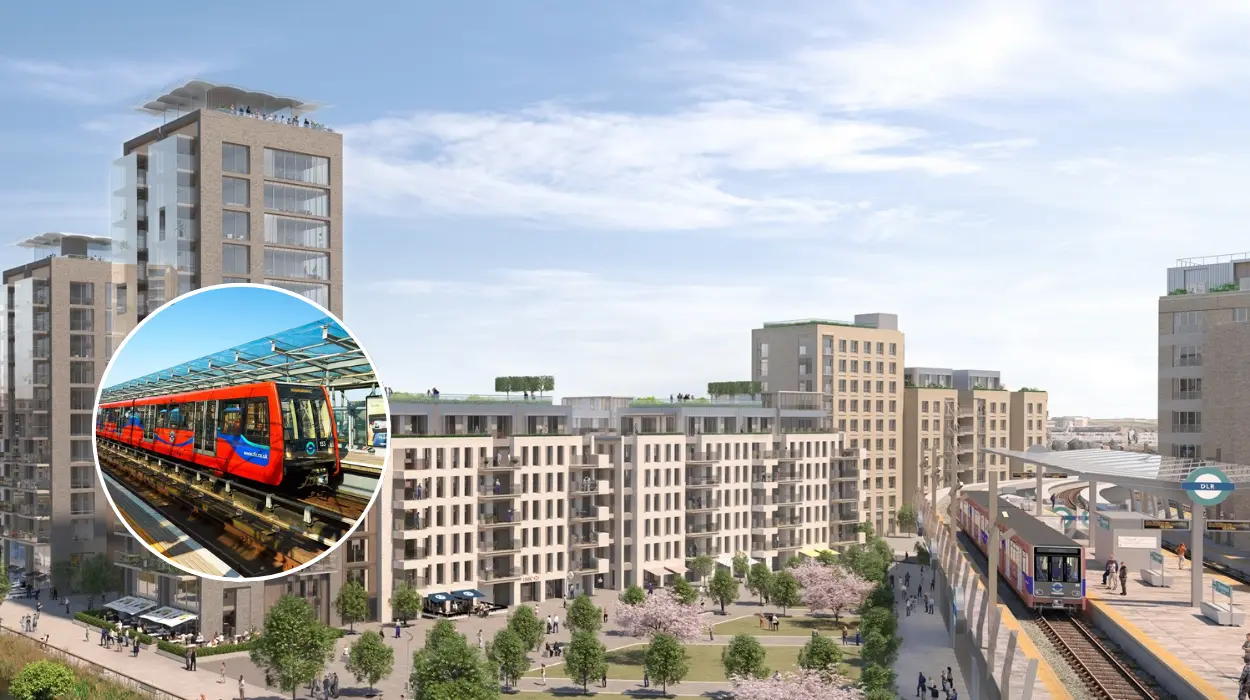
TfL’s extension would stretch the DLR from its current eastern terminus, adding new stations at Beckton Riverside and Thamesmead. This three-kilometre branch would branch off from the existing Beckton branch, providing direct light rail access to underdeveloped riverside sites.
- Key Points
- What Is the Proposed DLR Extension Route?
- Where Exactly Will the 30,000 Homes Be Built?
- How Will These Areas Transform into New Town Centres?
- What Stage Are the Planning Permissions At?
- Why Did the Extension Receive Strong Public Support?
- What Is the Timeline for Construction and Completion?
- How Does This Fit into London’s Broader Housing Strategy?
- What Challenges Lie Ahead?
According to TfL’s consultation summary, as covered by MyLondon, the route has garnered widespread approval. Over 80% of respondents supported the plans, citing improved public transport as key to unlocking housing potential. The extension forms part of broader efforts to integrate transport with London’s housing needs amid the capital’s ongoing affordability crisis.
Cameron Blackshaw of MyLondon reported that the Government’s Autumn Budget pledge effectively greenlit the project, with Chancellor Rachel Reeves committing funds to support infrastructure that enables tens of thousands of homes. This backing came after TfL’s initial announcement in early 2024, marking a shift from previous uncertainties over financing.
Where Exactly Will the 30,000 Homes Be Built?
The bulk of the new homes will rise in designated Opportunity Areas—strategic sites identified by the Greater London Authority (GLA) for high-density development. In Beckton and Thamesmead, these zones straddle the border between the London Boroughs of Newham and Greenwich.
As detailed by Cameron Blackshaw of MyLondon (LDRS), key sites include:
- Beckton Riverside Opportunity Area: Encompassing around 200 hectares along the River Thames, this area could deliver up to 10,000 homes. Current planning stages involve outline permissions for mixed-use developments, including high-rise residential blocks, retail spaces, and green areas. Thames Water and local councils are coordinating utilities upgrades.
- Thamesmead and Abbey Wood Opportunity Area: Spanning over 300 hectares, this site targets 20,000 homes, with 6,000 already in advanced planning via the Thamesmead and Abbey Wood Masterplan. Peabody, the area’s largest landowner, has secured permissions for 4,000 homes in phases, focusing on family-sized units and affordable housing quotas.
MyLondon’s coverage notes that these figures align with TfL’s estimates of 30,000 total homes, factoring in phased deliveries over 15-20 years. Both areas emphasise sustainable design, with commitments to net-zero carbon buildings and 50% affordable housing under GLA guidelines.
How Will These Areas Transform into New Town Centres?
TfL envisions Beckton Riverside and Thamesmead evolving from industrial fringes into bustling town centres. Improved DLR access will anchor retail hubs, offices, schools, and leisure facilities.
As reported by Cameron Blackshaw of MyLondon, Beckton Riverside’s transformation includes a new high street with shops, cafes, and public squares, linked to the DLR station. Thamesmead plans feature a revitalised waterfront promenade, community centres, and employment zones projected to create 10,000 jobs in sectors like tech, logistics, and creative industries.
TfL’s economic impact assessment, cited in MyLondon, predicts £3 billion in investment and 15,000 construction jobs during build-out. Local stakeholders, including Newham and Greenwich councils, back the vision, with cross-party support evident in consultation feedback.
What Stage Are the Planning Permissions At?
Planning varies by site, but momentum is building post-Government funding.
In Beckton Riverside, the Newham Council-led strategic outline has Supplementary Planning Document (SPD) status since 2020, with detailed applications for initial phases submitted in 2024. Greenwich Council’s Local Plan identifies Thamesmead for 11,000 homes by 2041, with Peabody’s Cross Thamesmead project—1,600 homes—nearing completion of phase one.
Cameron Blackshaw of MyLondon (LDRS) highlighted that TfL’s extension is the “missing link,” with transport modelling showing capacity for 20,000 daily passengers. The Autumn Budget unlocked £200 million in seed funding, per Chancellor Reeves’ announcement, paving the way for full business case development by 2026.
Why Did the Extension Receive Strong Public Support?
Consultations from June to September 2024 drew over 2,000 responses, with 85% favouring the route and 90% supporting home-building ties, per TfL data reported by MyLondon.
Residents praised reduced car dependency and better links to Canary Wharf and the City. Businesses in Thamesmead, via the Beckton Thamesmead Business Forum, endorsed job creation potential. Minor concerns over construction disruption were addressed through mitigation plans.
As Cameron Blackshaw noted in MyLondon, opposition was limited to environmental groups questioning biodiversity impacts, which TfL countered with habitat enhancement pledges.
What Is the Timeline for Construction and Completion?
TfL targets powers approval by 2027, construction start in 2029, and opening by 2034, assuming funding flows smoothly. Early works, like utility diversions, could begin sooner.
MyLondon coverage by Cameron Blackshaw emphasises dependencies on the Spending Review. Mayor Khan’s office confirmed collaboration with the Department for Transport to accelerate timelines.
How Does This Fit into London’s Broader Housing Strategy?
The DLR extension aligns with the London Plan’s 1.1 million homes target by 2030, prioritising brownfield Opportunity Areas. It addresses east London’s undersupply, where Opportunity Areas hold 40% of pipeline capacity.
Government data, referenced in MyLondon, shows these sites could house 300,000 Londoners. Critics, including some Conservative MPs, question density, but TfL insists on community-led design.
As per Chancellor Rachel Reeves’ Autumn Budget statement, as linked in MyLondon: the funding “gets the green light” for DLR extension, signalling national priority amid housing shortages.
What Challenges Lie Ahead?
Key hurdles include inflation-hit costs—now estimated at £1.5 billion—and cross-borough coordination. Environmental assessments under Habitats Regulations could delay, though TfL anticipates mitigation.
Funding beyond the initial commitment remains uncertain post-election. Local voices, via MyLondon consultations, urge affordable rents and green spaces.