Key Points
- Trussell says 43% of its food banks reported critical donation levels ahead of winter.
- Scottish food banks provided more than 55,000 emergency parcels last winter.
- Donations in Scotland were 36% lower than in 2022, while more than 400 tonnes of food were purchased in 2025.
- Trussell says more than half a million people in Scotland could be at risk of needing a food bank over the next year.
- The charity is urging donations through local food banks, its winter appeal and the Tesco Winter Food Collection from November 26 to 28.
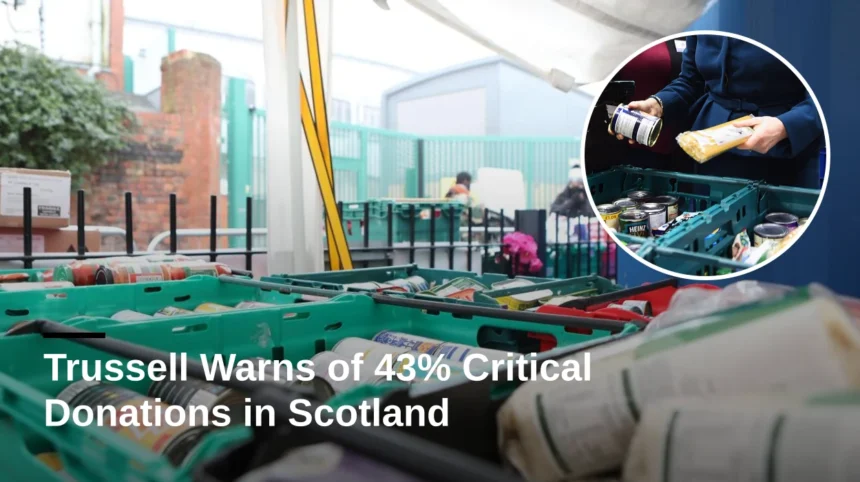
Scotland (East London Times) November 19, 2026 – Trussell Scotland has warned that food banks are entering winter with critically low donation levels as demand, food prices and operating costs remain high. The charity said 43% of its food banks reported critical donations, while 46% said preparing for winter was harder than in previous years. Scottish food banks supplied more than 55,000 emergency food parcels last winter and are increasingly buying stock to maintain support for people facing hunger.
Why are Scottish food banks warning about critically low donations?
As reported by the Bournemouth Echo in its report, Trussell said donations last winter were 36% lower than in 2022, describing the decline as sustained. The Herald Scotland reported that demand for emergency support continued to outstrip donations across the charity’s Scottish network.
Trussell said falling donations, rising operating costs and persistently high need were placing pressure on services. More than 400 tonnes of food were purchased by Scottish food banks in 2025, almost seven times the amount bought in 2021. The charity compared the volume with the weight of 35 double-decker buses.
How many people could need food bank support?
Trussell Scotland said more than half a million people in Scotland could be at risk of needing a food bank over the next year. The charity called for urgent action from the Scottish and United Kingdom governments so people can afford essential goods and services.
Cara Hilton, Trussell’s senior policy and public affairs manager for Scotland, said food banks were hearing from people skipping meals, going without heating and struggling to pay for rent, toiletries and household bills. She said one food bank had heard from people wearing coats and getting into bed to keep warm because they could not afford to heat their homes.
Ken Linton, manager of Dundee and Angus Foodbank, said rising food and energy costs could make it harder to keep services operating during the colder months. He urged people to support food banks with food or financial donations.
What support is Trussell requesting before winter?
Trussell is encouraging people who can help to donate food or funds. It has highlighted the Tesco Winter Food Collection, running from November 26 to 28, as well as direct donations to local food banks and its winter appeal.
The charity has asked donors to check their local food bank’s website before giving food, so contributions match the items most urgently required.
What is the background to the development?
Trussell’s annual survey covered 168 food banks between September 3 and October 4, 2026, according to reporting by the Daily Mirror. The charity expects to provide more than 600,000 emergency food parcels across the United Kingdom during the winter period, equivalent to one parcel every 12 seconds, Sky News reported. In Scotland, the number of food purchases rose from 3% of food required in 2021 to 22% in 2025. Trussell said the widening gap between donations and demand had intensified since the cost-of-living crisis.
How could the shortage affect food bank users?
Critically low donations could leave food banks facing higher purchasing costs while trying to maintain emergency food supplies for households with limited income. If demand remains high and donations do not recover, local services may have to spend more of their funds on food and operating costs. Trussell’s figures indicate that winter support will depend increasingly on direct public donations, food collections and financial assistance. The charity said contributions could help ensure that people receive emergency food and practical support while longer-term measures address household affordability.