Key Points
- Richard House Children’s Hospice in Newham, east London, which has supported children with complex life-limiting conditions for 25 years, is set to close on 18 December, just days before Christmas.
- The hospice provides specialist care to over 300 families, including residential care, hospital-to-home transitions, bereavement support, and end-of-life care.
- NHS North East London confirmed that the hospice’s board of trustees decided to close following a comprehensive strategic review.
- A briefly published and later removed statement on the hospice’s website stated that a merger with another children’s hospice, under active consideration, is not possible.
- Families, including those of 15-year-old Jayden with rare Lowe syndrome and six-year-old Alexander with short bowel syndrome, were shocked; they learned of the closure informally, such as via a charity shop sign.
- Parents like Kareema from Tower Hamlets and Emma expressed devastation, highlighting lack of transparency and the hospice as a “safe place” for their children.
- An online petition to keep the hospice open has surpassed 1,340 signatures.
- Richard House charity shop in Upminster is also closing.
- The closure affects families who were only informed of a “pause in services” at the end of November, not a full shutdown.
Why Is Richard House Children’s Hospice Closing?
As reported by BBC News, the decision follows “a comprehensive strategic review by the board of trustees”, according to a statement briefly published on the hospice’s website before its removal. The statement, as covered in the same BBC report, added that
- Key Points
- Why Is Richard House Children’s Hospice Closing?
- Which Families Are Affected by the Closure?
- What Services Does Richard House Provide?
- How Are Families and the Community Reacting?
- What Happens to the Upminster Charity Shop?
- Could a Merger Have Saved the Hospice?
- What Alternatives Exist for Affected Families?
- What Is the Broader Impact on Paediatric Care in East London?
“a merger with another children’s hospice, which had been under active consideration, is not possible”.
NHS North East London, in a statement echoed across multiple outlets including the BBC and local east London media, confirmed that
“the hospice’s board had taken the decision to close the facility on 18 December”.
Richard House has been approached for further comment but has not issued additional public statements beyond the retracted one.
This closure comes after 25 years of service, during which Richard House has been a cornerstone for families dealing with complex, life-limiting conditions in children. The hospice’s model, reliant on a mix of charitable funding, NHS contracts, and donations, appears to have faced insurmountable challenges, though specific financial details remain undisclosed in public reports.
Which Families Are Affected by the Closure?
The impact is profoundly personal, striking at the heart of families who depend on Richard House as a lifeline. Kareema, a mother from Tower Hamlets whose 15-year-old son Jayden has been supported at the hospice for the last nine years, shared her anguish in interviews covered extensively by BBC News.
Jayden suffers from Lowe syndrome, a rare genetic disorder affecting a handful of people in the UK, characterised by cataracts, glaucoma, kidney issues, and intellectual disabilities. As reported by BBC News, Kareema stated that families were told at the end of November about “a pause in services” but were “never under any impression it would stop completely”.
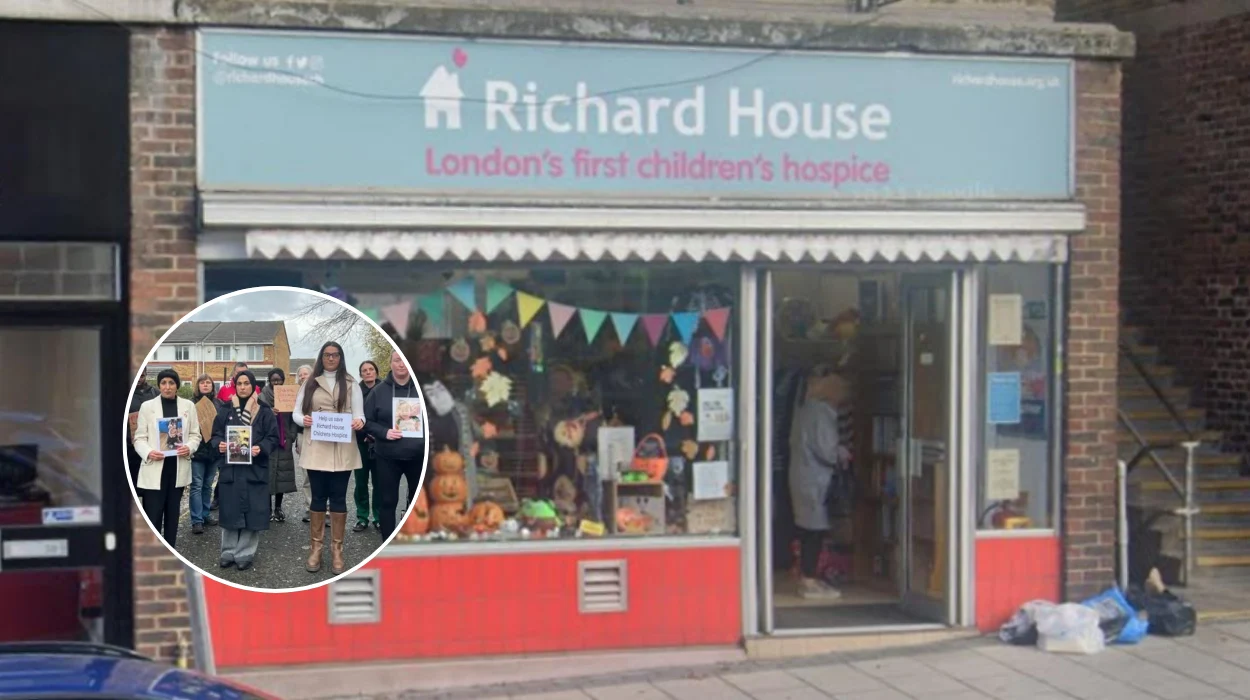
She learned of the full closure after another parent spotted a sign in the Richard House Upminster charity shop, which is also due to shut.
“It’s a very delicate and sensitive matter to handle, but I think transparency and honesty would have really been appreciated,”
Kareema said, as quoted in the BBC coverage. She added,
“It’s us that has to go about our daily lives now, stressing about all the practicalities,”
and acknowledged that “the trustees have tried to do a job which is extremely difficult” but described the news as “a shock to all the community”.
Emma, another mother using the service, spoke of her six-year-old son Alexander, who has short bowel syndrome and requires life support every night. As detailed in BBC News reports, Emma said,
“He is devastated at the moment because this is his safe place.”
Her words underscore the emotional toll, portraying Richard House not just as a medical facility but as a sanctuary for children and families navigating unimaginable challenges.
These accounts, drawn from direct family testimonies aggregated by BBC journalists, highlight how the closure disrupts not only medical care but also the psychological stability these families have come to rely upon. Over 300 families stand to lose this support network abruptly.
What Services Does Richard House Provide?
Richard House has been more than a hospice; it is a comprehensive care hub tailored for children with complex, life-limiting illnesses. Services include short-term residential care to give parents respite, seamless transitions from hospital to home environments, bereavement counselling for grieving families, and compassionate end-of-life care.
As outlined in coverage by BBC News and echoed in statements from NHS North East London, these offerings have sustained hundreds of families over a quarter-century. The facility’s specialised environment, equipped for round-the-clock medical needs, is irreplaceable in the short term, raising urgent questions about alternative provisions in east London.
Local reports from east London outlets, including those referencing NHS commissioning bodies, note that while adult palliative care options exist regionally, paediatric specialist hospices like Richard House are scarce, amplifying the void left by this closure.
How Are Families and the Community Reacting?
Public reaction has been swift and heartfelt. An online petition, as reported by BBC News, calling for the hospice to remain open has gathered more than 1,340 signatures within days of the news breaking. The petition, circulating on platforms like Change.org, urges stakeholders—including NHS commissioners, trustees, and government officials—to intervene and explore funding or partnership solutions.
Families like Kareema’s express a mix of shock and frustration over communication lapses.
“The news of the closure is a shock to all the community,”
she remarked, per BBC attribution. Emma’s description of the hospice as her son’s “safe place” resonates widely, fuelling social media campaigns and local discussions.
Community figures in Newham and Tower Hamlets have voiced support, with local councillors and MPs reportedly contacting NHS North East London for clarity, though no official responses beyond the closure confirmation have emerged. The timing, just before Christmas, adds a layer of poignancy, evoking images of children missing out on festive care in their familiar setting.
What Happens to the Upminster Charity Shop?
Compounding the loss is the closure of the Richard House charity shop in Upminster, which served as a vital fundraising arm. As first noted by parent Kareema in her BBC interview—after spotting the closure sign there—the shop’s shutdown signals broader operational wind-down.
Charity shops like this one typically fund core services through sales of donated goods, making its loss a double blow to sustainability efforts. No specific closure date for the shop was detailed beyond tying it to the main hospice shutdown on 18 December.
Could a Merger Have Saved the Hospice?
The briefly posted website statement explicitly dashed hopes of a lifeline.
“A merger with another children’s hospice, which had been under active consideration, is not possible,”
it declared, as reported by BBC News before the page’s removal.
This revelation suggests prolonged negotiations that ultimately failed, possibly due to geographical mismatches, funding disparities, or operational incompatibilities. East London’s hospice landscape includes facilities like Haven House in Woodford Green, but details on why integration faltered remain private to the trustees.
NHS North East London has not elaborated on merger discussions, focusing instead on the final board decision.
What Alternatives Exist for Affected Families?
Immediate alternatives appear limited, prompting fears of care gaps. NHS North East London, as per their statement covered by BBC and regional health reporters, is likely coordinating transitions, but families report scant details.
Options may include redirection to other paediatric palliative providers, such as those under Great Ormond Street Hospital or regional NHS trusts. However, Kareema’s concerns about “practicalities” highlight logistical nightmares, especially for home-based life support like Alexander’s.
Bereavement and respite services could shift to community teams, but the specialised, child-centric ethos of Richard House sets it apart.
What Is the Broader Impact on Paediatric Care in East London?
This closure exacerbates strains on London’s paediatric hospice sector, already under pressure from rising demand and static funding. With conditions like Lowe syndrome and short bowel syndrome requiring bespoke care, the loss of Richard House could overload remaining facilities.
Advocacy groups, including those tied to the petition, call for emergency funding reviews. As the 18 December date looms, scrutiny intensifies on NHS commissioning and charitable sustainability models.