Key Points
- Green Party Councillor Rob Callender has warned that residents in Royal Victoria ward, Newham, are inhaling harmful “dirty dust”.
- Streets surrounding Silvertown and West Silvertown Docklands Light Railway (DLR) station are reported to be caked in persistent dust and debris.
- The local environment is heavily influenced by nearby industrial sites, heavy logistics operations, and ongoing construction projects in east London.
- Community members report severe day-to-day impacts, including the inability to open windows, ruined property, and heightened fears over long-term respiratory health.
- Calls are growing for Newham Council, the Environment Agency, and industrial site operators to enforce stricter environmental controls and clean up the area.
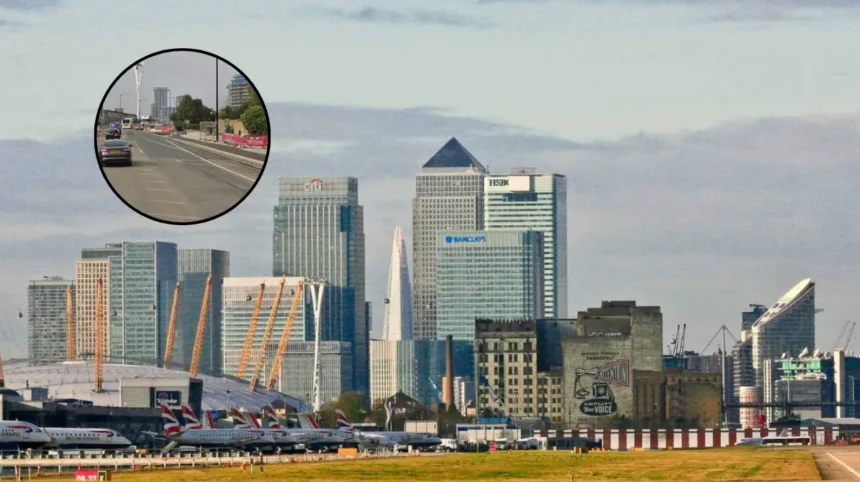
Newham (East London Times) October 9, 2026 – Residents living within the industrial corridor of east London are routinely inhaling “dirty dust” that settles continuously across their homes, vehicles, and pavements, according to local officials and community members. Green Party Councillor Rob Callender, who represents the Royal Victoria ward in the London Borough of Newham, raised the alarm after observing that the public realm around Silvertown and West Silvertown DLR station has become heavily caked in airborne particulate matter and industrial debris.
The affected district sits adjacent to active industrial sites, heavy commercial transport routes, and extensive development works along the Thames estuary. According to statements released by Councillor Rob Callender, the volume of grime in the area has reached levels that significantly compromise the daily quality of life for nearby households. Local residents report that particulate deposits accumulate rapidly on outdoor surfaces, window ledges, and vehicles, creating a perpetual blanket of dark grit across residential streets.
Why Are Residents Concerned About the Airborne Dust?
The physical intrusion of the debris has raised urgent health and environmental concerns among the local populace. Community members have expressed alarm over the potential long-term respiratory consequences of breathing fine industrial particulates on a daily basis. Families residing near the DLR station report being forced to keep windows sealed tight even during warm weather to prevent layers of dark soot from coating indoor furniture and flooring.
Beyond the immediate domestic inconvenience, the presence of persistent dust points to broader environmental management issues within Newham’s industrial zone. Environmental health advocates note that airborne dust from construction, material crushing, and heavy vehicle movements frequently contains fine particulate matter ($PM_{2.5}$ and $PM_{10}$), which can exacerbate existing health conditions such as asthma, cardiovascular issues, and general respiratory discomfort.
How Are Local Representatives and Authorities Responding?
In response to growing complaints from constituents, local representatives are seeking clearer accountability from industrial operators and local authorities. Councillor Callender has highlighted the visual and physical impact on public infrastructure, calling attention to the visible layers of waste coating pedestrian routes around transport hubs.
The responsibility for managing air quality and industrial emissions in the area is split across multiple regulatory entities:
- Newham Council: Responsible for street cleansing, local environmental health monitoring, and managing planning permissions for development sites.
- The Environment Agency: Responsible for regulating permitted industrial operations and enforcing compliance regarding emissions and dust suppression measures.
- Site Operators & Developers: Obligated under local planning frameworks and environmental law to implement mitigation measures, such as water spraying, vehicle wheel washing, and covered material storage.
Calls have been made for immediate site inspections, increased street washing operations by the local council, and stricter enforcement of mandatory dust suppression protocols on nearby commercial and construction premises.
Background of the Silvertown Industrial Corridor
Silvertown and West Silvertown have historically functioned as core industrial and logistics hubs for East London, situated along the north bank of the River Thames in the borough of Newham. Historically dominated by docks, manufacturing facilities, sugar refineries, and heavy industry, the area has undergone gradual urban transformation over recent decades.
However, unlike purely residential regeneration zones, Silvertown remains a mixed-use environment where modern residential apartment developments sit immediately adjacent to working wharves, concrete batching plants, waste transfer stations, and major transport infrastructure projects. The proximity of high-density housing to active industrial zones has created ongoing friction regarding noise, heavy goods vehicle (HGV) traffic, and airborne emissions. The Docklands Light Railway (DLR) network serves as a central transit link for thousands of commuters in the area, rendering the cleanliness and environmental health of public spaces around stations like Silvertown and West Silvertown a primary focal point for community well-being.
Prediction: How This Development May Affect Local Residents and Businesses
The escalating public scrutiny and official involvement surrounding dust pollution in Silvertown are likely to trigger several key outcomes for local stakeholders in the near to medium term:
- For Local Residents: Continued public campaign work may force local authorities to increase the frequency of high-pressure street washing and environmental monitoring around residential streets and transport hubs. If regulatory authorities intervene, residents may see stricter enforcement of dust suppression rules on local sites, potentially improving ambient air quality and reducing domestic property damage.
- For Nearby Industrial and Construction Operators: Businesses operating in the Silvertown and Royal Docks area are likely to face heightened scrutiny from Newham Council’s environmental health teams and the Environment Agency. Site managers may be required to invest in enhanced dust mitigation infrastructure—such as automated water misting systems, enclosed conveyor belts, and mandatory wheel-wash facilities for HGVs—to avoid statutory nuisance notices or operational delays.
- For Local Infrastructure and Planning: The issue could influence future planning approvals within Newham. Developers submitting planning applications for mixed-use or industrial developments along the river corridor may face tougher environmental conditions, requiring comprehensive air quality impact assessments and permanent dust monitoring equipment prior to commencing operations.