Key Points
- Operator of London Stadium LS185 has applied to Newham Council for the permit to organize up to 24 major non-sporting events on a yearly basis, which is twice as many events as it currently organizes – only 10.
- The application asks to allow an increase in peak attendance at concerts from 80,000 to 85,000 people on up to 8 days annually.
- It also asks to allow a reduction in noise control measures, making the limit for all major non-sporting events equal to 75 decibels, as well as organizing up to 4 days of consecutive concerts.
- In addition, it requests an increase in capacity for non-West Ham sports events to 62,500 in order to become the candidate for organizing the 2029 World Athletics Championships, while reducing the number of annual sport events from 87 to 70.
- It has been stated that the stadium faces losses of £19 million annually because of its expenses.
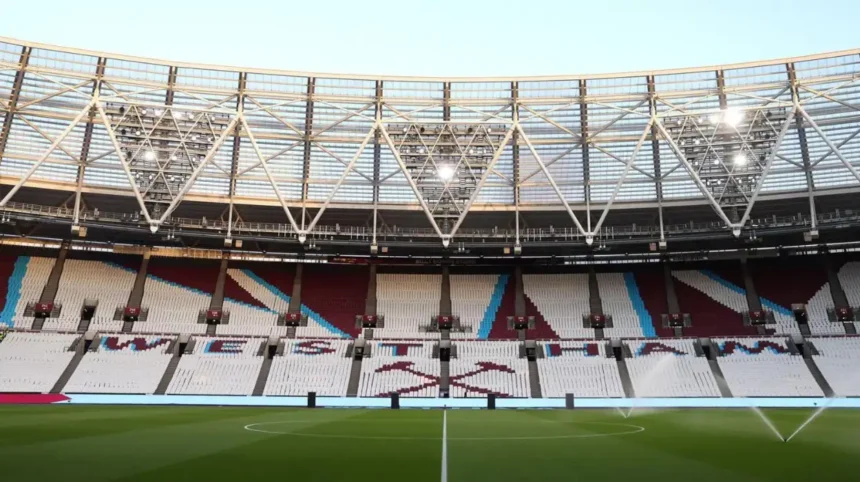
Stratford (East London Times) September 1, 2026 — London Stadium operator LS185 has formally submitted a planning application to Newham Council to significantly expand its schedule of live music concerts and major non-sporting events, seeking to address ongoing annual financial deficits and secure high-profile international hostings. Under reference number 26/01784/FUL, the venue management firm is seeking permission to increase its permitted non-sporting event allocation from 10 to 24 dates per calendar year. The proposal also includes requests to increase maximum event attendance, extend permitted consecutive event nights, adjust local noise limits, and amend sports hosting caps to bolster prospective bids for global athletic events.
- Key Points
- Why is London Stadium seeking to alter its current event restrictions?
- What changes are proposed for sound levels and sporting events?
- How do the proposed changes address the venue’s financial position?
- Background of the London Stadium Development
- Implications for East London Residents and Local Businesses
Why is London Stadium seeking to alter its current event restrictions?
According to statements included within the planning application submitted to local planning authorities, current operational restrictions have placed the venue at a disadvantage when bidding against rival sites across the capital. Under current planning conditions, the stadium is limited to 10 non-sporting events per year, capped at a maximum capacity of 80,000 attendees, with a restriction prohibiting events from running more than three consecutive nights.
As outlined in the official submission, venue management argues that these operational limits are increasingly restrictive, inhibiting the site’s capacity to compete effectively with other major London venues. The documentation notes that this frame of restriction has directly led to lost commercial opportunities, with the stadium failing to match the venue conditions offered elsewhere in the city. Specific artist tours cited within the application as having selected alternative venues due to these parameters include high-profile acts such as Jay-Z, Harry Styles, Beyoncé, and Bad Bunny, with bookings instead secured by locations such as Wembley Stadium and Tottenham Hotspur Stadium.
To address these limitations, LS185 is seeking authority to host non-sporting events across four consecutive nights. Furthermore, the venue proposes raising the maximum capacity ceiling from 80,000 to 85,000 spectators for up to eight of the requested 24 non-sporting event days per year.
What changes are proposed for sound levels and sporting events?
The application outlines specific structural modifications to acoustic caps and sporting event parameters to broaden commercial flexibility. Under existing permissions, sound emissions at the venue are capped at 75 decibels for six permitted annual events, with the remaining four events limited to a lower threshold of 65 decibels. The submitted plans request the establishment of a uniform 75-decibel limit across all 24 proposed non-sporting events to accommodate major live production standards.
Regarding athletic and field events, the plan requests an increase in the general spectator cap for non-football sporting events to 62,500. Under present permissions, attendance of 62,500 is restricted exclusively to home fixtures played by West Ham United Football Club, with all other sporting events capped at 60,000 attendees.
The planning statement highlights that establishing a higher uniform sports capacity is a vital prerequisite for the site’s intention to bid for the 2029 World Athletics Championships. To balance the requested increase in concert dates, the venue proposes reducing its total permitted annual sports event allocation from 87 to 70 days. Venue bosses confirmed that this reduction would not impact the schedule or operations of West Ham United fixtures. However, the venue is seeking explicit approval to class major boxing events under the 24 non-sporting event slots to permit larger crowds, referencing the attendance of 96,000 spectators recorded for the bout between Anthony Joshua and Daniel Dubois at Wembley Stadium in 2024.
How do the proposed changes address the venue’s financial position?
The planning application follows representations made by venue leadership to the Greater London Authority regarding the ongoing financial performance of the asset. During testimony delivered to the London Assembly, London Stadium Chair Lyn Garner stated that the venue’s operational losses have remained in the region of £19 million annually for an extended period.
Garner informed the assembly that fixed venue running costs regularly exceed the annual rent return generated through the tenancy agreement with West Ham United Football Club. Addressing event performance, Garner highlighted that the 2025/26 financial year represented a particularly difficult period for the venue’s commercial scheduling, as the site secured only two summer concerts. Management maintains that expanding the scope for non-sporting events represents a direct strategy to offset ongoing operational shortfalls.
Background of the London Stadium Development
The London Stadium, originally constructed as the Stadium at Queen Elizabeth Olympic Park for the London 2012 Olympic and Paralympic Games, was built at a primary construction cost of approximately £429 million. Following the conclusion of the Games, the venue underwent a multi-year conversion process costing over £320 million to transform the structure into a multi-purpose venue capable of hosting football, athletics, concerts, and major public events.
In 2013, West Ham United secured a 99-year lease as the primary sporting tenant, relocating from their historic Boleyn Ground home in 2016. Under the terms of the anchor tenancy agreement negotiated with the London Legacy Development Corporation (LLDC), West Ham United pays an indexed annual rent—originally set at £2.5 million per year—while the public sector retains responsibility for operational expenditures, pitch maintenance, seating conversion costs between sports and concert modes, and general facility upkeep.
To manage day-to-day operations, venue owner E20 Stadium LLP (a subsidiary of the Greater London Authority) appointed London Stadium 185 (LS185) as the dedicated operator. Over the subsequent decade, the costs associated with shifting the stadium’s retractable seating system between football fixtures, summer athletics, and concert configurations have contributed to sustained annual net losses for the public owner, prompting ongoing operational reviews and structural planning requests aimed at increasing commercial yield from non-sporting venue hires.
Implications for East London Residents and Local Businesses
The determination of planning application 26/01784/FUL by Newham Council carries direct consequences for nearby residential communities, local commerce, and municipal infrastructure across the Stratford area.
Impact on Local Residents
For residents living in the immediate vicinity of Queen Elizabeth Olympic Park, an increase from 10 to 24 non-sporting events annually would result in a more frequent schedule of large-scale public gatherings. The key areas of local operational impact include:
- Acoustic Environment: Adjusting sound limits to a uniform 75 decibels across all 24 potential event dates, alongside allowing four consecutive concert nights, will increase the cumulative acoustic profile of the stadium during peak summer months.
- Pedestrian and Crowd Density: Higher individual capacity caps—reaching 85,000 for peak concerts and 62,500 for non-premier sporting events—will elevate crowd movement along primary access routes, including the main footbridges connecting the venue to residential zones.
- Transport Operations: Increased event frequency will require more frequent implementations of local crowd management protocols around Stratford Station, Westfield Stratford City, and surrounding transit hubs.
Impact on Local Business and Regional Economy
Conversely, regional economic stakeholders, retail operators, and hospitality businesses around Stratford stand to experience distinct shifts in commercial volume:
- Hospitality Revenue: Increasing the annual event allocation provides local food, beverage, and accommodation providers with up to 14 additional high-capacity event days per year, increasing seasonal footfall.
- Venue Competitiveness: Expanding capacity parameters allows the venue to compete directly with Wembley Stadium and Tottenham Hotspur Stadium for multi-night international concert tours, retaining large-scale entertainment spend within the Borough of Newham.
- Public Sector Deficit Mitigation: If successful, higher venue operational revenues generated through expanded hosting rights may reduce the overall net operational burden historically borne by public funds via the Greater London Authority.