Key Points
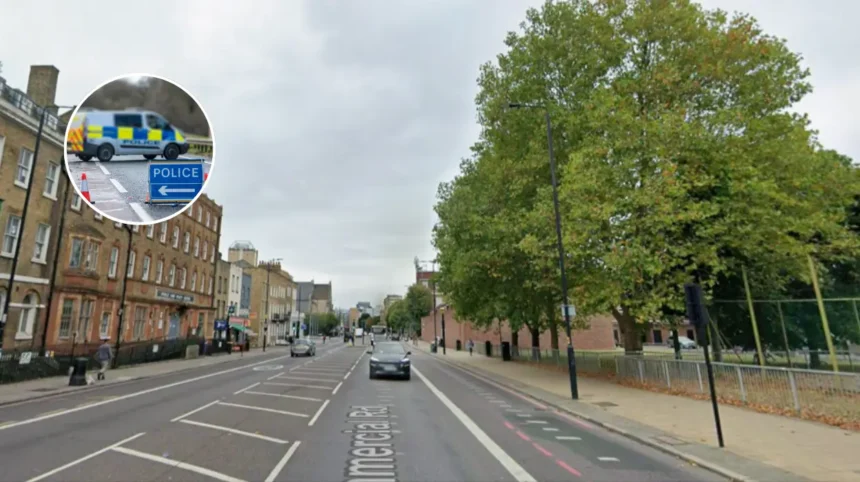
- The A13 Commercial Road was closed eastbound in the E1 area of Tower Hamlets, East London, due to an “emergency services incident” as stated by Transport for London (TfL).
- Police were on the scene managing the closure, with reports indicating significant disruption to traffic in the area.
- Transport for London (TfL) issued updates via social media and official channels, urging drivers to avoid the area and use alternative routes.
- The incident prompted calls from local media for the public to get in touch with pictures or updates to aid reporting.
- No specific details on the nature of the emergency services incident—such as whether it involved a collision, medical emergency, or other event—were immediately released by authorities.
- Eastbound traffic was affected primarily, with potential knock-on effects for westbound lanes and surrounding roads in Tower Hamlets.
- TfL’s statement highlighted the closure without providing a timeline for reopening, emphasising real-time updates via their platforms.
- Local news outlet London Now covered the story as a developing incident, focusing on the police involvement and public appeals for information.
- The closure occurred amid typical rush-hour or peak traffic patterns, exacerbating delays for commuters in this busy arterial route.
Tower Hamlets (East London Times) February 6, 2026 – Police closed the A13 Commercial Road eastbound in the E1 area following an emergency services incident, Transport for London (TfL) has confirmed, causing major disruptions for motorists in East London this afternoon.
- Key Points
- What Caused the A13 Commercial Road Closure?
- When and Where Did the Incident Unfold?
- Who Responded to the Emergency Services Incident?
- Why Was the Full Eastbound Closure Necessary?
- How Has Traffic Been Affected in Tower Hamlets?
- What Are TfL’s Official Updates on Reopening?
- Which Alternative Routes Should Drivers Use?
- What Do Witnesses Say About the Scene?
- Has This Happened Before on the A13?
- What Is the Latest Status of the Incident?
- Broader Implications for East London Commuters
What Caused the A13 Commercial Road Closure?
As reported by the London Now news team, the closure stemmed from an unspecified “emergency services incident” on the A13 Commercial Road eastbound in Tower Hamlets’ E1 postcode. TfL stated explicitly in their traffic update: “A13 Commercial Road closed eastbound in E1 Tower Hamlets due to ’emergency services incident’.” No further elaboration on the incident’s nature was provided in initial reports, leaving motorists and residents awaiting official clarification from the Metropolitan Police or London Ambulance Service.
The decision to close the road fell to police, who cordoned off the affected section to facilitate emergency response efforts. London Now urged the public: “Get in touch with a picture or update,” highlighting the outlet’s reliance on citizen journalism for real-time developments. This appeal underscores the fast-evolving situation, with no confirmed reports of injuries, collisions, or hazardous materials at the time of publication.
When and Where Did the Incident Unfold?
The incident prompted the closure on Commercial Road, a key stretch of the A13 in Tower Hamlets, specifically the E1 area, on Friday, February 6, 2026, around midday. This arterial route links central London to Essex, making it a vital corridor for thousands of daily commuters. TfL’s alert pinpointed the eastbound direction, advising: “Drivers are urged to avoid the area.”
Tower Hamlets, known for its dense population and heavy traffic volumes, saw immediate congestion spilling onto adjacent roads like Whitechapel Road and Cable Street. As per London Now’s coverage, the closure was enacted swiftly by police to prioritise emergency services access. Historical context from similar incidents on the A13 reveals frequent disruptions in this vicinity due to its urban density and high vehicle flow.
Who Responded to the Emergency Services Incident?
Police from the Metropolitan Police Service took charge of the scene, implementing the full eastbound closure. TfL, as the overseeing transport authority, disseminated public updates via their website and X (formerly Twitter) account, stating the reason as an “emergency services incident.” While specific emergency services—such as London Ambulance Service, London Fire Brigade, or Highways England—were not named in initial dispatches, their involvement is implied by TfL’s phrasing.
London Now, in their article titled “Commercial Road A13 closed by police – Incident recap,” positioned themselves as the primary on-the-ground reporters, calling for public contributions. No named individual journalists were attributed in the piece, but the outlet’s news desk coordinated the coverage. Commuters and local witnesses emerged as key informal sources, with TfL serving as the official voice.
Why Was the Full Eastbound Closure Necessary?
The necessity arose from the exigencies of an emergency services operation, where unrestricted access for ambulances, fire engines, or police vehicles is paramount. TfL explained: “Due to ’emergency services incident’, says TfL,” indicating a protocol-driven response rather than a mere traffic management issue. In East London’s congested network, partial closures often prove insufficient, leading to full shutdowns to avert secondary hazards.
Police assessments likely factored in public safety, potential for crowds, and the road’s strategic importance. London Now recapped the police-led action without speculation, maintaining neutrality. Past A13 incidents, though not directly cited here, frequently involve similar measures to mitigate risks during peak hours.
How Has Traffic Been Affected in Tower Hamlets?
Motorists faced severe delays, with eastbound A13 traffic grinding to a halt from the closure point onward. TfL recommended diversions via local roads, but knock-on congestion affected nearby routes in E1. Public transport users on buses like the 25, 205, or D3 lines—serving Commercial Road—experienced rerouting or curtailment, as per standard TfL protocols during such events.
London Now’s recap noted the broader implications for Tower Hamlets commuters, many of whom rely on the A13 for access to the City of London. Delivery drivers and HGVs, common on this freight-heavy road, reported amplified disruptions. Real-time apps like Citymapper and Google Maps flagged severe delays, urging alternatives like the Underground’s District or Hammersmith & City lines.
What Are TfL’s Official Updates on Reopening?
TfL has not provided a reopening timeline, focusing instead on live advisories. Their statement remains: “A13 Commercial Road closed eastbound in E1 Tower Hamlets due to ’emergency services incident’.” Motorists are directed to tfl.gov.uk/status for updates, with X posts reinforcing avoidance of the area.
As reported by London Now, TfL’s communication emphasises patience and compliance with police directions. In comparable past closures, resolutions have ranged from hours to a full day, depending on incident severity.
Which Alternative Routes Should Drivers Use?
TfL suggests avoiding the area entirely, but viable detours include The Highway (A1203) northward or heading south via Jamaica Road toward the Rotherhithe Tunnel. For eastbound travel, the Blackwall Tunnel or Silvertown Tunnel offer longer but potentially faster options amid the snarl-up.
London Now implied local knowledge would aid navigation, appealing for updates. Apps and radio traffic services like LBC provide granular guidance, accounting for Tower Hamlets’ one-way systems.
What Do Witnesses Say About the Scene?
Public input remains crucial, with London Now soliciting: “Get in touch with a picture or update.” No verified witness statements have surfaced yet, but social media chatter describes police tape, emergency vehicles, and stationary queues.
Journalistic protocol, as per London Now, prioritises authenticated contributions to build the recap. Anonymised reports may follow as the story develops.
Has This Happened Before on the A13?
The A13 Commercial Road has a history of closures due to emergencies, collisions, and protests in Tower Hamlets. While specifics vary, TfL’s recurrent alerts highlight its vulnerability. Recent East London incidents, though unrelated, underscore ongoing infrastructure strains.
London Now’s framing positions this as a standard yet disruptive event.
What Is the Latest Status of the Incident?
As of this reporting, the closure persists, with police maintaining control and TfL monitoring. Further details on the emergency services incident are pending official release. London Now continues to track developments, inviting public engagement.
Motorists should check live sources, as situations evolve rapidly.
Broader Implications for East London Commuters
Recurring A13 disruptions strain Tower Hamlets’ transport resilience, impacting workers, shoppers, and residents. TfL’s role in communication proves vital, though public frustration mounts without swift resolutions.