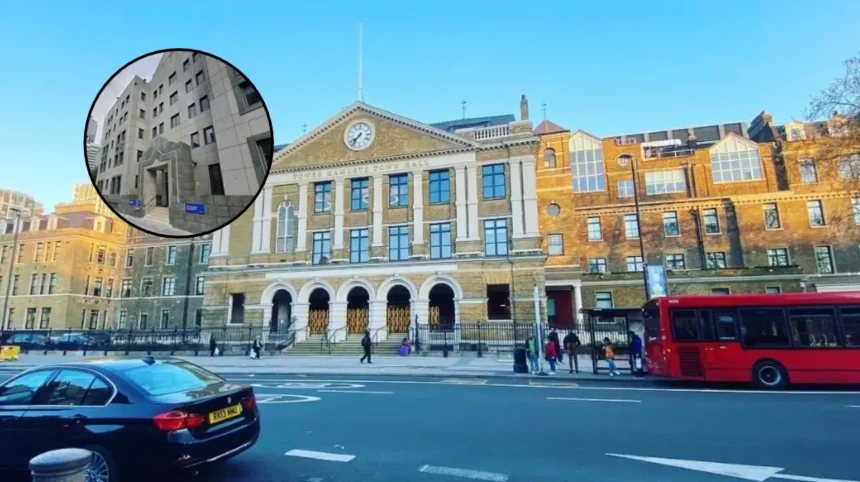
Key Points
- Tower Hamlets Council has backed a scheme to convert four vacant commercial buildings into temporary accommodation for homeless families.
- The former office spaces at 191, 193, 195, and 197 Marsh Wall in Canary Wharf are set to be transformed into 180 self-contained residential flats.
- The planned layout includes 167 two-bedroom units and 13 three-bedroom properties, catering specifically to larger families.
- Local authority leadership confirmed the borough secured a 10-year lease on the sites to curb soaring local homelessness and escalating temporary housing bills.
- Executive Mayor Lutfur Rahman highlighted that the initiative will keep displaced residents within their local community, reducing out-of-borough relocations.
- Councillor Abu Talha Chowdhury pointed out that local authorities across London face unprecedented financial pressure due to rising emergency housing expenses.
Canary Wharf (East London Times) October 30, 2026 – Four vacant commercial office structures located in Canary Wharf are slated to be converted into 180 residential units for local homeless families under a major initiative approved by Tower Hamlets Council.
- Key Points
- How Will the Marsh Wall Scheme Help Address the Local Homelessness Crisis?
- What Are the Financial and Strategic Implications for Tower Hamlets Council?
- Background of the Commercial-to-Residential Development
- Prediction: How This Development Can Affect the Local Community and Homeless Families
The development plan targets four adjacent commercial properties positioned at 191, 193, 195, and 197 Marsh Wall, situated near the South Quay DLR station. According to details released by the local authority, the comprehensive adaptive reuse scheme will yield 167 two-bedroom apartments alongside 13 three-bedroom family units. The initiative aims to provide secure, temporary housing for local residents currently without permanent accommodation.
As reported by Ruby Gregory of MyLondon, Tower Hamlets Council confirmed it has secured a 10-year lease on the four commercial sites. The council’s cabinet formally approved the proposals, granting officers authority to conclude lease negotiations, finalize independent rental valuations, and hire required technical consultants and structural contractors to carry out the retrofitting works.
How Will the Marsh Wall Scheme Help Address the Local Homelessness Crisis?
Homelessness figures have risen steadily across Greater London, with surrounding municipal statistics indicating an annual increase of approximately 11 per cent in households requiring emergency shelter. Tower Hamlets Council currently supports over 3,100 households in temporary accommodation, including around 2,700 families with children.
As reported by Vaishnavi Pandey of Secret London, Executive Mayor Lutfur Rahman stated that “every family deserves a safe and secure place to live close to their communities, schools and support networks.” Mayor Rahman explained that acquiring the commercial blocks for municipal utility will generate roughly 180 family-sized homes, allowing vulnerable households to maintain continuity in employment, education, and social care links without being relocated to distant regions.
As documented by local media outlet News on the Block, Mayor Rahman further emphasized the broader social benefits of the transaction, stating that
“keeping homeless families in Tower Hamlets means children are close to their schools and friends, and residents are close to their workplaces, healthcare and family networks. You can’t put a price on the wider social, educational and health benefits of keeping people in their communities.”
Previous regional housing investigations highlighted how high commercial rental rates in East London forced local authorities to seek out-of-borough placements. In several cases, displaced residents were placed dozens of miles away from their native boroughs due to a regional deficit in affordable self-contained flats. Municipal leaders intend for the Marsh Wall residential conversion to directly reduce reliance on out-of-area hotel placements and costly emergency bed-and-breakfast arrangements.
What Are the Financial and Strategic Implications for Tower Hamlets Council?
Local authorities across London are struggling with severe budget constraints driven by rising temporary accommodation expenditures. The repurposing of unused commercial space offers a strategic solution to convert vacant real estate into public resources while stabilizing municipal finances.
As reported by Vaishnavi Pandey of Secret London, Councillor Abu Talha Chowdhury, cabinet member for finance, assets and governance, stated that local authorities across London are experiencing “unprecedented pressures” caused by accelerating homelessness and commercial temporary accommodation costs. Councillor Chowdhury noted that the Marsh Wall development represents a strategy to make efficient, practical use of existing urban structures while ensuring better value for local taxpaying residents.
By converting 191–197 Marsh Wall into long-term municipal leases, Tower Hamlets Council aims to reduce its reliance on nightly emergency accommodation rates. While full acquisition prices and conversion schedules have not been publicly disclosed, council officers have been empowered to accelerate preparatory work to bring all 180 homes online.
Background of the Commercial-to-Residential Development
The four commercial properties situated at 191, 193, 195, and 197 Marsh Wall sit in a key commercial district of Canary Wharf. In recent years, changing workplace trends and remote-working models across London have increased office vacancy rates across various traditional financial hubs. Simultaneously, the supply of affordable multi-bedroom residential properties across East London has tightened significantly.
This structural divergence has prompted local authorities to investigate office-to-residential adaptive reuse projects. converting commercial floorspace into residential layouts allows municipal councils to expand housing inventories rapidly without the lengthy timelines required for ground-up construction projects. Securing a 10-year lease structure enables Tower Hamlets Council to establish predictable, long-term housing management operations directly within the borough’s geographical boundaries.
Prediction: How This Development Can Affect the Local Community and Homeless Families
The conversion of the Marsh Wall office blocks will directly impact several key demographic groups within Tower Hamlets:
- Homeless Families in Emergency Accommodation: Families facing displacement will gain immediate stability by securing two- and three-bedroom homes within their native borough. Staying in Canary Wharf prevents disruption to children’s schooling, minimizes travel time to local jobs, and preserves access to vital community support networks and healthcare providers.
- Tower Hamlets Taxpayers and Local Authority Budgeting: Shifting away from expensive nightly hotel bookings toward long-term lease models will stabilize council expenditures. This cost management strategy protects municipal services from emergency budget cuts triggered by runaway housing relief spending.
- The Surrounding Canary Wharf Neighborhood: Transforming four underutilized office buildings into family homes brings year-round residential activity to Marsh Wall. This transition supports nearby retail, transit, and public amenities while offering a practical model for commercial-to-residential urban redevelopment in central London.