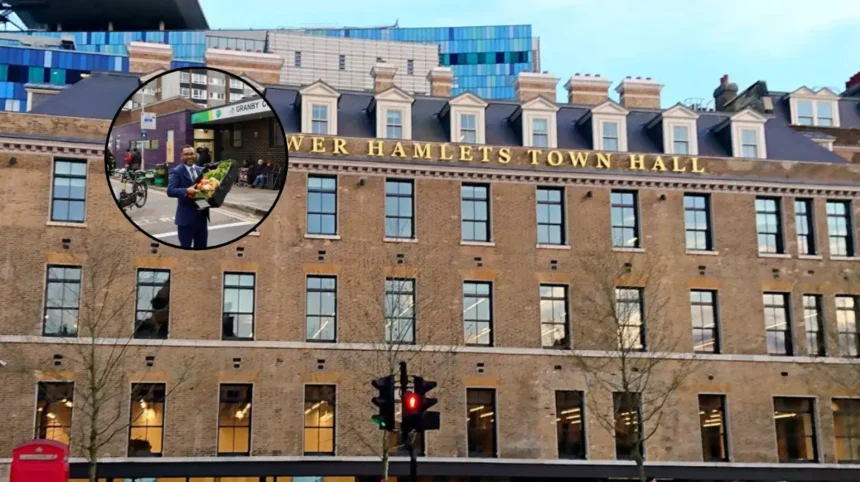
Key Points
- Tower Hamlets Council Expansion: Tower Hamlets Council has announced a comprehensive expansion of family financial support measures during Challenge Poverty Week, running from 12 to 18 October.
- Child Poverty Demographics: The borough currently records the highest child poverty rate in the United Kingdom after accounting for housing costs, alongside ranking as the fourth most deprived local authority in London.
- Universal Free School Meals: Tower Hamlets stands as the only local authority in the country providing universal free school meals to both primary and secondary school pupils, having delivered over 10 million meals and saving families approximately £550 per child annually.
- Clothing and Educational Grants: School clothing grant schemes have been expanded with vouchers ranging between £50 and £150 for up to 7,000 pupils each year, alongside more than £5.7 million distributed via Education Maintenance Allowance and University Bursary schemes to over 6,300 young people since 2022.
- Mayoral Commitment: Executive Mayor Lutfur Rahman and Deputy Mayor Maium Talukdar emphasised a dual strategy of immediate relief alongside tackling the systemic root causes of financial hardship.
Tower Hamlets (East London Times) October 20, 2026 – Tower Hamlets Council has officially launched an expanded suite of targeted financial support measures designed to alleviate severe economic pressure on local families, coinciding with the nationwide Challenge Poverty Week running from 12 to 18 October. The strategic push addresses acute financial hardship in a borough that currently holds the highest rate of child poverty in the United Kingdom once housing costs are factored in, whilst simultaneously maintaining its position as the fourth most deprived local authority across Greater London.
Executive Mayor of Tower Hamlets Lutfur Rahman confirmed the council’s strategic direction, stating that
“Poverty affects every aspect of people’s lives, from health and education to employment and housing. Challenge Poverty Week is an important opportunity to raise awareness, but it is also a reminder that action matters.”
Rahman further detailed the administrative objective behind the latest surge in resource allocation, highlighting that
“We are investing in support that puts money back into residents’ pockets today, while taking meaningful steps to tackle the underlying causes of poverty for the future.”
The operational framework of the council’s relief strategy centers on reducing everyday household expenditure through direct, institutional interventions. Principal amongst these provisions is the borough’s pioneer universal free school meals initiative. Tower Hamlets remains the sole local authority nationally to guarantee free hot lunches to all primary and secondary school pupils regardless of household income thresholds. Official records show that more than 10 million meals have been served under this policy to date, a provision estimated to save local families approximately £550 per individual child on an annual basis.
Beyond nutrition, the local authority has widened access to its school clothing grant scheme. Under the revised criteria, the council is distributing financial vouchers valued between £50 and £150 to assist up to 7,000 pupils each year with the costs of uniform and essential academic apparel. Additionally, post-secondary and higher education financial barriers are being targeted through relief schemes reinstated in recent years.
Since reintroducing the Education Maintenance Allowance (EMA) and University Bursary schemes in 2022, Tower Hamlets Council has disbursed in excess of £5.7 million in direct grants. This financial backing has directly assisted over 6,300 young residents to remain in full-time education or pursue higher qualifications without incurring insurmountable debt or immediate financial strain.
Deputy Mayor and Cabinet Member for Tackling Inequality and the Cost of Living Maium Talukdar underlined the human impact driving these financial commitments, stating that
“We know that behind every statistic is a person or family trying to make ends meet. That’s why we’re focused on providing practical support that helps residents now, while making sure no one misses out on help they may be entitled to.”
In tandem with educational support, the local authority continues to run its dedicated Crisis and Resilience Fund. This mechanism is designed to issue emergency cash injections and material assistance to residents facing sudden financial shocks, whilst simultaneously offering long-term guidance to help households construct lasting financial stability. Full access criteria and application portals for these measures have been centralized via the council’s official web portal.
What Is the Background of Poverty Relief and Financial Hardship in Tower Hamlets?
Tower Hamlets has long stood as one of the most starkly dynamic boroughs in the United Kingdom, characterized by deep structural economic contrasts. Situated immediately adjacent to Canary Wharf and the City of London—two of the world’s primary global financial centers—the borough paradoxically experiences some of the most concentrated pockets of social and economic deprivation in Western Europe.
The socio-economic landscape of Tower Hamlets is heavily dictated by housing economics. While gross earnings for workers employed within the borough are elevated due to the presence of multinational corporate headquarters, residential communities face severe housing cost burdens. When taking basic housing costs—such as private market rents, social housing rates, and energy tariffs—into account, child poverty figures within the borough consistently outpace all other local authority areas across England and Wales.
Over the past decade, local governance strategies have increasingly focused on mitigating the direct impacts of national macroeconomic challenges, including inflationary spikes and real-wage stagnation. The reintroduction of localized Education Maintenance Allowances and dedicated university bursaries in 2022 marked a direct administrative departure from broader national trends where similar discretionary grants had been scaled back or abolished. By anchoring municipal spending around childhood nutritional access, educational equipment, and post-16 financial support, Tower Hamlets Council has sought to erect a localized welfare buffer to shield vulnerable residents from systemic poverty.
What Is the Prediction for How These Support Measures Will Affect Local Residents and Families?
The continuation and expansion of Tower Hamlets Council’s financial support frameworks will directly impact thousands of low-income and working-class families across the borough in both the immediate and medium term.
For the targeted demographic—predominantly multi-child households, single parents, and young residents in post-compulsory education—the presence of universal meal schemes and uniform vouchers represents an immediate, predictable reduction in monthly household overheads. A savings figure of £550 per child annually on meals, combined with clothing grants up to £150, provides direct relief that liberates household income for critical expenditure such as heating, utility bills, and food security outside of school hours. This immediate capital retention is likely to lower household debt accumulation and decrease reliance on high-interest emergency loans among low-income residents.
From an educational perspective, the sustained allocation of over £5.7 million via the Education Maintenance Allowance and University Bursaries is anticipated to improve retention rates for 16-to-19-year-olds in further education and boost university enrolment figures among first-generation students from disadvantaged backgrounds. By removing immediate financial barriers to continuing education, the scheme aims to break multi-generational poverty cycles, enhancing long-term employment prospects and earning potential for local youth.
However, the sustained efficacy of these interventions will remain tightly bound to macroeconomic conditions and housing market pressures. While municipal aid provides a crucial safety net, high private sector rental costs in inner East London will continue to place structural pressure on household budgets. If housing costs remain on an upward trajectory, the financial buffer provided by local authority grants may be partially absorbed by rising living expenses, necessitating further sustained municipal investment and broader national policy coordination to achieve long-term economic resilience for the borough’s population.