Key Points
- Industrial Action Ballot Underway: Nearly 120 health visitors and support staff in East London are voting on strike action following disputes over workplace restructuring and contract terms.
- Employer Involved: The ballot directly concerns staff employed by Tower Hamlets GP Care Group (THGPCG), a primary care provider operating local community health contracts.
- Core Grievance: Workers are demanding full alignment with standard NHS Agenda for Change pay scales, terms, and conditions, warning against the creation of a two-tier workforce.
- Previous Plans Backtracked: Protests and union negotiations recently forced THGPCG to scrap planned redundancies, mandatory job re-interviews, and proposed staffing reductions.
- Patient Scope: The health visiting service covers early years provisions (zero to five years old), serving a population of nearly 20,000 young patients across Tower Hamlets.
- Key Dates: The ballot for industrial action opened following consultations and is scheduled to close on 2 September.
Tower Hamlets (East London Times) August 12, 2026 – Nearly 120 health visitors and support workers across East London have commenced a ballot for industrial action following a breakdown in negotiations over service restructuring and contractual terms with their employer, Tower Hamlets GP Care Group (THGPCG). The trade union Unite confirmed that the voting process will run through to 2 September, driven by concerns that the healthcare provider is refusing to guarantee full parity with standard NHS Agenda for Change pay structures and working conditions.
- Key Points
- Why Are Tower Hamlets Health Visitors Balloting for Industrial Action?
- What Statements Have Union Leaders and Officials Issued Regarding the Dispute?
- What Are the Key Demands Raised by Healthcare Staff?
- Background of the Particular Development
- Prediction: How This Development Can Affect Young Families and Healthcare Delivery in Tower Hamlets
Why Are Tower Hamlets Health Visitors Balloting for Industrial Action?
The decision to launch a strike ballot follows months of friction regarding a proposed full-service restructure of the borough’s zero to five years health visiting service.
As reported by union representatives from Unite, the dispute centres on the refusal of THGPCG to commit to full Agenda for Change terms for all current and future personnel within the service, which caters to approximately 20,000 infants and young children in Tower Hamlets.
While initial worker resistance successfully pressured management to abandon plans involving compulsory redundancies, the requirement for staff to reinterview for existing roles, and steep staffing level reductions, the core contractual issues remain unresolved.
Union leaders maintain that without explicit commitments to universal NHS pay alignment, support staff remain vulnerable to inferior employment terms, risking the creation of an unequal internal workforce structure.
What Statements Have Union Leaders and Officials Issued Regarding the Dispute?
Commenting on the ongoing ballot, Unite general secretary Sharon Graham stated that
“by failing to commit to NHS Agenda for Change for all workers, THGPCG is all but admitting that it is planning to create a two-tier workforce on inferior pay, terms and conditions. Unite will not allow this to happen – these workers have Unite’s full support.”
Detailing the position of the frontline staff, Unite regional officer Gary Boodna stated that
“these are hard-working staff dedicated to providing the best possible care to thousands of young families across Tower Hamlets. They are being forced down the road of taking strike action to prevent THGPCG from turning them into second class employees.”
Gary Boodna further noted that
“strikes can still be avoided but this will require THGPCG to fully commit to Agenda for Change for both health visitors and support staff.”
What Are the Key Demands Raised by Healthcare Staff?
The workforce has set out clear terms required to avoid potential strike action across the borough’s health visiting units:
- Universal Agenda for Change Alignment: Bringing all support staff who are currently outside standard NHS contracts onto full Agenda for Change pay rates and conditions.
- Job Evaluation Review: Committing to an immediate review of health visitor roles under the official NHS Agenda for Change job evaluation scheme, following national recognition by the NHS Staff Council that health visitor pay banding is currently inaccurate for many positions.
- Protection Against Workload Escalation: Establishing permanent guarantees that future restructuring will not reintroduce staffing reductions that compromise practitioner safety or patient care standards.
Explore More Tower Hamlets News
Tower Hamlets Running Water Crisis: Poplar HARCA Outage Hits East London 2026
Dr Alison Arnaud Leads New City College Tower Hamlets 2026
Background of the Particular Development
The current impasse represents a significant escalation in an ongoing operational dispute between community healthcare staff and Tower Hamlets GP Care Group. THGPCG, a community interest company formed by local general practices, manages delivered care contracts commissioned outside direct NHS Trust administration.
Trouble initially surfaced when THGPCG unveiled a formal consultation detailing a widespread restructure of early years health visiting provisions across Tower Hamlets.
The original management proposals outlined severe staffing cutbacks, potential redundancies, and a process requiring existing health visitors to re-apply for their current roles.
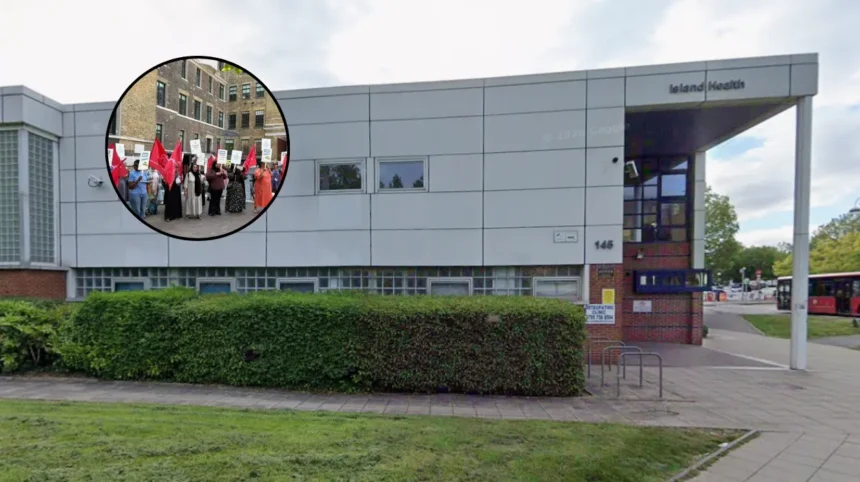
Following formal consultations and organised public protests by affected staff last month, THGPCG agreed to withdraw the most severe aspects of the restructure—specifically scrapping redundancy threats and mandatory job re-interviews that staff warned would create unmanageable workload spikes and put vulnerable child health outcomes at risk.
However, the resolution of structural redundancies exposed underlying contractual discrepancies. A proportion of support staff within the service remain on non-standard, independent contracts rather than national NHS Agenda for Change scales.
Furthermore, national developments overseen by the NHS Staff Council have acknowledged widespread discrepancies in how health visitor roles are banded across primary care, prompting local demands for formal job re-evaluations. When management declined to offer binding contractual guarantees on these fronts, Unite initiated the industrial action ballot closing on 2 September.
Prediction: How This Development Can Affect Young Families and Healthcare Delivery in Tower Hamlets
If the ballot resolves in favour of industrial action and a agreement is not reached prior to the deadline, the primary impact will be felt directly by families with young children residing within the London Borough of Tower Hamlets.
Health visitors carry out crucial home visits, developmental checks, safeguarding assessments, and maternal mental health reviews for nearly 20,000 infants aged zero to five.
Work stoppages or reduced staffing coverage would inevitably lead to postponed developmental checks, delayed identification of early childhood health conditions, and reduced support for mothers experiencing postnatal health difficulties.
A disruption in early years community care frequently creates a secondary impact on acute local health services.
Without routine health visitor monitoring, routine parental inquiries and manageable early-stage childhood ailments are likely to be diverted to local GP surgeries and Emergency Departments at Royal London Hospital, increasing pressure on urgent care facilities across East London.
Contractual uncertainty and pay disparities risk accelerating staff turnover within an already stretched community health sector.
If support staff and health visitors perceive local terms to be inferior to neighboring NHS Foundation Trusts, Tower Hamlets may face recruitment challenges, ultimately compounding workload pressure on the remaining clinical staff over the medium to long term.