Key Points
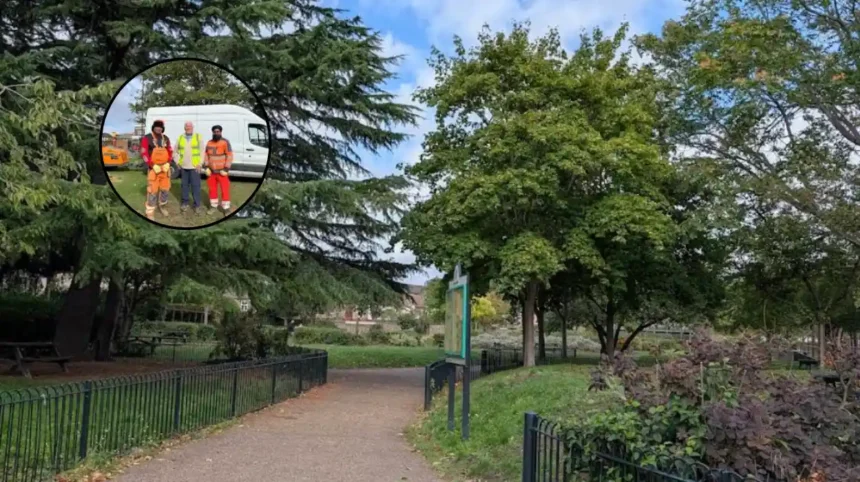
- Phase One Completion: The initial stage of comprehensive restoration and infrastructure works at Langthorne Park in Leytonstone has officially concluded ahead of schedule.
- Festival Readiness: Infrastructure delivery by Waltham Forest Council was deliberately fast-tracked to support the annual Langthorne Park Festival on Saturday, 13 June 2026.
- Accessibility Enhancements: Major structural adjustments include the introduction of step-free street entry and significantly streamlined pedestrian and cyclist pathways.
- Environmental Infrastructure: Integration of sustainable features, including a new functional rain garden to absorb car park runoff, expanded tree pits, and climate-resilient flora.
- Community and Artistic Collaboration: Upgrades feature youth-designed public art, permanent outdoor board games, and multi-agency youth project apprenticeships.
- Future Developments Outlined: Subsequent stages planned for later this summer include a pavilion-integrated café hatch, emergency medical infrastructure, and custom park signage.
Leytonstone (East London Times) June 17, 2026 – The London Borough of Waltham Forest has confirmed the successful completion of the first phase of its multi-year environmental and infrastructure regeneration project at Langthorne Park. The development was completed immediately prior to the open-air Langthorne Park Festival on June 13, 2026, which served as the public unveiling for the modernised municipal space. According to corporate statements issued by the local authority, the extensive physical overhauls were specifically executed to improve spatial openness, lower barriers to physical accessibility, and introduce sustainable climate-resilient landscapes. The project was executed under the design direction of Jonathan Cook Landscape Architects (JCLA), using a blended funding framework comprising central government allocations alongside localized developer contributions.
- Key Points
- What Specific Infrastructure Overhauls Were Completed In Phase One?
- How Do The Upgrades Address Climate Resilience And Biodiversity?
- What Educational And Youth Art Partnerships Were Developed?
- What Subsequent Upgrades Are Planned For Phase Two This Summer?
- Background of the Park Restoration Scheme
- Future Prediction and Impact Analysis
What Specific Infrastructure Overhauls Were Completed In Phase One?
As detailed in public planning registries and verified by municipal announcements, the first phase focused heavily on spatial de-cluttering and pedestrian optimization near the Birch Grove boundary.
Contractors systematically dismantled a series of restrictive interior architectural barriers that historically fragmented the public grounds.
This structural clearance involved the total removal of internal fencing, redundant perimeter railings, and an outdated timber pergola that had fallen into disrepair.
The spatial layout was further modified to separate human traffic from maintenance logistics. A highly condensed, low-impact car park was established exclusively for on-site staff and municipal park teams, moving vehicle storage away from primary pedestrian areas. Simultaneously, a dedicated storage facility was built to house groundskeeping machinery and public maintenance tools.
To encourage active travel patterns within the Leytonstone locality, the council installed extensive new cycle parking facilities directly adjacent to the main thoroughfare.
How Do The Upgrades Address Climate Resilience And Biodiversity?
According to technical specifications published on the local authority’s “Let’s Talk Waltham Forest” civic portal, civil engineering works within the park prioritised urban drainage and climate adaptation. A key installation is the newly engineered rain garden situated to collect surface water runoff directly from the newly compacted car park and the primary park entrance.
This low-lying, biologically active drainage basin is designed to naturally filter pollutants and slow down heavy stormwater discharge into the local sewer system.
Furthermore, the horticultural teams overhauled the surrounding green space by introducing an expanded botanical matrix. The updated planting schemes feature robust, native, and naturalised perennial species selected for their capability to withstand intense seasonal fluctuations, including elevated regional temperatures and prolonged summer humidity.
To secure the long-term health of the park’s mature canopy, tree pits throughout the entrance area were substantially enlarged. This optimization increases underground root volume, expands natural rainwater absorption zones, and mitigates soil compaction.
What Educational And Youth Art Partnerships Were Developed?
As reported by Community Reporter Robyn Bennett of the East London and West Essex Guardian Series, the physical environment integrates multiple layers of community-produced public art and dedicated youth installations.
The council partnered with the local creative hub, Blackhorse Workshop, and the Langthorne Park Youth Club to restore missing elements of the park’s visual design.
This initiative directly led to the installation of custom footway insets, which permanently replace historical cast-iron pieces that had been stolen, alongside repaired mosaic pathways.
Additional artistic interventions include large-scale murals painted on municipal storage containers, executed in coordination with the urban arts collective Wood Street Walls, alongside original poetry affixed directly to secondary boundary fencing.
To promote intergenerational recreation, small metal panels featuring classic board games have been permanently bolted to the existing concrete seating within the park’s open-air amphitheatre.
Administrators confirmed that the educational scope of the park has been formally extended via a newly constructed outdoor Forest School learning zone. Situated within the established wooded grove adjacent to the public basketball courts, the specialized pedagogical space will be managed on an operational basis by the environmental education group, The Hive.
What Subsequent Upgrades Are Planned For Phase Two This Summer?
Municipal documents indicate that phase one functions as the baseline for a wider suite of upcoming adjustments scheduled to commence later in the summer season.
The upcoming structural phase will focus primarily on upgrading the central Pavilion building. A dedicated café hatch will be cut into the exterior brickwork of the Pavilion to facilitate the commercial sale of snacks, hot beverages, and refreshments during public events.
Safety infrastructure will also be bolstered by the mounting of an automated external defibrillator (AED) on the exterior of the Pavilion for public access during emergencies.
Visual upgrades will include the hanging of festoon lighting spans between the street entrance and the main building, alongside standard unified wayfinding signage for the Toy Library and Forest School. Blackhorse Workshop is also finalizing a unique, youth-designed Langthorne Park community flag to be hoisted on the central flagpole.
Explore More Waltham Forest News
Council Orders Unlicensed Walthamstow Temple to Close: Walthamstow 2026
Waltham Forest Greens Reveal Rotating Leadership Model for New Council: Waltham Forest 2026
Background of the Park Restoration Scheme
The current restoration of Langthorne Park is the direct result of a multi-year civic engagement framework initiated by the London Borough of Waltham Forest to address shifting urban demands and community safety concerns.
Historically, sections of the park—particularly near the unlit pathways and dense, overgrown shrubbery—had faced ongoing challenges regarding anti-social behavior and a perceived lack of natural surveillance.
In response, the council commissioned Jonathan Cook Landscape Architects to draft a master plan rooted in five primary structural concepts, generated through iterative public workshops, localized surveys, and Area Framework consultations.
Financially, the transformation of the site does not rely on local council tax allocations alone. Funding streams were secured by pooling capital from the central government’s UK Shared Prosperity Fund (UKSPF)—an initiative designed to replace European Union structural funding with targeted domestic community investment—alongside Section 106 and Neighbourhood Community Infrastructure Levy (CIL) contributions paid by private property developers building within the borough.
Additionally, specific grants were drawn from the Suitable Alternative Natural Greenspaces (SANGS) fund, which explicitly dictates that financial resources must be utilized to improve access to nature, ease recreational pressure on protected natural habitats, and enhance localized biodiversity.
To build local economic capacity alongside physical improvements, the project framework mandated that Blackhorse Workshop CIC create 10 short-term, paid creative apprenticeships, providing young local residents with direct employment experience in carpentry, public design, and fabrication.
Future Prediction and Impact Analysis
The strategic completion of phase one, paired with upcoming phase two installations, is projected to alter how the local Leytonstone population utilizes this public infrastructure.
For families, young children, and local educators, the opening of the purpose-built Forest School zone under the management of The Hive will provide immediate, highly localized access to accredited outdoor education, removing the logistical need to transport students outside the urban borough for nature-based learning.
For elderly residents and individuals with mobility impairments, the removal of internal barriers and the introduction of true step-free access from the street will change the park from a restrictive layout into an accessible space.
This structural shift is highly likely to increase daytime usage among demographic groups that previously avoided the park due to navigation difficulties.
From a public safety and commercial perspective, the introduction of the Pavilion café hatch, permanent festoon lighting, and clear sightlines will alter the park’s late-afternoon atmosphere.
Increased foot traffic driven by commercial refreshments naturally improves passive surveillance, which is anticipated to decrease reports of anti-social behavior in the vicinity of Birch Grove.
Finally, the inclusion of climate-resilient rain gardens and heat-tolerant flora means that local taxpayers will likely see a reduction in long-term municipal maintenance costs, as the landscape is architecturally structured to withstand heavy downpours and urban heat island effects without requiring constant structural repairs or expensive replanting cycles.