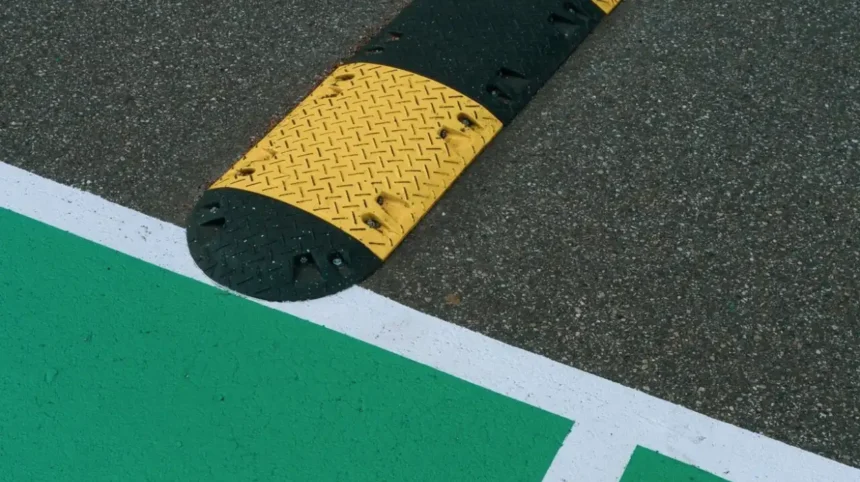
Mid-October brings a noticeable change to the roads of East London. Rainwater collects in potholes until they resemble ordinary puddles, fallen leaves conceal damaged tarmac along the kerb, and journeys through 20 mph zones involve a steady sequence of speed humps. For taxi drivers, couriers and commuters travelling through Newham, Hackney or Tower Hamlets, the suspension absorbs these impacts hundreds of times each week.
Concealed potholes present a measurable risk. During the exceptionally wet February of this year, the RAC reported that drivers who broke down mentioned potholes 225 times a day on average, nearly three and a half times as often as in February 2025. The organisation attributed the increase to standing water hiding potholes on roads saturated by almost continuous rain.
Suspension wear develops gradually, and drivers tend to adapt to it without realising. The vehicle continues to accelerate, brake and turn, although each function deteriorates slightly over time. For this reason, it is useful to recognise the early indications of wear.
How the daily commute wears down suspension
The suspension keeps the tyres in firm contact with the road while allowing the wheels to move independently of the body. In urban traffic, the loads occur at low speed but are sharp and frequent. A typical sequence involves braking before a speed hump, crossing it, accelerating away and then dropping a wheel into a pothole obscured by water.
Rubber bushes, joints and dampers are wear components, and repeated impacts of this kind shorten their service life more quickly than steady motorway driving. Breakdown figures indicate the scale of the issue. In 2025, RAC patrols attended 26,048 members with damaged shock absorbers, broken suspension springs or distorted wheels, the faults most often caused by poor road surfaces. Autumn weather does not cause this wear directly. However, water makes the depth of a pothole difficult to judge, and wet surfaces leave a smaller margin of grip if the steering or braking is compromised.
Signals the car sends before something breaks
The following symptoms usually develop slowly and are easy to overlook:
- Knocking or clunking over bumps often indicates that a component has developed play. Noting whether the sound occurs over humps, during braking or while turning helps a mechanic locate the source.
- Pulling to one side may result from worn suspension, alignment disturbed by a pothole or uneven tyre pressures. The pressures should be checked first.
- Imprecise handling in corners, such as increased body roll or the need for constant steering corrections, frequently points to worn stabiliser components or shock absorbers.
- Vibration through the steering wheel can be caused by worn joints, wheel imbalance or a rim bent by an impact. If it appears only under braking, the brake discs may be distorted.
- Uneven tyre wear, particularly on the inner or outer edge of a front tyre, suggests that the wheel is no longer positioned at the correct angle.
None of these symptoms identifies a single faulty part. Suspension wear typically produces a combination of signs, which is why a professional inspection is more reliable than assumptions.
The small joint that holds the wheel in check
Ball joints merit close attention. Each one functions in a similar way to a hip joint, with a ball seated in a socket. It connects the control arm to the steering knuckle and allows the wheel to move vertically while also turning. On many vehicles one joint carries the weight of the car while the other only guides the wheel, and the load-bearing joint generally wears faster. Most modern designs are sealed, pre-lubricated and protected by a rubber boot.
When the boot splits, water and grit enter the joint and accelerate wear. The resulting play allows the wheel to shift slightly under load, and how ball joint play affects steering geometry explains why a single worn joint can produce knocking, imprecise steering and uneven front tyre wear at the same time. If the problem is left untreated, a severely worn joint can separate completely, causing the driver to lose control of the affected wheel.
Bushes, drop links and dampers under strain
Ball joints are seldom the only cause. Control arm bushes can crack and lose stiffness, leading to knocking and vague steering. Anti-roll bar drop links are a frequent and generally inexpensive source of rattles. Worn shock absorbers allow the vehicle to continue bouncing after a speed hump. On rough surfaces they also extend the time the tyre spends out of full contact with the road, which reduces grip under braking.
When minor wear becomes a safety question
A small degree of play in a joint may appear insignificant. Nevertheless, it reduces the stability of the tyre’s contact with the road at critical moments, including emergency braking on a wet surface, avoiding a cyclist or striking a pothole mid-corner. Stopping distances may increase, the vehicle may pull under braking, and the tyres are likely to wear prematurely.
Steps to take before winter sets in
The following checks are advisable at this time of year:
- Check the tyre pressures and inspect each tyre for uneven wear.
- Where it is safe to do so, look behind the front wheels for torn or greasy rubber boots.
- Ask a garage to raise the vehicle and test each wheel for play in the joints and bushes.
Any sudden change in steering behaviour, loud knocking or pronounced vibration warrants an inspection without delay, rather than at the next scheduled service or MOT. On East London’s roads this autumn, a timely inspection is considerably less costly than a failure brought on by a pothole.