Bethnal Green is a historic neighbourhood in the East End of London, within the London Borough of Tower Hamlets. It combines museums, public gardens, traditional markets, historic buildings, independent businesses and streets shaped by centuries of migration and urban change. Visitors exploring Bethnal Green discover a part of East London where working-class history, cultural institutions, green spaces and contemporary neighbourhood life exist within a compact urban area.
- What makes Bethnal Green a distinctive neighbourhood to explore?
- Which museums and cultural attractions should visitors discover in Bethnal Green?
- What can families experience at the Young V&A?
- How does Bethnal Green connect with London’s wider cultural history?
- Where can visitors explore Bethnal Green’s historic streets and architecture?
- Which architectural details are worth noticing?
- How can visitors explore the area’s historical landmarks?
- Which parks and gardens offer a peaceful break in Bethnal Green?
- Which markets and shopping streets should visitors explore around Bethnal Green?
- What can visitors find at Bethnal Green Market?
- Is Roman Road Market worth including in a Bethnal Green itinerary?
- When should visitors explore Columbia Road Flower Market?
- Where can visitors discover food and independent businesses in Bethnal Green?
- Which historic cafés and local businesses are notable?
- How can visitors explore Bethnal Green responsibly?
- What arts and entertainment venues can visitors find near Bethnal Green?
- Which nearby attractions can visitors combine with Bethnal Green?
- How can visitors travel to Bethnal Green and move around the area?
- When is the best time to explore Bethnal Green?
- Why should Bethnal Green be included in an East London travel guide?
The area is particularly suitable for travellers interested in local history, family attractions, architecture, food, street photography and walking routes. Its transport connections also make Bethnal Green a practical starting point for exploring nearby destinations, including Shoreditch, Whitechapel, Spitalfields and Victoria Park.
What makes Bethnal Green a distinctive neighbourhood to explore?
Bethnal Green is a neighbourhood in East London known for its social history, museums, historic streets, markets and community spaces. Located within Tower Hamlets, it connects visitors with the area’s industrial past, diverse cultural heritage and contemporary urban life.
Bethnal Green developed as part of London’s expanding eastern districts. Its history includes rural settlements, silk weaving, manufacturing, dense residential streets and the growth of working-class communities. Later waves of migration shaped its shops, food businesses, religious institutions and cultural identity.
Today, Bethnal Green offers a mixture of established attractions and everyday neighbourhood experiences. Visitors can explore the Young V&A, walk through Bethnal Green Gardens, discover historic religious buildings and browse independent businesses along local streets.
The neighbourhood also provides access to the wider East End. Nearby destinations include Brick Lane, Columbia Road Flower Market, Spitalfields Market and Victoria Park. Each has its own character, making Bethnal Green a useful base for a wider Tower Hamlets itinerary.
The most rewarding way to understand the area is to combine its major attractions with time spent walking between them. The streets themselves reveal changes in architecture, housing, commerce and community life.
Which museums and cultural attractions should visitors discover in Bethnal Green?
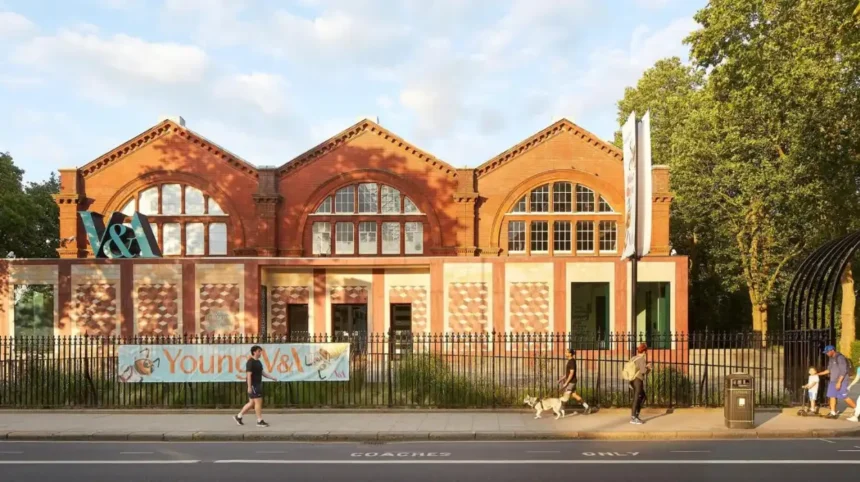
Bethnal Green’s principal museum attraction is the Young V&A, a museum dedicated to children, families, creativity and design. Its exhibitions, interactive displays and learning spaces introduce visitors to objects, ideas and creative practices across different generations.
The Young V&A stands on Cambridge Heath Road and occupies a former museum building associated with London’s wider Victoria and Albert Museum network. Following a major redevelopment, it reopened in July 2023 under its current name. Its collections and displays focus on childhood, play, design and creativity.
The museum is particularly relevant to families travelling with children. Exhibitions encourage visitors to explore how toys, games, clothing, digital experiences and everyday objects reflect design decisions and social change. Creative activities also make the museum useful for school-age visitors and adults interested in design.
Opening arrangements, exhibitions and activities change over time. Visitors should consult the museum’s official website before travelling, particularly when planning around school holidays or special events.
What can families experience at the Young V&A?
The museum connects design with practical learning. Children can examine objects, explore imaginative environments and participate in activities that explain how creative ideas become physical products or experiences.
Parents and carers can use the visit to introduce subjects such as architecture, product design, fashion and visual communication. The museum’s family-focused approach also makes it a useful indoor destination during wet weather.
Allow enough time to explore the displays without rushing. Families planning a full day should check the current exhibition programme and any advance booking requirements before arriving.
How does Bethnal Green connect with London’s wider cultural history?
Bethnal Green’s cultural identity extends beyond museums. Churches, former industrial buildings, public monuments and traditional commercial streets preserve evidence of the area’s changing population and economy.
As you explore the modern neighbourhood, you are also crossing land shaped by earlier generations. Read the full [Bethnal Green history and heritage guide] to understand the area’s historical development, changing communities and architectural legacy.
This historical context helps visitors interpret the streets around the museum. Older terraces, commercial premises and public spaces reflect different periods of London’s urban growth.

Where can visitors explore Bethnal Green’s historic streets and architecture?
Visitors can explore Bethnal Green’s historic character through residential terraces, former industrial sites, religious buildings and long-established commercial streets. These places reveal how the neighbourhood developed from an eastern settlement into a densely populated part of metropolitan London.
Bethnal Green’s built environment reflects several stages of development. Older residential streets contain brick terraces and modest houses associated with the expansion of working-class London. Some buildings retain traditional façades, while others have been adapted for modern housing, offices, cafés and shops.
Religious buildings also provide evidence of changing community needs. Churches and other places of worship reflect the neighbourhood’s long-standing role as a residential district serving different populations over time.
The surrounding streets are suitable for self-guided architectural walks. Visitors can observe building materials, window styles, shopfronts and street layouts while moving between museums, parks and transport stations.
Which architectural details are worth noticing?
Look for London stock brick, decorative brickwork, traditional sash windows and narrow frontages on older residential streets. Commercial roads often contain a mixture of historic shop buildings and newer developments.
These details help explain how land was used. Residential terraces supported local households, while shops and workshops served nearby communities. Modern redevelopment has introduced new residential blocks and commercial spaces without removing every trace of the older urban landscape.
Visitors should remember that most residential buildings are private properties. Architectural exploration is best conducted from public pavements, without entering private courtyards or obstructing residents.
How can visitors explore the area’s historical landmarks?
Start around Bethnal Green Underground station or the Young V&A, then walk along nearby public streets. Follow routes that connect older residential blocks with local parks and established shopping roads.
The neighbourhood’s history is closely linked to the wider East End, including manufacturing, migration, public health reform and working-class political organisation. These themes become clearer when visitors compare Bethnal Green’s buildings with the nearby historic districts of Spitalfields and Whitechapel.
A walking visit provides a useful introduction without requiring an organised tour. Visitors who want detailed architectural information should check local heritage resources and historical walking guides before setting out.
Which parks and gardens offer a peaceful break in Bethnal Green?
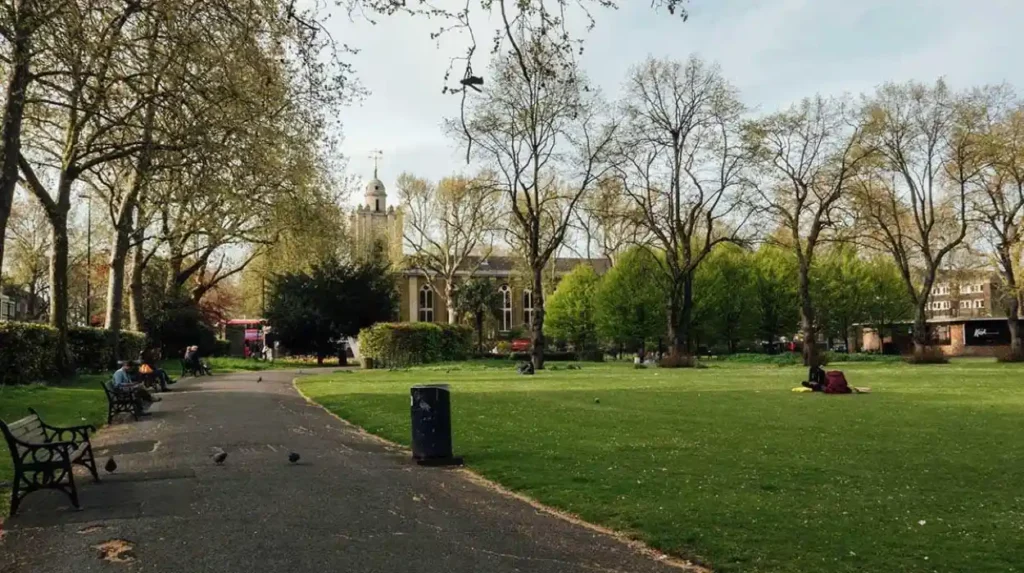
Bethnal Green Gardens and Museum Gardens provide accessible green spaces close to the neighbourhood’s principal cultural attractions. Visitors use these public spaces for walking, resting, family outings and outdoor recreation while exploring the surrounding streets of Tower Hamlets.
Bethnal Green Gardens sits beside Bethnal Green Underground station and Cambridge Heath Road. The gardens provide a convenient outdoor stop before or after visiting the Young V&A. Facilities include children’s play areas, sports courts and public amenities. The park is managed by Tower Hamlets Council.
Museum Gardens, beside the Young V&A, offers another outdoor space for visitors. Its proximity to the museum makes it useful for families taking breaks between indoor activities.
Weavers Fields, another green space in Bethnal Green, provides room for walking, informal recreation and outdoor exercise. It also gives visitors a different perspective on the neighbourhood beyond its main shopping roads.
What is the Stairway to Heaven memorial?
The Stairway to Heaven memorial in Bethnal Green Gardens commemorates the Bethnal Green tube disaster of 3 March 1943. During an air-raid warning, a crowd rushing towards the Underground station’s shelter entrance became caught in a crush on the stairs. A total of 173 people died, including 62 children.
The memorial was unveiled in December 2017. It provides an important historical point of reference for visitors learning about civilian experiences during the Second World War. Tower Hamlets Council documents the memorial and the circumstances of the disaster.
Visitors should approach the memorial respectfully. It is a place of remembrance as well as a feature within a public garden.
How can visitors enjoy outdoor activities in Bethnal Green?
The neighbourhood’s parks support several forms of outdoor recreation, including walking, children’s play and court sports. Visitors can use these facilities to break up a museum-focused itinerary or spend time outside without travelling to a larger London attraction.
Families should check local signage for play-area age guidance and sports-court arrangements. Visitors planning longer walks can extend their route towards Victoria Park, which offers larger landscaped grounds, lakes, paths and recreational facilities.
Green spaces also help explain how public amenities support a densely populated urban neighbourhood. They provide places for exercise, informal social contact and time outdoors within the wider East End.
Which markets and shopping streets should visitors explore around Bethnal Green?
Bethnal Green Road is the neighbourhood’s main shopping corridor, with traditional market stalls, food shops, independent retailers and cafés. Nearby Roman Road Market and Columbia Road Flower Market offer additional East London shopping experiences on their respective trading days.
Bethnal Green Road combines everyday shopping with the neighbourhood’s historic commercial identity. Tower Hamlets Council describes the street as a destination for grocers, fishmongers, jewellers, Asian wedding stores, cafés and restaurants. Its range of businesses reflects the area’s varied communities and changing consumer habits.
The road is particularly suitable for travellers who want to experience local commerce rather than visit only major tourist attractions. Walking along it reveals independent shopfronts, food businesses and the practical services used by residents.
What can visitors find at Bethnal Green Market?
Bethnal Green Market operates along Bethnal Green Road and offers a range of everyday goods. Tower Hamlets Council lists trading from Monday to Saturday, generally between 8am and 6pm. Stalls sell products such as clothing, fruit and vegetables, alongside other shopping essentials.
Market trading conditions and individual stall availability vary. Visitors should check local information before making a special journey, especially on public holidays or during periods of street works.
The market is part of the wider neighbourhood’s commercial life. It offers an opportunity to observe the relationship between traditional street trading, permanent shops and nearby cafés.
Is Roman Road Market worth including in a Bethnal Green itinerary?
Roman Road Market is a useful extension for visitors interested in traditional East London shopping. Located in the wider Bethnal Green and Globe Town area, it developed in connection with the district’s growing population, including silk weavers during the early nineteenth century.
Tower Hamlets Council lists Roman Road Square Market as trading from Monday to Saturday, with stalls selling fruit, vegetables, fish and other household goods. Some traders have family connections to the market spanning generations.
Visitors should distinguish Roman Road from Bethnal Green Road when planning their route. Both are associated with local shopping, but they serve different stretches of the neighbourhood and its surrounding communities.
When should visitors explore Columbia Road Flower Market?
Columbia Road Flower Market is a nearby East London attraction best known for flowers, plants and garden-related shopping. Tower Hamlets Council lists its trading hours as Sundays from 8am to 2pm. The surrounding street also contains independent shops, galleries, cafés and other businesses.
The market is suitable for visitors interested in photography, gardening and independent retail. Sunday mornings are the main time to plan a visit, although crowd levels and stock vary.
Columbia Road is not in the immediate centre of Bethnal Green, so allow additional walking or transport time. Combining the market with Bethnal Green’s museums and parks creates a broader East London day trip.
Where can visitors discover food and independent businesses in Bethnal Green?
Visitors can explore Bethnal Green’s food culture along Bethnal Green Road and surrounding streets, where cafés, bakeries, restaurants, grocers and independent businesses serve residents and travellers. The neighbourhood offers both convenient meals and opportunities to experience everyday East London commerce.
Bethnal Green’s food scene reflects its diverse population and long-standing role as a local shopping district. Businesses include traditional cafés, curry restaurants, Turkish food outlets, Italian dining venues and shops selling ingredients for home cooking. Tower Hamlets Council identifies these varied food businesses as part of Bethnal Green Road’s commercial offer.
For visitors, the main advantage is variety within a relatively compact area. A walk between the Underground station, Young V&A and local shopping streets offers opportunities to stop for breakfast, lunch, coffee or an early evening meal.
Which historic cafés and local businesses are notable?
E. Pellicci is a well-known East End café on Bethnal Green Road, recognised for its long association with the local community. The business is also connected with the area’s independent retail and food heritage.
Local businesses provide a perspective on how commercial streets retain continuity while adapting to new residents and visitors. Some premises have longstanding family ownership, while others introduce newer cuisines, creative products and contemporary services.
Visitors interested in independent businesses should allow time to explore side streets rather than limiting their visit to the main attractions. Check individual opening hours before travelling, since trading schedules differ between businesses.
How can visitors explore Bethnal Green responsibly?
Choose locally operated businesses where possible, follow shop and restaurant policies, and avoid blocking pavements when taking photographs. Busy shopping streets are working neighbourhoods, not simply tourist destinations.
Visitors should also respect residents’ privacy when photographing homes, market traders or people in public spaces. Ask permission before taking close-up photographs of individuals.
These practical choices support a considerate visit while allowing travellers to experience the area’s commercial and cultural life.
What arts and entertainment venues can visitors find near Bethnal Green?
Bethnal Green and the neighbouring Shoreditch area provide access to arts centres, galleries, live performances and community events. Rich Mix, located on Bethnal Green Road, is a notable cultural venue offering a programme of creative activities, music and performance.
Rich Mix is an independent arts and community venue at 35–47 Bethnal Green Road, close to Shoreditch High Street station. Its programme includes live music, theatre, creative events and other cultural activities. It also provides spaces for events and community projects.
The venue is useful for travellers seeking an evening activity after exploring the neighbourhood’s museums and shopping streets. Event schedules vary, so check the official programme before planning a visit.
Rich Mix has also announced that its daily cinema programme is paused during major building works until autumn 2027. Visitors specifically interested in film screenings should check the current arrangements rather than assume all cinema facilities are operating normally.
Where can visitors find independent art exhibitions?
Espacio Gallery, at 159 Bethnal Green Road, is another cultural name associated with the area. Independent galleries provide opportunities to encounter contemporary visual art, discover emerging artists and explore creative work beyond major museums.
Exhibition schedules and access arrangements differ between venues. Check current listings before travelling, particularly if an exhibition is the main purpose of the visit.
The surrounding area also connects with Shoreditch, where galleries, studios and creative businesses contribute to East London’s wider arts scene.
Which nearby attractions can visitors combine with Bethnal Green?
Visitors can extend a Bethnal Green itinerary to include Victoria Park, Brick Lane, Shoreditch and Columbia Road Flower Market. These nearby destinations add larger green spaces, historic commercial streets, independent retail and further cultural experiences to a visit.
Victoria Park is a particularly useful addition for travellers who want more outdoor space. Located in Tower Hamlets, the park opened in 1845 and was established to provide public recreation for East London’s growing population. It now covers more than 80 hectares and contains gardens, lakes, play areas and sports facilities.
Brick Lane and Shoreditch offer a different experience, with independent shops, street art, food businesses and creative venues. Columbia Road Flower Market is especially relevant to visitors travelling on a Sunday.
These destinations are not all within a few minutes’ walk of each other. Plan the route according to the time available, the market opening day and the preferred balance between indoor and outdoor activities.
How can visitors plan a one-day East London itinerary?
A practical day begins at Bethnal Green Underground station, followed by a visit to the Young V&A and a walk through the neighbouring gardens. Continue along Bethnal Green Road for local shopping and lunch.
In the afternoon, choose a longer walk towards Victoria Park or explore the nearby streets and cultural venues around Shoreditch. On Sundays, consider Columbia Road Flower Market, allowing time for crowds and additional walking.
A useful itinerary groups attractions geographically instead of repeatedly crossing the neighbourhood. This approach reduces unnecessary travel and leaves more time for museums, meals and outdoor stops.
How can visitors travel to Bethnal Green and move around the area?
Bethnal Green is accessible by the London Underground’s Central line, with additional rail connections at nearby Cambridge Heath and Bethnal Green railway stations. Local buses serve the surrounding roads, while walking connects many of the neighbourhood’s principal attractions.
Bethnal Green Underground station is close to the Young V&A and Bethnal Green Gardens. Cambridge Heath station provides another rail connection, particularly useful for visitors arriving from other parts of East London.
Bethnal Green Road and Cambridge Heath Road are important routes for local buses and pedestrian movement. Travellers can use Transport for London’s journey planner to check live services, disruptions and accessible travel options.
What should visitors know about accessibility?
The Young V&A has a step-free entrance and wheelchair-accessible facilities. However, the nearest step-free Underground access is not at Bethnal Green station, so visitors who require step-free rail travel should check the museum’s access guidance before setting out.
Cambridge Heath railway station also has accessibility limitations, including no step-free access to its platforms. Check station information and assistance arrangements before travelling.
Public pavements, park paths and market streets vary in width and surface condition. Visitors with mobility requirements should plan routes in advance and confirm access directly with individual venues.
Explore More Area Guide
Poplar East London: A Tourist Guide to Historic Landmarks
Exploring Limehouse: Historic Streets and Riverside Attractions in Tower Hamlets
When is the best time to explore Bethnal Green?
Bethnal Green can be explored throughout the year, with the best schedule depending on the attractions selected. Museum visits suit daytime itineraries, parks work well during daylight hours, and market visits depend on individual trading days and opening times.
Weekdays suit travellers seeking a museum visit combined with local shopping and a quieter walk through the neighbourhood. Weekends provide opportunities to explore markets and attend cultural events, although popular streets and venues can become busier.
Spring and summer provide longer daylight hours for walking between parks and historic streets. Autumn and winter visits benefit from an itinerary that prioritises indoor attractions and checks outdoor conditions before departure.
What should visitors check before setting out?
Check museum opening times, temporary exhibitions, market schedules, transport disruptions and any access restrictions. These details affect how much visitors can fit into a day.
The Young V&A generally opens daily from 10am to 5.45pm, with galleries closing from 5pm. General admission is free, although some temporary exhibitions and special events carry charges. Check the official website for the latest notices.
Visitors planning a Sunday market trip should also verify the trading hours of Columbia Road Flower Market and allow time to walk between destinations.
Why should Bethnal Green be included in an East London travel guide?
Bethnal Green offers visitors a combination of museums, historic streets, public gardens, markets and cultural venues within Tower Hamlets. Its location also provides access to wider East London attractions, making it a practical destination for travellers interested in local history and contemporary neighbourhood life.
The neighbourhood’s appeal comes from the variety of experiences available within a relatively small area. The Young V&A provides an introduction to design and creative learning, while Bethnal Green Gardens connects visitors with public recreation and the memory of wartime civilian casualties.
Bethnal Green Road introduces visitors to local shopping, traditional markets and independent food businesses. Nearby galleries and arts venues add contemporary cultural activities, while Victoria Park offers a larger landscape for walking and outdoor recreation.
The area also illustrates broader changes in London’s East End. Historic housing, commercial streets, community institutions and modern developments show how neighbourhoods adapt as populations, industries and lifestyles change.
For tourists, the most effective approach is to combine one or two main attractions with time for walking, eating and exploring local businesses. Families can prioritise the Young V&A and nearby gardens, while history enthusiasts can focus on architecture and memorials. Travellers with more time can extend their route to Victoria Park, Shoreditch or Columbia Road Flower Market.
Bethnal Green therefore provides a useful introduction to the cultural, historical and everyday character of East London. Its museums, markets, gardens and community spaces make it relevant to both first-time visitors and London residents seeking to discover more of Tower Hamlets.
What is Bethnal Green famous for?
Bethnal Green is known for the Young V&A museum, historic East London streets, traditional markets, public gardens and diverse food businesses. It also has an important working-class history and a memorial commemorating the 1943 Bethnal Green tube disaster.