
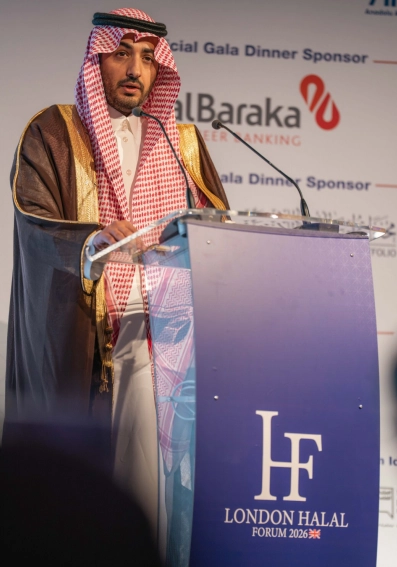
Saudi Arabia’s drive to expand local halal production, attract international investment and strengthen its position in global markets was highlighted at London Halal Forum 2026 by H.E. Mr Fahad Suliman Alnuhait, CFA, Chief Executive Officer of Halal Products Development Company (HPDC), the event’s main sponsor.
LONDON — Saudi Arabia’s ambitions to strengthen its position in the global halal economy took centre stage at London Halal Forum 2026, where H.E. Mr Fahad Suliman Alnuhait, CFA, Chief Executive Officer of Halal Products Development Company (HPDC), highlighted the Kingdom’s evolving halal ecosystem and its role in advancing domestic production, industrial development and international trade under Saudi Vision 2030.
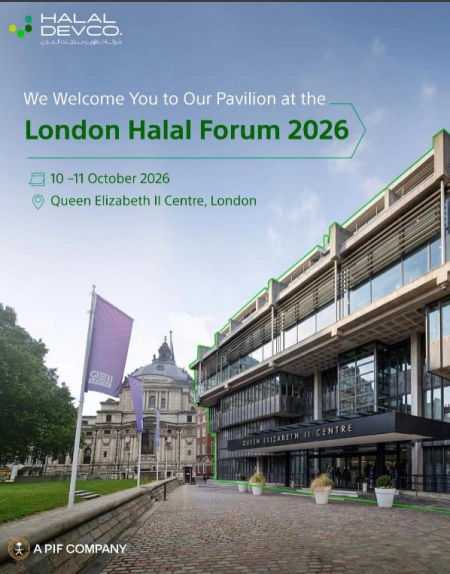
Held at the Queen Elizabeth II Centre in London on 10–11 October 2026, the forum brought together industry leaders, businesses and stakeholders to explore opportunities across the global halal economy. HPDC served as the event’s main sponsor, supporting discussions on investment, production capabilities and international cooperation across the sector.
At the heart of the discussions was a strategic shift in Saudi Arabia’s ambitions: moving beyond reliance on imported products towards strengthening domestic manufacturing and developing the capacity to compete in international export markets.
The direction was captured in a clear ambition: “From importer to producer, and from consumer to exporter.”
This transition reflects a broader economic objective: building a competitive domestic industry that can serve local demand while creating new opportunities for Saudi businesses to reach customers around the world.
Building Investor Confidence and Advancing Global Halal Leadership
A central theme of the forum was the importance of creating an environment that enables businesses to invest, expand production and participate in the growing global halal economy.
Robust regulatory frameworks, industrial infrastructure, investment opportunities and financing incentives are important factors in strengthening Saudi Arabia’s position as a destination for halal production. Together, these enablers can support business expansion, encourage long-term investment and help companies develop the capabilities needed to serve international markets.
For Saudi Arabia, developing a competitive halal industry requires more than increasing production volumes. It involves connecting manufacturing with financing, logistics, regulatory systems and access to international distribution networks.
These foundations can help businesses make informed investment decisions, establish sustainable operations and develop commercial partnerships across borders.
By continuing to strengthen its halal ecosystem, the Kingdom aims to attract international investors, support domestic enterprises and expand the global reach of Saudi halal products.

Safety, Security and Trust in the Global Halal Economy
Safety, security and trust are important considerations in the development of halal markets. Consumers and businesses need confidence in product integrity, quality standards and the systems that govern halal production and distribution.
Building this confidence requires reliable regulatory frameworks, appropriate infrastructure and consistent standards throughout the supply chain. These elements can help strengthen consumer confidence while supporting companies seeking to enter new markets.
Trust also depends on cooperation among manufacturers, regulators, investors, distributors and international partners. Stronger connections between these stakeholders can help improve supply-chain coordination, establish commercial relationships and respond to evolving consumer expectations.
As halal products reach an increasingly diverse range of consumer markets, maintaining these foundations is essential to supporting sustainable growth and facilitating international trade.
Saudi Vision 2030: Strengthening Domestic Production
The development of Saudi Arabia’s halal sector forms part of the Kingdom’s broader economic diversification agenda under Saudi Vision 2030.
Strengthening domestic manufacturing and industrial capabilities can support local businesses, create opportunities for investment and enhance the ability of Saudi companies to compete internationally.
Developing an integrated halal ecosystem also requires investment in skilled talent, industrial facilities, effective financing mechanisms and the infrastructure needed to connect producers with international markets.
Investment opportunities and financing incentives can help companies expand their production capabilities, while regulatory clarity can provide greater certainty for businesses planning long-term projects.
These factors are particularly relevant as halal products extend beyond food into lifestyle products and other consumer sectors, creating opportunities for companies to diversify their offerings and establish partnerships in international markets.
The broader ambition is to build a sector that combines domestic industrial strength with international competitiveness, enabling Saudi businesses to participate more effectively in global halal value chains.
Connecting Markets, Producers and Consumers
London Halal Forum 2026 provided a platform for exploring how international collaboration can connect producers, investors and consumers while creating new opportunities across the global halal ecosystem.
London’s international business links and diverse commercial environment offered a setting for discussions on cross-border partnerships, commercial cooperation and market development.
For Saudi Arabia, strengthening these connections forms part of the wider effort to expand the international presence of its halal products and develop a more competitive domestic industry.
For international businesses, closer engagement with Saudi producers and investors can create opportunities for trade, investment, collaboration and access to new markets.
Bringing markets together and building lasting commercial relationships are essential to the continued development of the global halal economy. Producers need access to investment and distribution networks, investors require confidence in the commercial environment, and consumers depend on product quality and trust.
Strengthening these connections can help create a more integrated and accessible global halal marketplace.
From Local Production to Global Markets
Saudi Arabia’s evolving halal ambitions reflect a wider recognition that international competitiveness depends on more than production capacity alone. It also requires investment, industrial development, reliable standards, effective financing and sustained international cooperation.
As the Kingdom continues to develop its halal ecosystem under Vision 2030, these priorities remain central to efforts to attract investors, support domestic businesses and expand the international reach of Saudi halal products.
The discussions at London Halal Forum 2026 highlighted the importance of connecting local production with international trade and building an ecosystem capable of supporting both.
For Saudi Arabia, the transition from importer to producer, and from consumer to exporter, represents an important dimension of its broader economic transformation.
For the global halal economy, it underscores the growing importance of industrial capability, investor confidence, consumer trust and international partnerships in shaping the sector’s future.
https://www.linkedin.com/posts/londonhalalforum-lhf26-halaleconomy-ugcPost-7515709081140183040-5aS7