
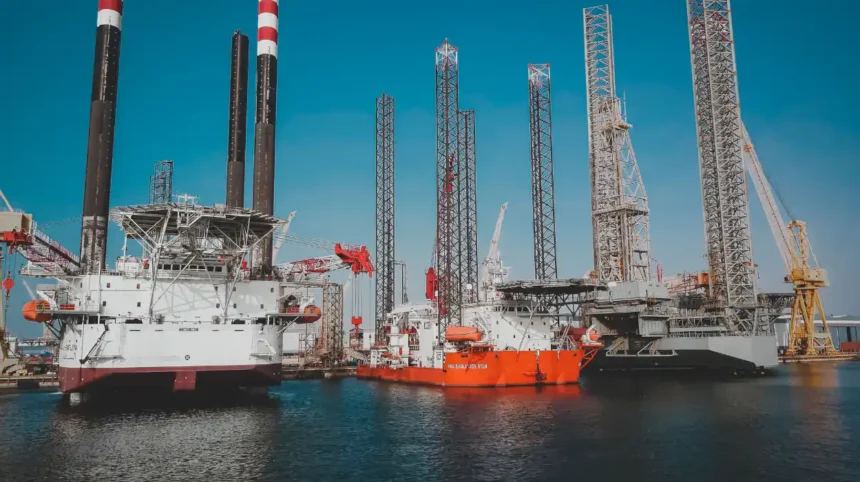
For decades, the relationship between the United Kingdom and the Middle East was defined by one powerful word: energy. Oil shaped economies, influenced foreign policy and created strategic partnerships that reflected the realities of the twentieth century.
But the world that created those relationships is changing.
In the twenty-first century, the most valuable resource may no longer be what lies beneath the ground, but what can be created by human intelligence. Data, innovation and artificial intelligence are becoming the foundations of economic power, national competitiveness and global influence.
This shift presents a historic opportunity for Britain and the Middle East to redefine their partnership.
Artificial intelligence is not simply another technological development. It is becoming a force that will reshape industries, transform public services and influence the balance of power between nations. Countries that build strong AI ecosystems will not only produce new technologies; they will shape the rules, standards and opportunities of the future economy.
The United Kingdom is well positioned to play a leading role in this transformation. Its strengths in scientific research, higher education, financial services and technology provide a strong foundation for innovation. London, as one of the world’s leading financial centres, offers a unique environment where ideas, investment and entrepreneurship can come together.
However, leadership in artificial intelligence will not be achieved by technology alone. It will depend on international partnerships.
This is where the Middle East becomes increasingly important.
Across the region, governments are pursuing ambitious economic transformation programmes aimed at building knowledge-based economies. Investment is moving beyond traditional sectors towards digital infrastructure, advanced technology, renewable energy and innovation.
The Middle East’s ambition and investment capacity, combined with Britain’s research capabilities and technological expertise, create the potential for a partnership based on mutual strengths.
The next stage should not be limited to investment agreements or technology purchases. It should focus on building shared knowledge.
Universities, research centres and technology companies should become central pillars of this new relationship. Joint research programmes, talent exchanges and innovation partnerships can create lasting connections that go beyond political cycles.
Artificial intelligence also offers practical solutions to some of the greatest challenges facing both regions.
In healthcare, AI can support earlier diagnosis, improve medical research and help healthcare systems become more efficient. In energy, it can improve the management of complex systems and support the transition towards cleaner technologies. In finance, it can accelerate innovation in digital banking, cybersecurity and financial services.
These opportunities demonstrate that AI should not be viewed only as a commercial sector. It should be seen as a strategic bridge between societies.
Yet every technological transformation brings challenges.
The future of artificial intelligence must be built on trust. Questions surrounding data protection, cybersecurity, employment and ethical standards cannot be ignored. Innovation without responsibility risks creating public concerns and weakening confidence in new technologies.
This is an area where Britain and the Middle East can contribute together. By developing approaches that encourage innovation while protecting society, both sides can help shape a more balanced model of AI development.
The global race for artificial intelligence leadership is accelerating. The United States and China continue to invest heavily in technology, while Europe seeks to strengthen its role through research, regulation and industrial policy.
For the UK and the Middle East, cooperation offers a strategic advantage. Neither side needs to compete alone when their strengths are complementary.
The future of international influence will increasingly depend on who can attract talent, develop ideas and create successful innovation ecosystems. Traditional resources will remain important, but knowledge will become an equally powerful source of economic and geopolitical influence.
The relationship between Britain and the Middle East has adapted many times throughout history. The next transformation should be based on a new understanding of partnership — one built around universities, entrepreneurs, researchers and innovators.
The twentieth century was shaped by energy. The twenty-first century will be shaped by intelligence.
The question is not whether artificial intelligence will change the relationship between the United Kingdom and the Middle East. That transformation has already begun.
The real question is whether both sides will act with enough ambition to shape it together.
From oil to algorithms, the next era of partnership is waiting to be built.