Key Points
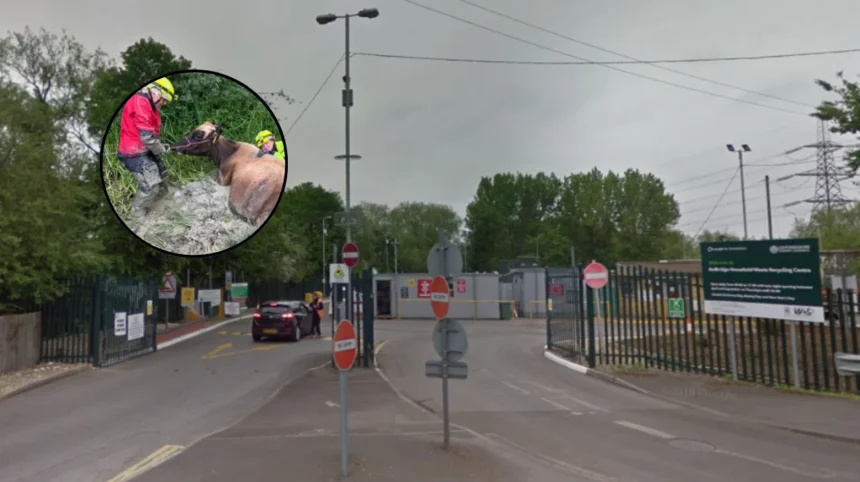
- Multiple emergency service vehicles responded to an incident near the Southern By-Pass Road in Redbridge, Oxford, early in the morning.
- Fire crews were deployed after receiving reports of an animal trapped in a watercourse off Mill Lane in Iffley.
- Oxfordshire Fire and Rescue Service dispatched an appliance from Slade Park fire station alongside specialist rescue units.
- Emergency responders used specialist animal rescue equipment to free a cow stuck in mud along Hinksey Stream.
- The operation lasted just under one hour and a half, with all emergency crews departing the scene after successfully releasing the livestock.
Oxford (East London Times) August 20, 2026 — Emergency response vehicles rushed to the outskirts of Oxford after receiving urgent calls regarding an incident near the Southern By-Pass Road, where specialist crews successfully freed livestock trapped in thick mud.
Why Did Fire Engines Rush to the Scene in Oxford?
The sudden presence of multiple emergency service vehicles near the Redbridge area created immediate concern among local commuters and residents along the Southern By-Pass Road. Oxfordshire Fire and Rescue Service confirmed that crews were deployed following reports of an animal in distress along Hinksey Stream, located off Mill Lane in Iffley, Oxford.
A spokesperson for Oxfordshire Fire and Rescue Service explained the circumstances surrounding the emergency deployment:
“Oxfordshire Fire and Rescue Service was called on August 20 at 7.49am, sending a fire engine from Slade Park fire station, plus specialist rescue units, to Hinksey Stream, Mill Lane, Iffley, Oxford.”
What Equipment Was Used in the Oxford Animal Rescue Operation?
Responding units had to navigate local routes off the major bypass to reach the rural section of the stream. Upon arrival, emergency responders identified a cow trapped in deep mud along the watercourse bank. Specialist animal rescue equipment was deployed by the attending fire crews to extract the animal safely without causing further injury or distress.
The spokesperson for the service confirmed the outcome of the specialist operation:
“Crews using specialist animal rescue equipment released a cow that was stuck in mud. The crews departed at 9:13am.”
Explore More UK News
UK Bans Gel Nail Chemical TPO Across Salons UK 2026
Fitch Maintains High UK Credit Rating Amid Rising Energy Prices London 2026
Background of Livestock Rescues and Emergency Service Allocations
Fire and rescue services across the United Kingdom routinely maintain specialist technical rescue units trained to handle large animal incidents.
Watercourses, muddy riverbanks, and marshy terrain present significant hazards to livestock in rural and semi-rural areas like Oxfordshire, where pastures border low-lying streams such as Hinksey Stream. Emergency service protocols prioritize public safety during such rescues to prevent untrained members of the public from entering dangerous mud or deep water to assist distressed animals.
Prediction: How Will This Development Affect Local Farmers and Commuters?
This successful rescue highlights the potential operational impacts on both the local agricultural community and nearby road network users. For local farmers and livestock owners along the Thames and Cherwell tributaries, seasonal changes in water levels and soft riverbanks represent an ongoing risk to grazing herds, requiring heightened vigilance around perimeter fencing along watercourses.
For commuters using key arterial routes such as Oxford’s Southern By-Pass Road, emergency responses involving heavy specialist appliances can occasionally lead to brief traffic delays near access junctions like Redbridge. Continued availability of technical animal rescue units ensures rapid incident resolution, minimizing long-term disruptions to local transport networks and preventing significant livestock losses for agricultural businesses.