
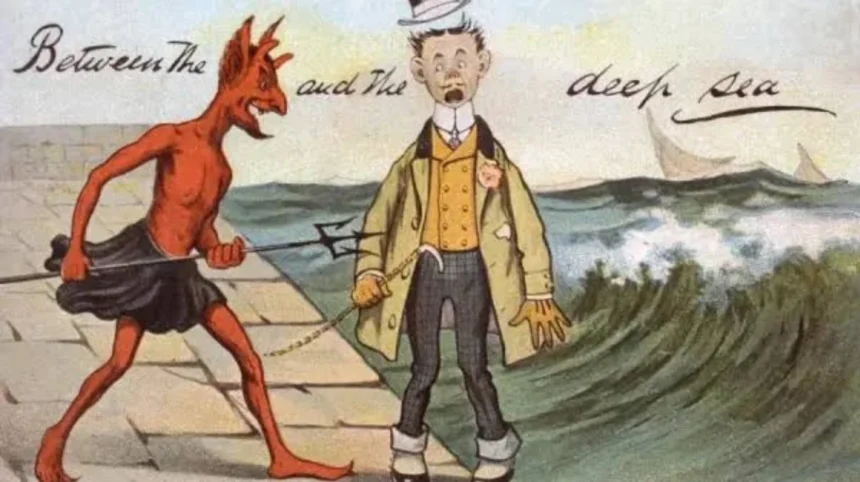
In recent weeks there has been political controversy with regard to the proposed realignment between this country and the European Union. As everyone knows there was a referendum in 2016 which was surrounded not only in political controversy as to certain fundamental misconceptions and external interferences with that campaign, but it was based on the extraordinary concept as to an unquestionable “will of the people”. No such constitutional proposition has ever existed under our unwritten constitution or wa sit based on any concept or principle of constitutional law in this country. We are not the United States of America where their Declaration of Independence gives power to “the People” not to the President, a misconception certain faction in America do not comprehend. It is bemusing to me that a party that has always respected Sir Winston Churchill as a great leader should undermine and disregard one of the fundamental policy objectives he believed would preserve the peace of Europe after 1945. I was articled in a Westminster firm where one of our partners was a former Conservative MP who had known Churchill quite well. On some occasions he would interest me in that great man’s legendary speeches. One I never forgot was that made on 19 September 1946, speaking at the University of Zurich, Switzerland, when Churchill proposed the creation of “a kind of United States of Europe”—”a European group which could give a sense of enlarged patriotism and common citizenship to the distracted peoples of this mighty continent.” Hence my canvasing in the Common Market referendum and once meeting Mrs Thatcher, at that time an ardent supporter of the European movement seemed encouraging. Churchill based his arguments on the British interest and our security. He was aware that after the Second World War Britain would find it difficult to adapt and find its place in the world without empire. Churchill he knew from his discussions with President Roosevelt of the plan to export American democracy to the world even to China.
The problem with the Brexit referendum was that it undermined our fundamental principles of the sovereignty of parliament and the rule of law albeit parliament delegated the decision by statute. Britain was at the crossroads in 1972 because it had lost its empire and it was betwixt and between the United States as an ally, the Commonwealth, and its proximity to the common market. Such a triangulated relationship had obvious conflicts of interest and complications.
The situation in Europe has now drastically changed from what it was in 2016 when the government abrogated its European treaties and sought independent global economic existence. Albeit Britain was a member of NATO by necessity it still co-operated with its former European partners, and indeed new members of the European Union which are now members of NATO. Leaving the European Union lost the benefits of a common economic trade policy across the whole of Europe which constitutes one of the strongest economies in the world. Trading with your nearest partner which is just over 30 miles from Dover to Calais is perhaps more beneficial than trading with a country 6000 miles away especially when oil prices are at a premium and the seas are potentially insecure especially in the Gulf, the Baltic and the Black Sea. This country is currently vulnerable to Trump’s imprudent imposition of tariffs and increases in order to put pressure on NATO members to stop supporting the defence of Ukraine which is vital to European security. What was beneficial about our membership of the European Union was its consensual arrangement unique in the annals of European history of enabling sovereign states to interact in their common interest as equal partners without the upsurge in nationalism, isolationism and protectionism which destroyed Europe in 1940. In effect as Churchill foresaw it has diminished the risks of conflict and disputes between those states within the European Union. Things are decided by consensus more than by conflict. In effect it is a far more effective scheme of collective security than President Woodrow Wilson ever dreamed of. Indeed, historians may say in 100 years’ time that the European Union exceeded expectations in keeping a more cohesive union over the last five or so decades. Most of the people who reject the idea of a reunion with the European Union were not alive during the Second World War, they have no experience of what the war did to Britain and certainly no experience of how the people of Europe suffered from Nazi occupation and later Soviet occupation. So, they may be forgiven for their ignorance to some extent, but they should know that ever since 1688 this country’s foreign policy has been based on the supposition that no one country shall dominate the continent. For hundreds of years our armies and the navy ensured that that remained the case. I might also confirm for my American friends that it was the Royal Navy that maintained your independence after 1828 until the Civil War in 1861. The European Union is not one dominant power; it is a collection of national sovereign states, some of which were empires with colonies, but no longer. However, they do find accommodation within the organisations of this unique union and are dissuaded from repeating their former proclivities.
If Britain were to return to the European Union, then I agree with Professor Rory Stewart of the LSE International Relations Department on the idea that the approach of the European Union should be based on an anti-coercion approach to external actors. This is pertinent at this time given the approach of the Trump executive in Washington. Trump’s attitude towards Putin’s threats to NATO and Europe, appear to acquiesce in Putin’s dreams of recreating Stalin’s Soviet Empire which is contrary as I have inferred in my earlier opinion to the fundamental tenets of US Foreign Policy since 1945, the UN Charter, and international law. At present Britain is vulnerable to Trump’s trade-offs and sellouts hence the need to find an alternative. Putin’s threats and Trump’s remonstrances cannot be ignored so that renegotiation for a realignment with European Union is a necessity. In such circumstances it seems logical, as Professor Stewart suggested that bearing in mind Britain has little influence now in the United Nations, that the European Union presents a more plausible organisation for Britain to pursue its best interest rather than in the United Nations.
There are those who will of course oppose any realignment with the European Union and certainly any reintegration. However, a similar story was told in 2016 about “Singapore on Thames”, but there is certainly nothing down Docklands way bearing much similarity to Singapore and whilst the City maintains its lead in finance there is increasing market competition from other European capitals. There is also the increasing security risk of cyber-crime, state sponsored computer hacking, risks from an internationally unregulated AI system and all the threat of hybrid warfare by state actors. A state on its own cannot mage cross border threats of that magnitude alone.
Recent polls suggest that 58% of those polled think Brexit was wrong and 63% suggest it has failed. The malcontents as Edmund Burke would describe them or as they call themselves, Brexiteers, say that it would cost £750 million a day to rejoin the European Union. I have not seen any actuarial evidence to support that calculation and without such evidence it is difficult to accept such figures as it may not include any refund or deduction. On the other hand, it is suggested the cost and exclusion from the European Union is costing between £3billion and £3.5 billion per week and that the estimated cost to the economy is measured as between 4% lost productivity to a 6% to 8% reduction in GDP in 2025. On any showing the financial costs and consequential damages to Britain’s relationships with European Union political, economic, cultural, scientific, and indeed educational are immeasurable. Fortunately, some of the consequences in terms of security have been maintained by NATO membership. However, it would be more efficient, and effective if Britain were part of the European Union in terms of defence procurement and the industrial production of munitions and armaments to defend and increase deterrence against the aggressor. Wars are not just won on a battlefield but by efficient industrial wartime production.
Constitutional Questions as to the Renunciation of our European Treaties
Having considered some of the wider questions that may be relevant in our consideration of a renegotiation with the European Union it is interesting perhaps for constitutional lawyers to reflect retrospectively upon what happened in Parliament in 2019 in the process of legislating the renunciation of our European treaties. In writing my first academic research article for the Northern Ireland Law Quarterly Review on the Special Commission of 1888 on Parnellism and Crime: Indictment of A Nation I read as background the Act of Union between Ireland and Great Britain. It was called irregular by Henry Grattan who demanded a more independent Irish Parliament before the Act of Union of 1800 abolished it. There was much controversy in Ireland about alleged corruption and coercion in the Irish Parliament, undermining its democratic legitimacy. Fast forward to 2019, there were allegations of irregularity in Parliament during the final stages of the enabling renunciation legislation. Unlike in 1800 in Ireland here the Scottish MP, Joanna Cherry KC MP and others launched an action in Scotland before the Inner House of the Court of Session. [2019] CSIH 49 P 680/19 regarding the extraordinary restriction on debating renunciation and abrogation of the treaties and giving sufficient time to members to discuss the subject before the European Council meeting on the 17th and 18th October 2019. The case reached the Supreme Court in England which has an appellate jurisdiction from Scotland. Despite criticism that this was a “political matter” not a legal one, the Supreme Court had the courage to deal with the excuses offered by the Government that it was a political matter and the court should not interfere. The court rightly looked at the matter based on legal principles. Put simply, on the question of excessive exercise of the Crown’s prerogative. The court reminded us, as Professor Mark Elliott of the University of Cambridge and Fellow at Saint Catherine’s College, Cambridge wrote in Public Law for Everyone on the most modest of constitutional propositions: “that the United Kingdom is a democracy founded on parliamentary sovereignty, executive accountability, and the subjugation of government to law; that, from those basic constitutional facts of life, it follows that the government is not afforded an unfettered power to deny the legislature the opportunity to perform its vital constitutional role; and that questions about the legal scope of government power are questions of law for the courts of law.” These are self-evident propositions regarding the doctrine of the separation of powers which distinguish between the executive, legislative and the judicial power. How different it must be said are our courts and judges from those across the Atlantic who succumb to the whims of the Executive branch of government despite the fact that over there under the US Constitution all branches of government are equal. Whilst that was the court’s judgement renunciation became a fact and has remained so. But times change, policies change and sometimes history come back to haunt us.