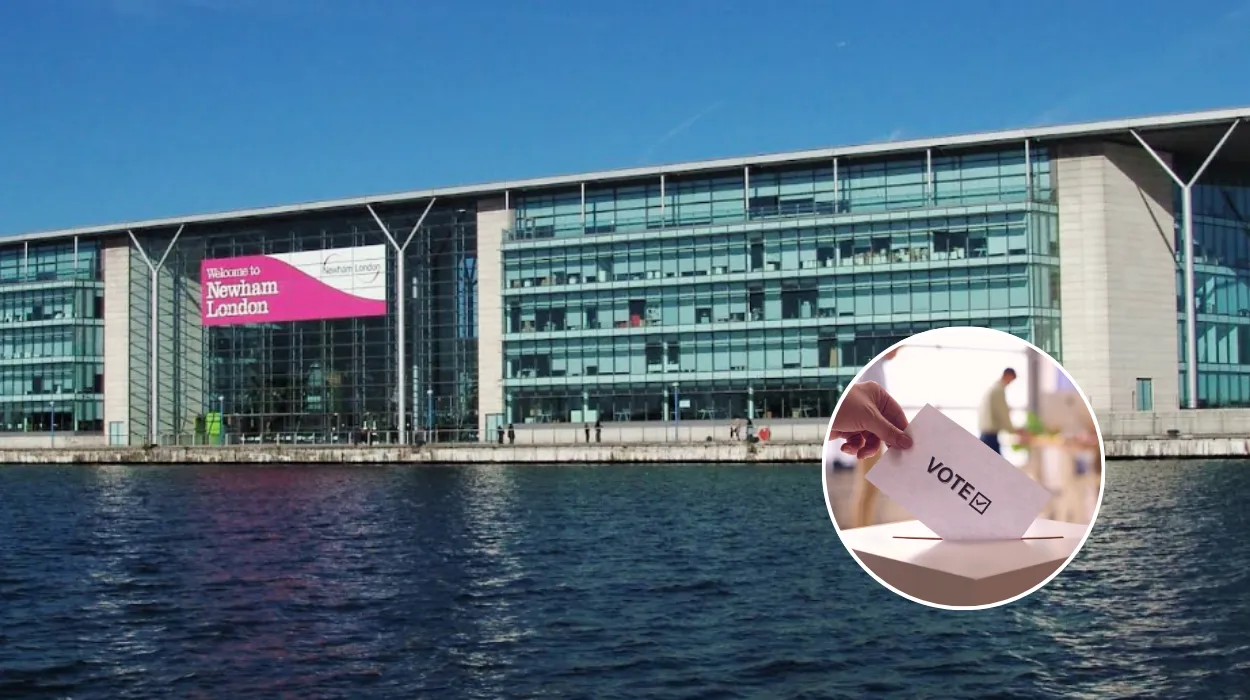
Non-voters took centre stage in the 2022 election, and there is little to suggest that the upcoming election will be any different.
Elections across the London Boroughs were last held in 2022. According to research by the Supervote Project, Newham recorded the fifth most undemocratic result in London. A distinction earned through the routine operation of the voting system itself. The Supervote Project’s foundation focuses on the inefficient voting system, noting that it produces ‘a distorted result’.
The data collected by the Supervote project displays the discrepancies between the percentage of votes awarded, and the seats taken following the percentage of votes won by each party. Below is a table provided by the Supervote Project, displaying each political party, the percentage of votes, and the seats awarded.
| Party | % Votes Won | % Seats Taken |
| Labour | 56.0% | 97.0% |
| Green | 16.6% | 3.0% |
| Conservative | 14.0% | None |
| LibDem | 5.4% | None |
| Independents | 4.3% | None |
| Others | 3.8% | None |
Table 1: Vote share and seat allocation for Newham Council election 2022
Source: Supervote Project
The table above ultimately displays the disconnect between how Newham residents voted, and how the council was formed. The Labour party won only 56% of the vote in 2022, but went on to take 97% of council seats. David Green, founder of the Supervote Campaign notes ‘there is something very wrong with a voting system that has the ability to award over 9 out of 10 seats to a party that has won under 6 out of 10 votes’. In contrast to this, parties that received a substantial amount of votes were left with no representation, for example the Conservatives won 14% of votes but gained no seats. Newham’s 2022 election results offer a clear example of the problems identified by David Green with the first-past-the-post voting system. The concerns from the results are only amplified by the voting turnout for this 2022 election.
Just 28.7% of Newham’s 226,690 registered voters took part in the 2022 election, meaning more than seven out of ten Newham voters did not participate. This marks a 6.9% decrease since 2018. For critics of the current voting system, such as David Green, founder of the Supervote campaign, residents evidently felt ‘so disconnected with the democratic process they chose not to vote’.
The combination of low turnout and the imbalance between votes cast and seats won offers little reassurance ahead of the next borough election. With no change to the voting system, there is little to suggest that the same pattern of disengagement will not be repeated in 2026. David Green, founder of the Supervote Project, warned that declining participation poses a risk to local democracy. ‘ It doesn’t bode well for the forthcoming borough elections in 2026’, he said. ‘Declining public interest and participation in local elections spell disaster for our democracy unless something is done’.
So what does the Supervote Project propose as a solution? David Green explains that ‘the London Boroughs need to have their voting system bought up to date, so that results reflect the votes cast’. He argues that this change would make local elections more inclusive and encourage broader participation.
The Supervote Project supports the Single Transferable Vote (STV) describing this voting method as ‘the most powerful and democratic vote on earth’. Supporters of proportional representation argue the system would reduce wasted votes and ensure the seats are allocated in line with how residents vote. More on the campaign, including an interview with Supervote founder David Green, can be read in ‘Why the UK’s voting system needs to change, starting with local elections’.
With no changes made to the voting system, the 2026 Newham borough election is likely to follow a familiar pattern. The 2026 Newham London Borough election is set to take place on the 7th May 2026, using the first-past-the-post voting system that ultimately shaped the 2022 result. The key question ahead of the election is will motivation increase for people to participate in the next borough election, or will the voting system continue to reduce participation?