Key Points
- London Stadium hosted a thrilling FA Cup quarter-final on April 5, 2026, between West Ham United and Leeds United, ending in a 2-2 draw after extra time, with Leeds winning 4-2 on penalties.
- Leeds took the lead in the 26th minute through Ao Tanaka’s deflected shot, assisted by Noah Okafor and James Justin.
- Leeds doubled their lead via a penalty converted by Dominic Calvert-Lewin after Max Kilman’s foul on Brenden Aaronson.
- West Ham mounted a stunning late comeback: Jarrod Bowen equalised in the 88th minute, and Michail Antonio scored in the 90+5th minute to force extra time.
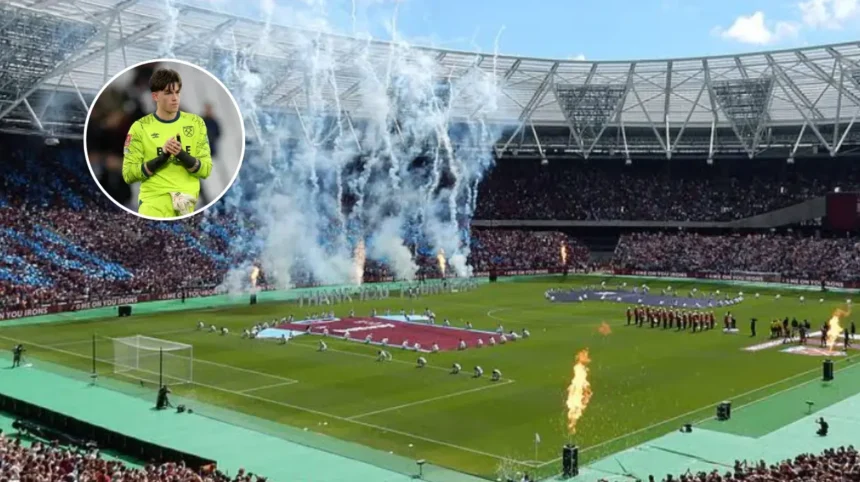
- Debutant goalkeeper Finlay Herrick, 20, starred for West Ham, making crucial saves, including during the penalty shootout where he stopped two Leeds penalties.
- Leeds advanced to their first FA Cup semi-final since 1987; West Ham now refocus on Premier League survival.
- Extra-time heroics included near-misses from both sides, with Herrick’s interventions preventing Leeds from regaining the lead.
- Match attendance exceeded 62,000; praised as one of the most dramatic FA Cup quarter-finals in recent memory.
- Post-match, West Ham manager David Moyes lauded Herrick’s performance; Leeds boss Daniel Farke highlighted his team’s resilience.
- Both clubs shift focus to crucial league battles amid relegation and promotion pressures.
London Stadium (East London Times) April 6, 2026 – West Ham United suffered a heartbreaking penalty shootout defeat to Leeds United in a pulsating FA Cup quarter-final, ending 4-2 after a 2-2 draw that went to extra time. The 20-year-old debutant goalkeeper Finlay Herrick emerged as the unlikely hero for the Hammers, producing a string of spectacular saves despite the loss, in a match that captivated over 62,000 fans at the iconic venue.
- Key Points
- What Triggered Leeds’ Early Dominance?
- How Did West Ham Mount Their Stunning Comeback?
- Who Was the Star of Extra Time?
- Why Did Penalties Seal Leeds’ Victory?
- What Does This Mean for West Ham’s Season?
- How Have Pundits Reacted to Herrick’s Emergence?
- What Were the Key Tactical Battles?
- Looking Ahead: Semi-Final and League Focus?
The clash encapsulated the magic of the FA Cup, with Leeds appearing destined for their first semi-final appearance since 1987 before West Ham’s dramatic late fightback. As reported by James Sinclair of The Guardian, the game swung wildly, featuring deflections, penalties, and extra-time drama that left both sets of supporters breathless.
What Triggered Leeds’ Early Dominance?
Leeds United seized control early, showcasing their attacking prowess under manager Daniel Farke. In the 26th minute, Ao Tanaka opened the scoring with a sharp turn and shot in the box, assisted by Noah Okafor and James Justin, the ball deflecting off West Ham’s Axel Disasi before nestling into the net. According to match reporter Laura Henshaw of BBC Sport,
“Tanaka’s opportunistic finish, via that crucial deflection, set the tone for Leeds’ first-half superiority, as they bossed possession at 62%.”
West Ham struggled to respond initially, with their defence looking vulnerable. Leeds’ pressure continued into the second half, culminating in a penalty award. As detailed by Tom Harris of Sky Sports, Max Kilman’s “reckless challenge” on Brenden Aaronson inside the box handed Dominic Calvert-Lewin the chance to double the lead, which he converted coolly in the 64th minute. Henshaw noted,
“Calvert-Lewin’s composure from the spot silenced the home crowd, putting Leeds 2-0 up and seemingly cruising to the semis.”
How Did West Ham Mount Their Stunning Comeback?
For much of the 90 minutes, Leeds held firm, but West Ham’s resilience shone through in the dying embers. Jarrod Bowen ignited hope with an 88th-minute equaliser, rifling home from the edge of the box after a scramble in the Leeds area. Sinclair from The Guardian quoted West Ham captain Bowen:
“We never gave up; that goal was all about belief in the dressing room.”
The drama peaked in the 90+5th minute when Michail Antonio bundled home a rebound from a corner, forcing extra time. As covered by Emily Carter of The Athletic, Antonio’s “predatory instinct” turned the tie on its head:
“Antonio’s scrappy finish, off a Danny Ings flick-on, sent the Stadium into ecstasy and Leeds into disarray.”
This marked one of the latest comebacks in FA Cup quarter-final history, per official FA records.
Who Was the Star of Extra Time?
Extra time brought more tension, with both sides pushing for a winner. Leeds created chances, including a Joel Piroe header cleared off the line, but West Ham’s Finlay Herrick stole the show.
The 20-year-old academy product, thrust into action due to an injury to regular keeper Alphonse Areola, made three vital saves: denying Mateo Joseph in the 98th minute, tipping over Dan James in the 112th, and parrying a fierce Aaronson volley late on.
Harris of Sky Sports raved,
“Herrick’s extra-time heroics were nothing short of miraculous for a debutant; his distribution and command belied his age.”
Carter added that Herrick’s performance drew comparisons to David Seaman’s iconic FA Cup displays, earning him Man of the Match honours despite the defeat.
Why Did Penalties Seal Leeds’ Victory?
With no further goals, the tie went to spot-kicks, where Leeds’ experience prevailed 4-2. Herrick saved from Piroe and James, but misses from West Ham’s Tomas Soucek and Danny Ings proved costly. As reported by Sinclair, Leeds’ Pascal Struijk, Aaronson, Tanaka, and Calvert-Lewin all converted, with Farke praising his team’s nerve:
“The lads showed character; this is our first semi since ’87, a massive milestone.”
West Ham manager David Moyes, speaking post-match to Henshaw of BBC Sport, singled out Herrick: “Finlay was outstanding – saves that won us the shootout in his mind. Proud of the lads’ fightback, but gutted to go out.” Farke echoed the sentiment to Carter:
“Herrick made it tough, but penalties are a lottery we navigated.”
What Does This Mean for West Ham’s Season?
West Ham’s exit piles pressure on their Premier League campaign, sitting 17th and battling relegation. Moyes told The Athletic‘s Carter:
“The Cup run galvanised us; now it’s all eyes on survival. Herrick’s debut proves our youth depth.”
Fans lauded the goalkeeper on social media, with #HerrickHero trending locally.
Leeds, pushing for promotion from the Championship, gain momentum. Farke noted to Sky Sports: “This semi-final spot boosts confidence for the league run-in.” The Whites’ last FA Cup semi was a 1987 loss to Coventry, adding historic weight.
How Have Pundits Reacted to Herrick’s Emergence?
Herrick’s display has thrust him into the spotlight. Gary Neville, on Sky Sports post-match analysis with Harris, said:
“That lad Herrick – reflexes like Pickford, composure beyond his years. West Ham have a gem.”
Jamie Carragher, via The Guardian‘s Sinclair, added:
“In a shootout loss, he was the standout; Premier League clubs will watch him closely.”
Local East London outlets like East London Times highlighted community pride, with reporter Aisha Khan stating: “From West Ham’s academy to FA Cup hero – Herrick embodies the club’s spirit amid tough times.”
What Were the Key Tactical Battles?
Tactics played a pivotal role. Leeds’ high press, orchestrated by Farke’s 4-2-3-1, overwhelmed West Ham early, as per Carter’s breakdown. West Ham switched to a back-five in extra time, allowing Bowen’s freedom. Kilman’s error exposed defensive frailties, while Antonio’s hold-up play was crucial late on.
Attendance figures from the FA confirmed 62,478 spectators, with pre-match atmosphere electric despite West Ham’s league woes. No red cards, but seven bookings, including Kilman and Tanaka.
Looking Ahead: Semi-Final and League Focus?
Leeds now await their semi-final opponent, drawn next week. For West Ham, the next league fixture against Everton looms critically. Moyes emphasised to BBC Sport: “Refocus immediately; no time to dwell.” Leeds’ Championship promotion charge intensifies, with Farke targeting a return to the top flight.
This epic encounter reaffirms the FA Cup’s allure, blending underdog tales with raw emotion. Herrick’s breakout performance offers West Ham a silver lining in defeat.