Key Points
- London’s proposal to host the 2029 World Athletics Championships at London Stadium has fallen through following the announcement that Nairobi has been selected as the venue by UK Athletics.
- World Athletics selecting Nairobi as the host of the athletics championship means one less scheduling headache for West Ham United of the Premier League.
- For the 2031 version of the athletics world championship, Munich has been selected as the host city.
- West Ham United Football Club holds the stadium on a 99-year lease agreement, thus granting the team priority in booking fixtures during the summer season.
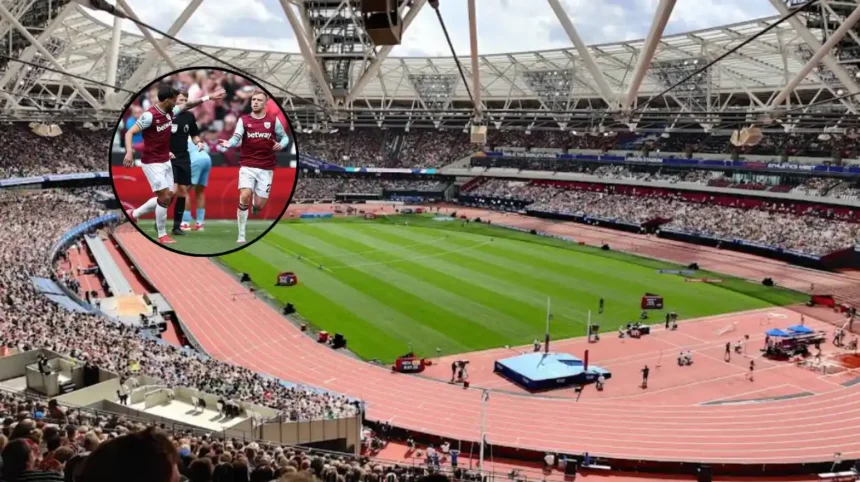
West Ham United (East London Times) September 15, 2026 – West Ham United will no longer face a major venue conflict at the London Stadium during the summer of 2029 following the defeat of London’s bid to host the World Athletics Championships. UK Athletics confirmed on Tuesday that World Athletics selected Nairobi over the British capital to stage the 2029 event, whilst awarding the 2031 edition to Munich. The decision ensures that the Premier League club’s home ground will not require the extensive structural conversions and summer scheduling adjustments necessary to accommodate a major multi-week global track and field tournament.
- Key Points
- What Led to the Rejection of London’s 2029 Athletics Bid?
- Why Does the Decision Benefit West Ham United’s Domestic Calendar?
- How Are London Stadium Operations Affected by the Outcome?
- Background to the London Stadium Concession Agreement
- Predictions: How Will This Outcome Impact West Ham United, Stadium Operators, and British Athletics?
What Led to the Rejection of London’s 2029 Athletics Bid?
As reported by sports correspondents across major national titles, UK Athletics pursued the 2029 event with the intention of returning the World Athletics Championships to the venue built for the 2012 Olympic Games. However, the governing body of world athletics opted to award the 2029 hosting rights to Kenya’s capital, Nairobi, marking a historic move to bring the flagship event to the African continent.
The bidding process required applicant cities to demonstrate financial backing, transport infrastructure, and venue availability. Whilst London offered an established venue with a proven track record from the 2017 World Athletics Championships, World Athletics selected Nairobi’s proposal, effectively ending the capital’s campaign and removing the prospect of a summer international event at the Stratford site in 2029.
Why Does the Decision Benefit West Ham United’s Domestic Calendar?
Under the terms of the 99-year concession agreement signed in 2013, West Ham United are the primary sporting tenants of the London Stadium. However, the agreement grants designated summer windows for athletics and other major entertainment events, requiring the stadium seating to be moved over track areas.
Had London won the hosting rights for 2029, the global event—traditionally staged in July or August—would have overlapped directly with the preparation and start of the 2029–30 Premier League season. Reconfiguring the seating from athletics mode back to a football layout requires several weeks of engineering work. The rejection of the London bid removes the risk of West Ham United having to request away fixtures for the opening weeks of that season or seeking alternative arrangements for early home matches.
How Are London Stadium Operations Affected by the Outcome?
The venue is managed by E20 Stadium LLP, the body responsible for overseeing the transition between football matches, concerts, and athletics events. Operating the London Stadium involves substantial annual costs tied to converting the retractable seating system.
The absence of a World Athletics Championships in 2029 removes a significant operational hurdle for the venue’s operators, who would have had to balance the financial returns of a major international tournament against the contractual commitments owed to West Ham United. The club holds priority booking rights for domestic league and European fixture dates, meaning any collision with international athletics schedules presents logistical and financial challenges for stadium managers.
Background to the London Stadium Concession Agreement
The London Stadium was originally constructed as the central venue for the London 2012 Olympic and Paralympic Games before undergoing a multi-million-pound conversion into a multi-purpose arena. In 2013, West Ham United secured a 99-year lease to become the anchor tenant, moving from their historic Boleyn Ground home in Upton Park ahead of the 2016–17 football season.
The tenancy agreement established that the stadium would remain a multi-use venue capable of hosting track and field events, major music concerts, and international sports such as Major League Baseball. To maintain its track heritage, UK Athletics was granted specific summer usage rights, including the annual London Athletics Meet.
In 2017, the venue successfully hosted the IAAF World Athletics Championships and World Para Athletics Championships. However, the annual transformation process—moving seat blocks over the running track—has historically generated high operational costs and required careful timing to avoid overlapping with the start of the English football season each August.
Predictions: How Will This Outcome Impact West Ham United, Stadium Operators, and British Athletics?
Impact on West Ham United and Supporters
For West Ham United and their fanbase, the selection of Nairobi provides long-term fixture certainty. The club will not face stadium availability constraints or forced schedule adjustments at the start of the 2029–30 season. Supporters can expect standard scheduling for home pre-season friendlies and early-season league matches without the threat of temporary relocation or extended sequences of away fixtures.
Impact on Stadium Operators and Public Finances
For stadium managers and local stakeholders, missing out on the 2029 event eliminates both a potential revenue opportunity and a logistical complication. While hosting a World Championships brings global publicity and tourist expenditure to East London, it also entails heavy operational expenditure related to venue preparation, security, and seating transitions. The operators will now maintain their standard event calendar, relying on summer concerts and single-day athletics meets to generate off-season revenue.
Impact on UK Athletics
For UK Athletics and the broader domestic sporting landscape, the failure to secure either the 2029 or 2031 events shifts the focus toward smaller-scale international competitions and the annual Diamond League fixture. UK Athletics will need to look for alternative strategies to bring elite global events to Britain without the financial guarantee and prestige associated with hosting the World Athletics Championships.