Key Points
- A new fan-made redesign of the West Ham United badge has gone viral, earning widespread praise from supporters.
- The redesign emerges during one of the club’s most difficult seasons, with West Ham facing relegation battles for the second year running.
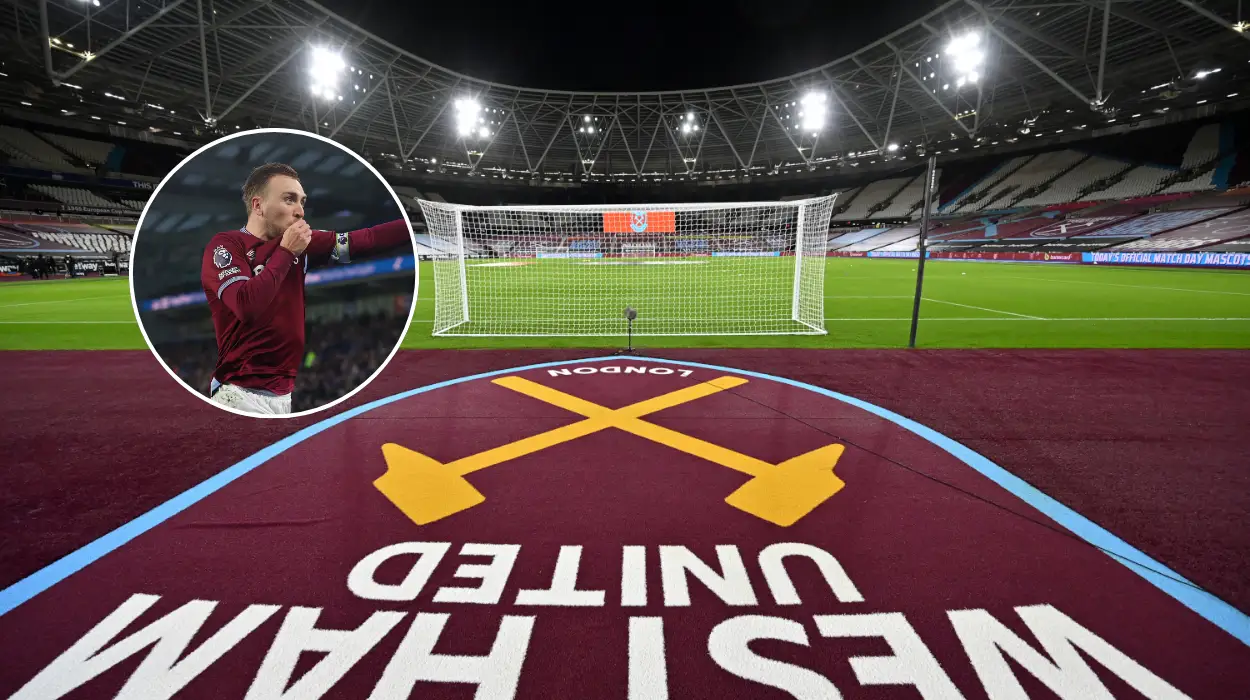
- Fans have long criticised the 2016 badge that introduced the word “London”, widely seen as a break from tradition.
- The fan-created concept removes “London” from the crest and brings back visual elements reminiscent of the Upton Park era.
- 2025 has been a bleak year for the Hammers, marked by poor results, protests against ownership, and financial uncertainty.
- The badge redesign has sparked debate about whether the club should consider officially reverting to an older design.
- Supporters see the new design as a symbol of hope and identity amid a season of turmoil.
Why does the new West Ham badge redesign matter so much to fans?
As reported by Tom Clark of Football.London, West Ham’s fanbase has endured a turbulent few years marked by inconsistent performances, managerial uncertainty, and unrest towards the club’s board. The badge, introduced in 2016 following the club’s move from Upton Park to the London Stadium, has often been a flashpoint for criticism.
- Key Points
- Why does the new West Ham badge redesign matter so much to fans?
- Who created the redesigned badge and what does it represent?
- How have fans responded to the new badge?
- What does the badge controversy reveal about fan sentiment?
- Could West Ham consider changing the badge again officially?
- How bad has this season been for West Ham?
- Why do symbols like badges matter so much in football culture?
- What’s next for West Ham and its fans?
Supporters objected to the inclusion of the word “London” beneath the crossed hammers symbol, arguing it diluted the identity and heritage of the club. “It felt like a branding exercise, not a football decision,” wrote Clark in his feature piece reflecting on the issue in early 2025.
That frustration has persisted, and amid a disappointing run of only 19 wins in the last 74 league matches since January 2024, the badge has come to represent what fans perceive as the club’s detachment from its roots. The new fan-made redesign, which circulated widely on platforms such as Twitter and Reddit, strips away the controversial elements and instead introduces a modernised version of the traditional crest — elegantly simple yet unmistakably West Ham.
Who created the redesigned badge and what does it represent?
According to Hammers News, the new design was developed by an independent sports branding designer known online as “SB Designs”. The artist said the project was “a passion piece born from a love for the club and respect for its heritage.” As quoted by Hammers News, the designer added:
“I wanted to create something that fans could be proud of again — something that felt authentic, rooted in history, and connected to the Upton Park era.”
The redesign features:
- The removal of the word “London” to restore the focus on the crossed hammers.
- Deeper claret and more muted blue tones inspired by classic kit designs.
- The return of a shield outline similar to pre-2016 crests.
This aesthetic shift instantly resonated with supporters, many of whom described it as “the best thing to happen all year.” Posts showcasing the design received tens of thousands of likes and shares within 48 hours, with fans calling it “a true emblem of West Ham United.”
How have fans responded to the new badge?
According to The Mirror’s sports reporter Aaron Flanagan, supporters have “overwhelmingly embraced” the new design. On social media, phrases like “finally feels like West Ham again” and “this should replace the current badge immediately” dominated fan discussions.
On X (formerly Twitter), one user wrote:
“This is what the badge should’ve looked like before we moved from Upton Park. The current one represents corporate West Ham — this feels like home.”
Meanwhile, Claret & Hugh, a leading independent fan blog, highlighted how the viral crest became a symbolic “revival of pride” among the fanbase during what many described as “the darkest period in the club’s modern history.”
Blogger Hugh Southon of Claret & Hugh wrote that “it’s telling that a badge redesign, not a transfer or result, has given supporters something to unite behind.”
What does the badge controversy reveal about fan sentiment?
The ongoing debate surrounding the badge reflects deeper tensions between supporters, the club’s identity, and its owners. As reported by Jacob Steinberg of The Guardian, there has been a steady erosion of trust since the move to the London Stadium in 2016 under co-owners David Sullivan and the late David Gold. Many fans view the stadium relocation as a commercial decision that came at the expense of atmosphere and tradition.
Steinberg observed that such symbolic decisions — like the badge redesign — often amplify resentment during poor results, serving as “lightning rods for fan frustration.”
With West Ham currently languishing near the relegation zone, those emotional undercurrents have resurfaced. The Evening Standard reported in December 2025 that fan groups such as Hammers United have called for renewed consultation between the board and supporters, including in matters of branding and club heritage.
Could West Ham consider changing the badge again officially?
While no official communication from the club has confirmed plans for another badge redesign, speculation has grown. According to journalist Jack Rosser of The Standard, club officials are “aware of fan discontent” and have discussed “branding refresh concepts” as part of a broader image overhaul planned for future seasons.
However, club sources quoted by The Athletic’s Roshane Thomas clarified that “there are currently no formal plans” to revisit the crest, as leadership focuses on stabilising results and securing Premier League safety. Thomas noted that the communications team “acknowledges the strength of supporter sentiment” but is wary of making changes that might appear reactionary.
Still, the online traction of the fan-made redesign has not gone unnoticed. Marketing consultants told The Athletic that viral fan engagement “could influence future rebranding conversations,” especially as football clubs increasingly measure brand effectiveness through digital fan interaction.
How bad has this season been for West Ham?
To contextualise the timing of this viral moment, West Ham’s form has been dire. As reported by BBC Sport, the Hammers have recorded only three wins in their last 15 league matches. Their attacking record has been one of the worst in the division, while defensive lapses have seen them concede late goals in several critical fixtures.
Manager David Moyes, under immense pressure, has faced repeated questions about his future. Sky Sports reported earlier this month that Moyes retains “backing from the board for now”, but the situation remains precarious.
The bleakness of 2025 has extended beyond the pitch. Evening Standard journalists Malik Ouzia and Dom Smith highlighted growing fan protests outside the London Stadium, focusing on ownership decisions and the lack of clear strategy.
Against this background, even a badge redesign — unofficial though it may be — has unexpectedly provided something positive for fans to rally around.
Why do symbols like badges matter so much in football culture?
Football historians such as Dr. Guy Oliver, quoted in The Guardian, note that club crests function as “repositories of identity and belonging.” In West Ham’s case, the crossed hammers are not just graphics; they embody the club’s industrial roots and East End heritage. The loss of that sense of authenticity, Oliver argued, contributes to why fans resist corporatised rebrands.
Supporter and historian Brian Williams, author of Nearly Reach the Sky: A Farewell to Upton Park, told BBC London that “a club’s symbols matter because they tell the story of who you are and where you’ve come from. When you lose that, you lose part of what keeps people emotionally invested.”
The reaction to the new badge demonstrates that even amid sporting crises, supporters crave cultural continuity — something they feel has been overlooked in the modern Premier League era.
What’s next for West Ham and its fans?
While the redesigned badge has generated excitement, its long-term impact remains uncertain. West Ham’s immediate concern lies in survival — both in the Premier League and in maintaining unity within its fanbase.
If the club continues to struggle, renewed discussions about leadership, identity, and image could follow. For now, however, this creative spark — born outside the club’s formal structure — has reminded supporters of what West Ham stands for: heritage, community, and resilience.
As journalist Joe Ward of Hammers News aptly summarised:
“In a year defined by frustration, it’s ironic that something as simple as a badge redesign has done what results couldn’t — unite West Ham fans again, even if just for a moment.”