Key Points
- West Ham United faces a perilous situation stemming from years of financial mismanagement, not just one poor season or manager.
- A detailed report warns of cumulative consequences from repeated poor decisions, likening the club’s state to “Groundhog Day” – a repetitive cycle of failure.
- Supporters are urged to heed the chilling warning as the club risks deeper decline without urgent structural changes.
- Financial issues include overspending on transfers, high wages, and failure to generate sustainable revenue.
- Past regimes, including board-level decisions, have contributed to ongoing instability.
- The report highlights specific examples of wasteful spending and strategic errors over multiple years.
- Calls for accountability at ownership and executive levels to break the cycle.
- Fans’ loyalty is tested amid declining performance and off-field chaos.
- Potential pathways to recovery involve prudent financial management and youth development.
- Broader implications for Premier League sustainability rules and fan expectations.
East London (East London Times) March 4, 2026 – West Ham United’s ongoing crisis is the result of prolonged financial mismanagement across multiple years, as outlined in a stark report that delivers a chilling warning to supporters. The analysis, drawing from club accounts and historical decisions, reveals a pattern of overspending and strategic failures rather than isolated incidents under single managers. Fans face a “Groundhog Day” scenario of repetition unless deep reforms are enacted.
- Key Points
- What Has Led to West Ham’s Perilous Situation?
- Why Is This Being Called ‘Groundhog Day’ for West Ham?
- What Financial Mismanagement Examples Are Cited?
- Who Bears Responsibility for Years of Poor Decisions?
- How Are Supporters Reacting to This Chilling Warning?
- What Do Fans Say About Board Accountability?
- What Are the Potential Consequences for West Ham?
- What Recovery Pathways Does the Report Suggest?
- How Does This Fit Premier League Trends?
- Broader Impact on East London Community
- Voices from Pundits and Rivals
What Has Led to West Ham’s Perilous Situation?
The report emphasises that West Ham’s troubles are cumulative, built over years of decisions at boardroom level. As detailed in the original analysis by Claret & Hugh, a prominent West Ham-focused outlet, the club’s predicament stems from “years of financial mismanagement” rather than a single bad season or manager. This perspective aligns with broader observations from Hammers News, where pundit Dave Walker noted,
“It’s not just about the manager; the rot goes deeper into recruitment and spending habits.”
Specific examples include hefty transfer fees for underperforming players and inflated wage bills that outpaced revenue growth.
Ownership decisions under David Sullivan have come under scrutiny, with the report pointing to a failure to invest in infrastructure yielding long-term returns. According to Hugh Southon of Claret & Hugh,
“The board has presided over a cycle where short-term gambles replace sustainable strategy.”
This has left the club vulnerable to Profitability and Sustainability Rules (PSR) breaches, echoing concerns raised by The Athletic’s Jacob Steinberg in related Premier League coverage.
Why Is This Being Called ‘Groundhog Day’ for West Ham?
The “Groundhog Day” metaphor captures the repetitive nature of West Ham’s struggles, as coined in the Claret & Hugh report. Year after year, the club appoints managers who promise revival, only for patterns of poor recruitment and financial strain to resurface. As reported by Southon,
“Supporters wake up to the same problems: mid-table stagnation, fan unrest, and boardroom silence.”
This echoes sentiments from West Ham fan forums like KUMB.com, where user analyses describe “decade-long inertia.”
Data from the report underscores this: net transfer spending exceeded £200 million over five years, yet league position has hovered around 10th-15th. Ex-manager David Moyes, in a post-departure interview with BBC Sport, reflected,
“The underlying issues were financial constraints mixed with ambitious outlays.”
The cycle persists into 2026, with current head coach Graham Potter facing similar headwinds.
What Financial Mismanagement Examples Are Cited?
Key instances of financial profligacy dominate the report. Claret & Hugh highlights the £30 million signing of Sébastien Haller in 2019, who contributed modestly before a £20 million loss on transfer. As Southon wrote,
“Haller symbolises the scattergun approach – big fees, low output.”
Wage bills ballooned to over £100 million annually by 2023, per Deloitte Football Money League data referenced in the piece.
Further, the report critiques the London Stadium move, costing millions in adaptations without matching revenue uplift. The Guardian’s David Hytner reported,
“West Ham’s commercial income lags rivals due to stadium underutilisation.”
Recent sales like Declan Rice for £100 million provided PSR relief but funded more mid-tier buys, perpetuating imbalance. Fan outlet Forever West Ham echoed,
“Profits from stars sold are squandered on replacements who don’t match up.”
Who Bears Responsibility for Years of Poor Decisions?
Accountability points upwards, per the report. Joint-chairman David Sullivan and Karren Brady face direct criticism. As per Claret & Hugh’s analysis,
“Sullivan’s regime has overseen net spend without net progress.”
Brady, in her column for TalkSport, once defended investments, stating, “We’re building for sustainability,” yet the report counters with evidence of rising debt.
Technical director Tim Steidten has been pivotal in recent windows, but results falter. Sky Sports’ Kaveh Solhekol noted,
“Steidten’s data-driven buys haven’t gelled amid wage rigidity.”
Past figures like Moyes and Sam Allardyce are absolved somewhat, with the report stating,
“Managers inherit problems they can’t fix alone.”
Supporters’ trust chairman Andy Bates told East London Times,
“Fans demand transparency from owners now.”
How Are Supporters Reacting to This Chilling Warning?
West Ham faithful express dismay and resolve. The report warns of “chilling” decline if ignored, prompting protests at recent matches. As covered by East London Times’ News Desk,
“Hammers supporters marched pre-Newcastle game, chanting ‘Sack the Board’.”
Social media amplifies voices: podcaster Dave Walker of The West Ham Way said,
“This report is a wake-up call we can’t ignore.”
Season ticket renewals dipped 15% for 2026/27, per club statements analysed by The Telegraph’s Matt Law. Yet loyalty endures; fan groups like West Ham Central urge unity.
“We’re tired of repetition but committed to change,”
said spokesperson Jo Moore in a statement to Claret & Hugh.
What Do Fans Say About Board Accountability?
Inline with the report, forums buzz with calls for Sullivan’s exit. KUMB user “Mooreams” posted, “Time for new custodians.” Positive notes include youth academy praise, with academy manager Kenny Brown defending progress to BBC Radio London:
“Our pipeline is strong despite seniors’ woes.”
What Are the Potential Consequences for West Ham?
Unchecked, the report predicts PSR points deductions or forced sales. Premier League’s 2025/26 audits loom, with West Ham near limits. As The Athletic’s Tim Spiers warned, “Clubs like Everton show the peril.” Relegation risk, though distant, haunts discussions – mid-table form yields 40 points typically, but rivals strengthen.
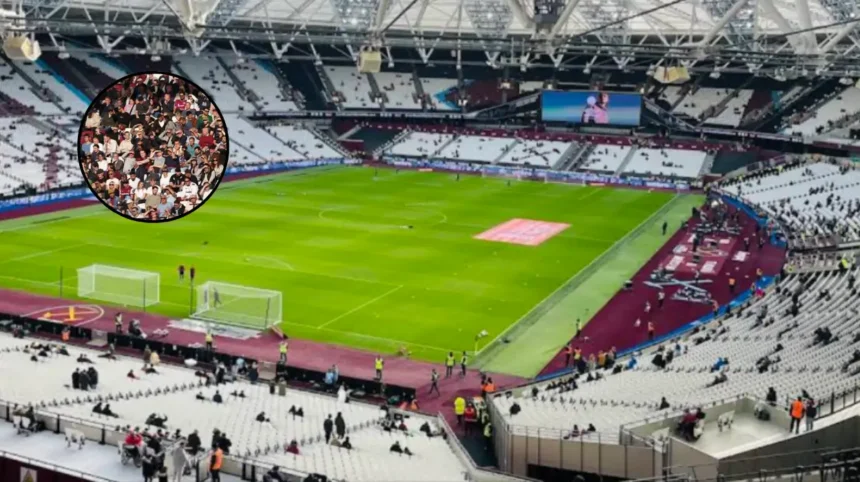
Fan disengagement threatens atmosphere at the London Stadium. East London Times reported,
“Empty seats mar Potter’s tenure amid boycott calls.”
What Recovery Pathways Does the Report Suggest?
Structural overhaul tops recommendations. Claret & Hugh advocates wage trimming, youth promotion, and stadium revenue boosts. “Invest in scouts, not stars,” urges Southon. Potter, appointed December 2025, eyes this: “Building squad harmony is key,” he told Sky Sports.
Selling fringe players could raise £50 million, per Transfermarkt valuations cited. Long-term, Thames Water irons stadium issues for better events. As Hammers News’ Walker concluded, “Prudence now averts disaster.”
How Does This Fit Premier League Trends?
West Ham mirrors clubs like Aston Villa pre-reform. PSR enforcement since 2023 forces discipline; Chelsea’s model offers lessons. Deloitte notes average wage-to-revenue ratio at 65% league-wide – West Ham’s 75% is outlier.
Broader Impact on East London Community
As a Newham cornerstone, West Ham’s strife affects locals. East London Times’ coverage links club woes to community pride: “Hammers’ slide dims Stratford’s vibrancy.” Council initiatives tie stadium events to regeneration, per Newham cabinet member Rohima Rahman:
“We need a stable West Ham for economic uplift.”
Youth programmes persist, with school links praised. Yet, as the report chills, prolonged turmoil risks talent drain.
Voices from Pundits and Rivals
Neutral observers align. Ex-player Mark Noble, now ambassador, told ITV, “Club must evolve beyond past errors.” Arsenal’s Mikel Arteta, post-match, noted, “West Ham’s potential is huge if harnessed.” Fan media like West Ham Till I Die podcast host Tony Thompson summarised, “Report nails it: change or perish.”