Key Points
- A road collision in Walthamstow, east London, has caused significant traffic congestion near St James Street station.
- The A1006 Markhouse Road is partially blocked northbound from Markhouse Avenue to South Grove, with Markhouse Avenue completely obstructed.
- Local public transport routes are impacted, with bus services 58, 158, and W19 diverted around the collision site.
- Emergency services and traffic monitoring platforms report ongoing delays and queuing traffic along the affected corridors.
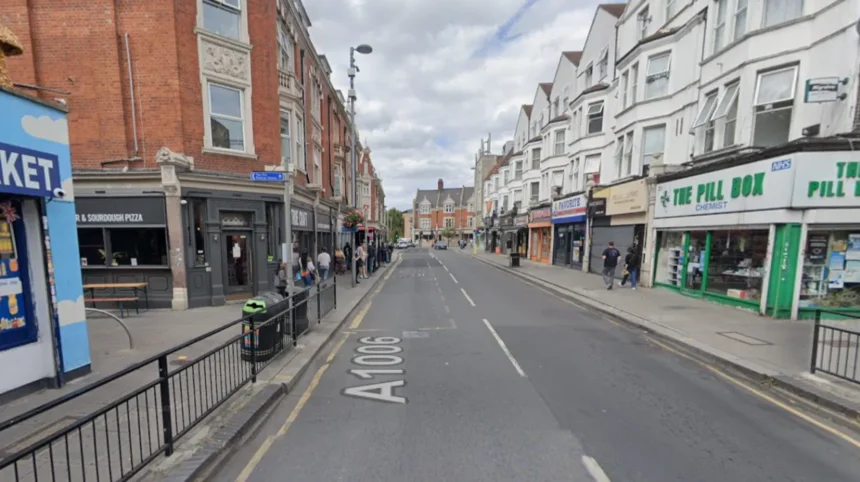
Walthamstow (East London Times) October 19, 2026 – A road traffic collision in Walthamstow, east London, has led to major vehicular disruption and partial road closures in the vicinity of St James Street train station. According to traffic monitoring data provided by the Automobile Association, the A1006 Markhouse Road has been rendered partially blocked northbound between Markhouse Avenue and South Grove. In addition, Markhouse Avenue itself is fully obstructed as a consequence of the incident, creating extensive queueing along key arterial routes in the London Borough of Waltham Forest.
What Are the Immediate Traffic and Transit Disruptions on Markhouse Road?
The incident occurred along a busy sector of the A1006 Markhouse Road, a primary route connecting resident and commercial traffic toward central Walthamstow and nearby rail links. As reported by the Automobile Association, the crash forced a partial shutdown of the northbound carriage, immediately impairing the traffic flow from Markhouse Avenue up to South Grove. The complete blockage of Markhouse Avenue has further constrained movement through the surrounding residential streets, preventing vehicles from accessing the main corridor.
Public transport networks in the area have been altered to navigate around the scene of the collision. Transport for London has implemented formal diversions for several local bus services operating through the Markhouse Road junction. Specifically, bus routes 58, 158, and W19 have been rerouted to maintain service continuity while avoiding the obstructed sections of the A1006 and Markhouse Avenue. Commuters using St James Street station and surrounding bus stops have been advised to anticipate extended journey times due to the knock-on congestion on designated diversion paths.
Background of the Particular Development
Markhouse Road serves as a vital north-south connector in the Walthamstow area, carrying a high volume of local car traffic, goods vehicles, and scheduled bus services throughout the day. Situated close to St James Street station—a key stop on the London Overground line into London Liverpool Street—the surrounding junction network experiences heavy pedestrian and vehicular density during peak operational hours.
Due to the density of the surrounding residential zones and narrow side-street access, any disruption along the A1006 rapidly impacts neighboring arteries, including South Grove and the nearby Lea Bridge Road corridors. Emergency services and local transport authorities frequently implement standard diversion protocols along these routes when collisions occur to ensure clear passage for emergency vehicles and maintain minimum access levels for surrounding transit links.
Prediction: How Will This Development Affect Local Commuters and Transit Operations?
The ongoing partial closure of the A1006 Markhouse Road and the full blockage of Markhouse Avenue will likely continue to cause localized travel delays for residents, daily commuters, and commercial transport operators throughout the affected period. Bus passengers relying on services 58, 158, and W19 face increased wait times and modified stop locations, requiring commuters to adjust travel plans or utilize alternative rail options from St James Street station where available.
Until the vehicle recovery process is fully completed and traffic authorities reopen all blocked lanes, surrounding residential bypasses will absorb the displaced vehicular volume. Drivers traveling through the Walthamstow area are expected to experience residual tailbacks, particularly during peak travel windows, as the regional network slowly returns to normal capacity.