Key Points
- Severe Financial Crisis: Havering Council Leader Councillor Keith Prince AM has warned that the borough’s current financial trajectory is “not sustainable”, despite recent spending reductions.
- Government Loan Burden: The local authority remains dependent on a Central Government loan to shore up its finances, though recent officer-led interventions have reduced the required drawdown and subsequent interest payments.
- Additional Funding Secured: High-level advocacy by the council’s Chief Executive and Finance Director secured an additional £6 million from Central Government, though council leadership insists this remains insufficient.
- Demand for Social Care Reform: The administration is lobbying Central Government to fully absorb social care costs through the proposed National Care Service, identifying social care as a primary financial driver.
- Investment in Policing: Havering Council maintains a firm commitment to funding Section 92 Police Officers to combat local crime, including targeting prolific shoplifters in areas like Hornchurch.
- Gallows Corner Compensation Push: Following the reopening of Gallows Corner after protracted disruptions, the council is actively lobbying the Greater London Authority (GLA), Transport for London (TfL), and Essex and Suffolk Water to compensate affected local businesses.
- Strategic Roadmap Released: The administration has launched ‘The Havering Plan 2040’, an overarching initiative aimed at transforming the borough into “London’s Super Suburb”.
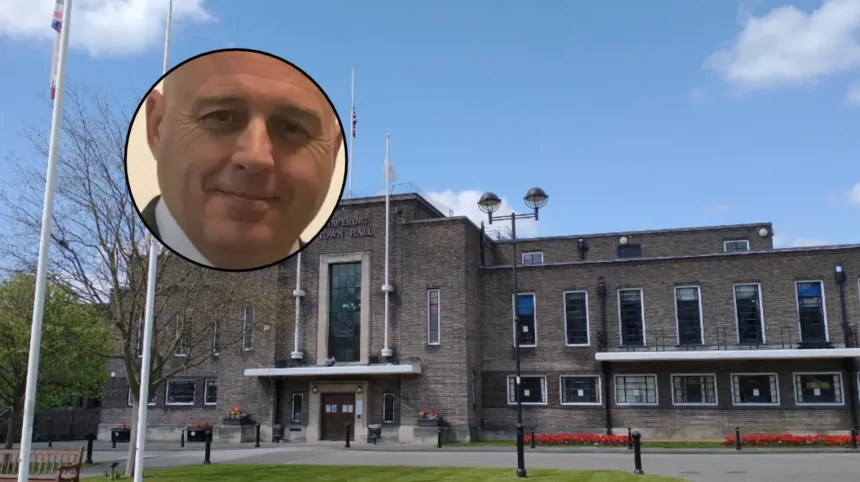
Havering (East London Times) October 19, 2026 – Havering Council is confronting significant fiscal turbulence, with local leadership declaring that the local authority’s present financial model cannot be sustained over the long term. In an official communication released by the local authority, Councillor Keith Prince AM, Leader of Havering Council, detailed the rigorous financial management measures currently underway while stressing the immediate necessity for broader systemic funding reforms from Central Government.
Councillor Prince outlined that the administration, alongside senior council officers, is conducting intensive budgetary reviews to formulate the financial plan for the upcoming fiscal year. These measures have involved extensive cross-departmental deliberations to identify achievable efficiency savings while pinpointing areas where localized public investment remains essential.
According to Councillor Prince, the council’s financial trajectory has been burdened by structural deficits inherited from prior years. He noted that former political leadership failed to enact necessary fiscal decisions, exacerbating the current financial strain. However, targeted internal interventions carried out by officers have successfully generated expenditure reductions, improving the council’s immediate outlook.
As detailed by Councillor Prince, these localized savings have enabled the council to reduce its reliance on the emergency Central Government loan allocated to stabilize municipal finances. Decreasing the amount drawn down from this governmental facility directly diminishes the compounding interest burden placed upon local taxpayers. Despite these internal improvements, Councillor Prince stated unequivocally that these interim operational adjustments are not sustainable independently, making direct intervention from Central Government mandatory to achieve a balanced fiscal position.
How Is Local Leadership Lobbying Central Government for Further Support?
To address the immediate structural budget deficit, Havering Council executive management has actively engaged with national authorities to secure direct financial support. Councillor Prince revealed that administrative negotiations led by the council’s Chief Executive and the Finance Director successfully yielded an additional £6 million allocation from Central Government.
While acknowledging the funding injection as positive progress, Councillor Prince stressed that the £6 million sum remains inadequate to bridge the borough’s overall financial gap. Consequently, the local authority intends to escalate its lobbying efforts in Whitehall to secure further capital infusions and structural financial relief. Among the proposals being actively put forward by the administration is the complete cancellation of interest accruals on the existing Central Government emergency loan.
In addition to direct municipal loans, Havering Council is pressing national ministers for comprehensive structural reform of adult and children social care, which remains one of the largest expenditure items on the borough’s balance sheet. Councillor Prince confirmed that the administration will vigorously lobby national policymakers to ensure that the proposed National Care Service fully absorbs the operational and delivery costs associated with social care provision, thereby relieving local authorities of an unsustainable financial obligation.
What Investments and Infrastructure Recovery Projects Are Being Prioritised?
Despite prevailing budgetary constraints, Havering Council has pledged to maintain localized funding for core community safety initiatives. Councillor Prince highlighted the administration’s continued funding of dedicated Section 92 Police Officers, emphasizing their key role in tackling localized crime networks across the borough.
Highlighting recent operational achievements, Councillor Prince referenced an official site visit to Hornchurch on Friday, October 9, where he observed frontline policing teams targeting repeat retail crime offenders and prolific shoplifters. The administration reaffirmed that direct support for targeted law enforcement will remain a cornerstone of its operational priorities.
Simultaneously, the borough is addressing infrastructure recovery in the wake of the reopening of Gallows Corner. The major junction, which underwent extensive and prolonged maintenance works, caused substantial economic disruption to surrounding commercial enterprises.
Councillor Prince characterized the initial management of the junction works as flawed, noting that local traders continue to experience financial repercussions. In response, the council leader affirmed that local authority representatives will continue to formally press the Greater London Authority (GLA), Transport for London (TfL), and Essex and Suffolk Water to provide financial compensation packages to impacted local businesses.
Furthermore, these operational measures form part of the council’s broader strategic document, ‘The Havering Plan 2040’. The long-term vision document outlines the local authority’s ambition to establish Havering as “London’s Super Suburb” through managed economic growth, protection of local green spaces, and enhanced public service delivery.
What Is the Background of Havering’s Financial Crisis?
The financial strain facing the London Borough of Havering reflects broader structural pressures across UK local government, particularly surrounding the escalating costs of social care and temporary accommodation. Over recent years, outer London boroughs have faced disproportionate demographic shifts alongside static core funding baselines, forcing several local authorities to seek Exceptional Financial Support (EFS) from the Ministry of Housing, Communities and Local Government (MHCLG).
Havering Council was previously forced to apply for special government dispensation to borrow funds to balance its operational budget—a legal requirement under the Local Government Finance Act 1988. In early 2024, the council warned of potential Section 114 notices (effective bankruptcy) if emergency capitalisation directions were not granted. The reliance on government loans, while staving off immediate administrative insolvency, introduced long-term interest servicing obligations that continue to compress the borough’s discretionary spending capacity.
Prediction: How Will This Development Affect Local Residents and Businesses?
The ongoing fiscal crisis and subsequent municipal responses will directly impact Havering residents, commercial operations, and local service delivery over the coming financial years.
1. Pressure on Local Taxation and Discretionary Services
While the council has managed to reduce its emergency loan drawdowns, the requirement to balance the annual budget means residents are likely to face maximum permissible Council Tax increases in future budget cycles. Furthermore, non-statutory discretionary services—such as local library hours, park maintenance, community centers, and highway repairs—may experience further consolidation as officers work to identify permanent structural savings.
2. Commercial Relief and Business Support
For local business owners, particularly those around the Gallows Corner corridor, successful lobbying against TfL, the GLA, and utility companies could yield much-needed financial restitution to offset historical trading losses. However, if compensation claims face prolonged administrative delays, small enterprises may continue to absorb the economic impact without immediate relief.
3. Public Safety and Social Care Provision
The council’s explicit decision to preserve funding for Section 92 Police Officers ensures that visible neighbourhood policing will remain active in key commercial hubs like Hornchurch, offering support to retail businesses facing shoplifting threats. Conversely, vulnerable residents reliant on social care services will see their delivery frameworks shift as the government rolls out its national strategies; if Central Government fails to fully fund social care costs, local eligibility thresholds may tighten further to control municipal expenditure.