Key Points:
- Two Hornchurch car parks — Keswick Avenue and Dorrington Gardens — will close in early 2026.
- 40 new homes will be constructed across both sites by Mercury Land Holdings (MLH).
- Havering Council says both car parks are “underused”.
- 34 homes (a mix of houses and flats) will be built at Dorrington Gardens, while six three-bedroom homes will rise at Keswick Avenue.
- Council Leader Councillor Ray Morgon said delivering new homes is a “top priority” for Havering.
- Permissions for Keswick Avenue and Dorrington Gardens were granted in April and May 2024 respectively.
- More than 40 objections were lodged against the Dorrington Gardens proposal.
- Earlier plans for 137 homes in Como Street also faced community opposition.
- Havering Council is trialling a new £1 flat parking rate for two hours at other sites.
- The council says housing demand is “quickly outpacing” supply across the borough.
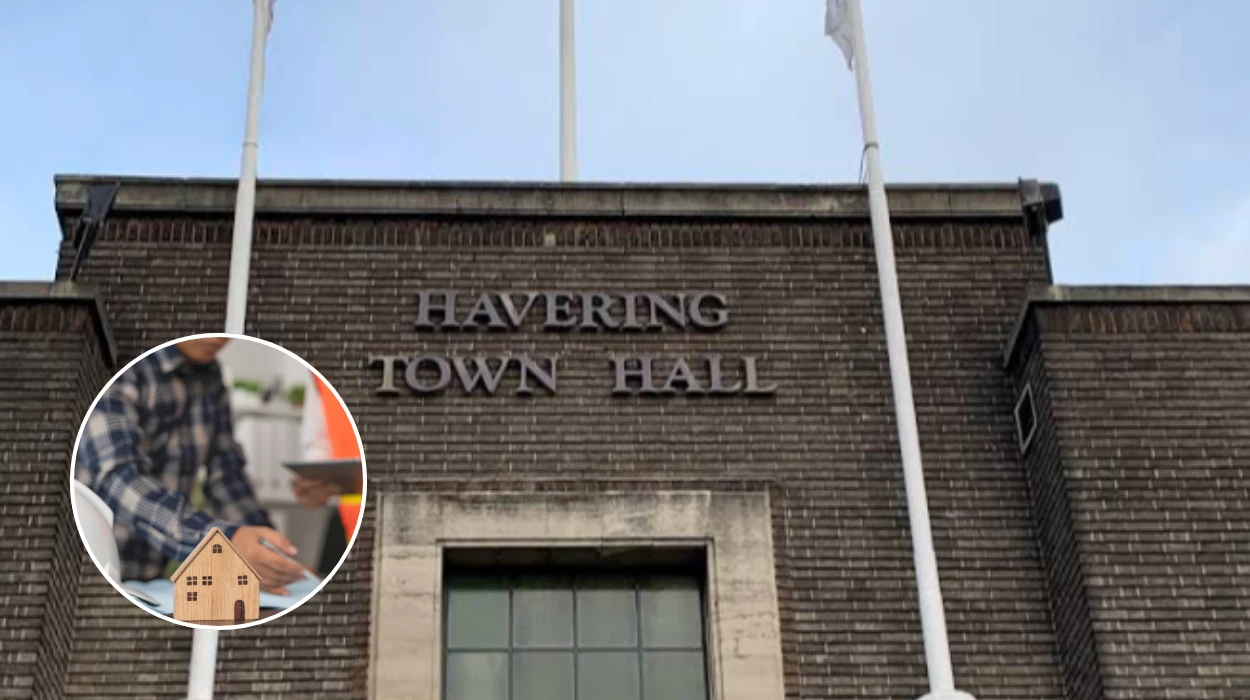
Two underused Hornchurch car parks are set to permanently close in early 2026, paving the way for the construction of 40 new homes as part of Havering Council’s ongoing housing strategy. The developments, approved in mid-2024, mark another step in the borough’s efforts to tackle mounting local housing demand.
- Key Points:
- Why are car parks in Hornchurch being closed?
- What has Havering Council said about the closures?
- How bad is the housing shortage in Havering?
- How are residents responding to the decision?
- What alternative parking measures are being introduced?
- Are there other similar redevelopment projects in Havering?
- What is Mercury Land Holdings (MLH)?
- What happens next?
- Will these developments ease the housing pressure?
Why are car parks in Hornchurch being closed?
According to a report by MyLondon News, published by journalist Josh Bolton, the two council-run car parks — Keswick Avenue and Dorrington Gardens — will shut their gates in January and March respectively. Havering Council confirmed that both sites are considered “underused,” and therefore present viable opportunities for redevelopment.
As reported by MyLondon, planning permission was first granted for the Keswick Avenue site in April 2024, followed by approval for Dorrington Gardens the following month. The latter plan received more than 40 objections from residents concerned about parking loss and local congestion.
Mercury Land Holdings (MLH), the council’s own housing development company, will deliver the projects. Together, the schemes will create 40 homes — comprising six three-bedroom houses at Keswick Avenue, and a further 34 homes of mixed sizes at Dorrington Gardens.
What has Havering Council said about the closures?
As reported by Josh Bolton of MyLondon, Havering Council Leader Councillor Ray Morgon described the closures and subsequent housing projects as a key component of the borough’s policy to meet local housing needs. He stated:
“Delivering new homes for local people is a top priority for our administration, and these developments in Hornchurch by Mercury Land Holdings (MLH) are an important step toward meeting that need.”
Councillor Morgon further emphasised that redeveloping low-use car parks not only makes better use of under-performing public land but also ensures that new family homes can be built within the borough without consuming green belt land.
How bad is the housing shortage in Havering?
The shortage of affordable and accessible housing in Havering has become an increasing concern for local authorities. As noted in the MyLondon report, a council-commissioned study published in mid-2023 found that housing demand in the borough is “quickly outpacing supply.”
The report outlined that the pace of new construction is insufficient to accommodate growing local populations, particularly among younger families seeking affordable homes. Havering’s housing waiting list has steadily grown over the past five years, prompting the council to identify “surplus” spaces, such as car parks, for possible redevelopment.
How are residents responding to the decision?
The decision has drawn mixed reactions from Hornchurch residents. Many objectors, as recorded in planning documents cited by MyLondon, expressed worries over lost public parking and strain on local infrastructure.
One local resident was quoted in council records as saying the removal of car parks would “discourage visitors from shopping locally,” potentially affecting small businesses. Others voiced concern that increased housing density could lead to congestion and additional pressure on local services such as schools and GP surgeries.
Nevertheless, other residents have supported the council’s ambition to bring new homes to the borough, particularly in a period of escalating rental and ownership costs.
What alternative parking measures are being introduced?
To alleviate parking concerns, Havering Council is simultaneously trialling a new two-hour flat rate of £1 across several remaining car parks in the borough. The initiative aims to encourage shorter stays, improve turnover, and support local retail activity.
The pilot scheme, according to council documents referenced by MyLondon, will run throughout early 2026. The council will assess its impact on both parking availability and local businesses before deciding on a long-term pricing policy.
Are there other similar redevelopment projects in Havering?
The Hornchurch car park conversions form part of a wider redevelopment strategy across Havering. Other MLH-led projects are already under way, including the long-debated Como Street development, where 137 homes are proposed.
As reported earlier by Local Democracy Reporting Service (LDRS) through MyLondon, the Como Street scheme has attracted “sustained opposition” from residents who claim the site is “unsuitable for the area” and could overburden existing infrastructure. However, Havering Council maintains that each project undergoes rigorous community consultation and planning scrutiny before approval.
What is Mercury Land Holdings (MLH)?
Mercury Land Holdings is Havering Council’s wholly owned development company, established to help deliver regeneration and housing schemes across the borough. The organisation’s mission, according to its public statements, is to “create sustainable homes that meet the needs of local people” while generating reinvestable returns for the council.
Previous MLH projects include redevelopments in Rainham and Romford, combining residential and mixed-use developments with green and community-focused design principles. The Hornchurch projects continue this approach, prioritising compact, energy-efficient housing.
What happens next?
Following the closures of Keswick Avenue in January and Dorrington Gardens in March, site preparations will begin immediately. Construction is expected to commence mid-2026, with estimated completion before late 2027.
The council says it will keep residents updated through planning bulletins and community engagement sessions. Parking signage at both sites will be updated ahead of closure, and nearby alternative car parks have been identified for use.
A spokesperson for Havering Council added (reported by MyLondon):
“We understand residents’ concerns about parking reduction and will continue to monitor the impact across the area following the closures. However, the opportunity to deliver much-needed homes for local families remains an essential part of our long-term strategy.”
Will these developments ease the housing pressure?
While the addition of 40 new homes marks progress, housing advocates suggest that far more units will be needed to meet current and projected demand levels. Local housing associations have called for “consistent annual delivery” of new builds across multiple sites, combined with upgrades to infrastructure and transport links.
Experts say the closure of low-use sites such as car parks is a sign of councils being forced to “make hard choices” amid limited available land, an issue echoed across other London boroughs including Barking and Dagenham, Redbridge, and Newham.