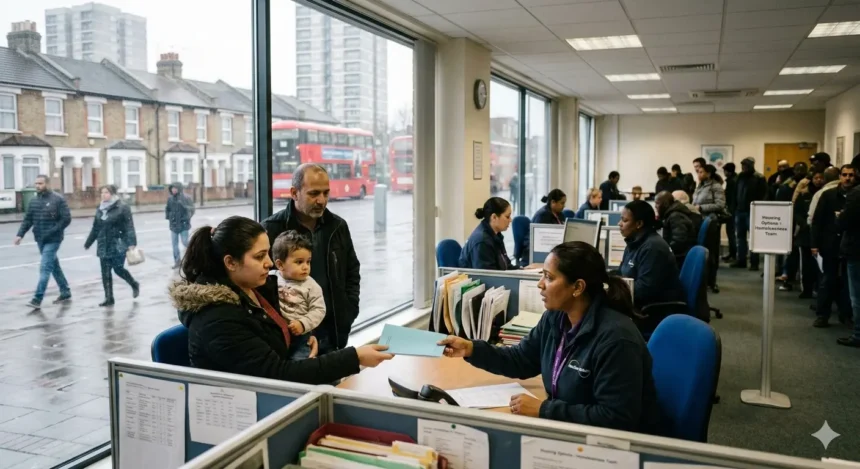
If you are homeless or at immediate risk in Newham, contact your local council’s housing options or homelessness team right away for emergency temporary accommodation. Councils in East London, including Newham council, Tower Hamlets council, and others, must provide short-term housing if you meet eligibility criteria like priority need.
This support applies to residents of Newham, Tower Hamlets, Hackney, Waltham Forest, Redbridge, and Barking & Dagenham, helping local residents avoid rough sleeping while longer-term solutions are assessed.
Why This Issue Matters to Local Residents
Sudden homelessness affects many East London residents due to evictions, domestic issues, or job loss, disrupting daily life in busy boroughs like Newham.
For families with children or pregnant individuals, lack of shelter poses risks to health and schooling, making quick access to emergency temporary accommodation essential for stability.
Local residents in Tower Hamlets, Hackney, and nearby areas face high housing demand, so understanding how to find emergency temporary accommodation in Newham ensures faster resolution without added stress.

Step-by-Step Actions to Solve the Problem
Contact your council’s out-of-hours service if after hours, or the housing needs team during business hours, explaining your urgent situation.
Attend any arranged assessment meeting promptly, providing details on why you are homeless and any priority factors like children or vulnerability.
Follow the council’s personalised housing plan, cooperating fully to secure emergency temporary accommodation while they investigate your case.
Which Council Service Handles It
In Newham, the Homelessness Prevention and Advice Service (HPAS) manages applications for emergency temporary accommodation.
Tower Hamlets council uses its Housing Options Service, Hackney has a dedicated homelessness team, and Waltham Forest, Redbridge, and Barking & Dagenham offer similar housing advice units.
East London councils assess eligibility through these services, providing advice and interim housing where duties apply.
Information or Documents Needed
Bring proof of identity such as a passport, birth certificate, or driving licence to verify who you are.
Provide evidence of homelessness, like an eviction notice, landlord letter, or confirmation you must leave your current place.
Include details on income via wage slips or benefit letters, medical evidence if relevant, and proof of pregnancy or children for priority need.
Councils may also request immigration status documents and past address history.
Expected Response Time
Councils aim to provide emergency temporary accommodation on the day if priority need is clear, especially outside hours via duty services.
Full assessment and personal housing plan follow quickly, with relief duty lasting up to 56 days or until housed.
Decisions on main duties typically take 8 weeks or more amid high demand, though interim support starts immediately.
What to Do if Follow-Up Is Required
If no initial response, follow up with the same housing team, referencing your application details.
Request updates on your personalised plan and attend all meetings to progress your case for emergency temporary accommodation.
If delays occur, note reasons in writing and cooperate, as councils must notify decisions formally.
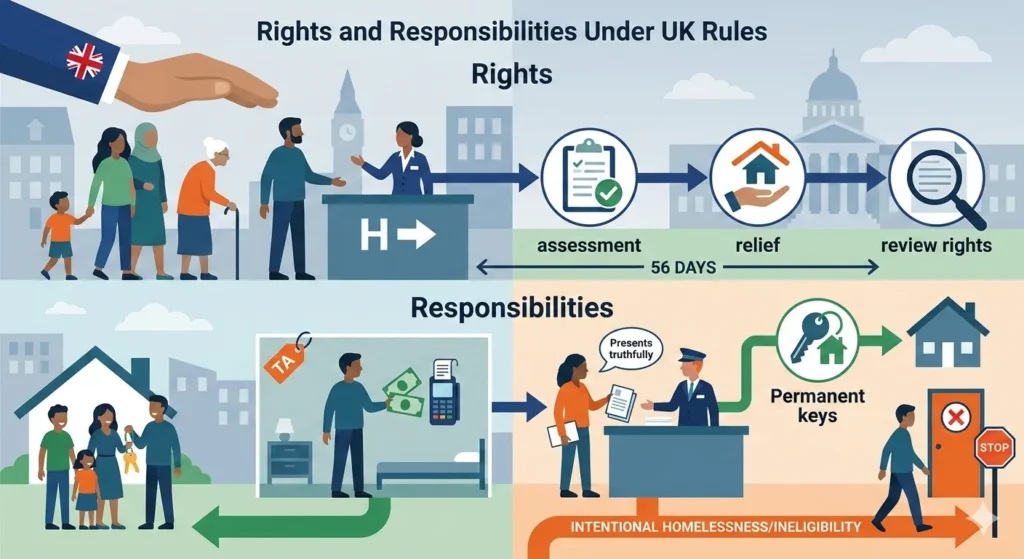
Rights and Responsibilities Under UK Rules
UK law requires councils to offer emergency housing if you are eligible, homeless, and in priority need, like families or vulnerable people.
You have a right to a homeless assessment and relief duty help for up to 56 days, plus review rights on decisions.
Responsibilities include paying rent on temporary accommodation, not refusing suitable offers, and providing accurate information.
Intentional homelessness or ineligibility may end duties, so follow procedures honestly.
Practical Tips to Avoid the Problem in Future
Build savings for rent deposits and seek mediation early if facing eviction from private rentals.
Check eligibility for benefits like Universal Credit housing costs and explore private renting options proactively.
Contact East London council prevention services 56 days before risk, and maintain tenancy records to strengthen future applications.
Consider shared housing or family support as buffers, while bidding on social housing lists where available.