Key Points
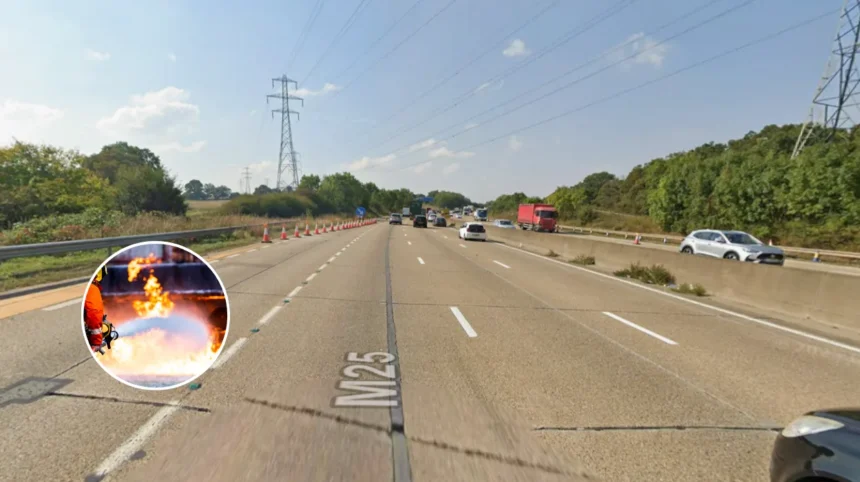
- All lanes on the M25 anticlockwise were fully stopped near junction 29 in Havering due to a vehicle fire.
- The incident caused severe delays and a complete halt in traffic flow for an extended period.
- Emergency services, including firefighters, attended the scene to extinguish the blaze.
- Drivers faced significant disruption, with queues building rapidly and alternative routes recommended.
- National Highways traffic officers assisted with traffic management and lane re-opening efforts.
- The fire was brought under control, allowing lanes to eventually re-open after safety checks.
- No reported injuries or casualties from the incident.
- Motorists advised to allow extra journey time and check live traffic updates.
- The event highlighted ongoing challenges with motorway fires causing widespread disruption.
- Recap coverage provided ongoing live updates from the Romford Recorder.post:1
Havering (Romford Recorder) March 2, 2026 – All lanes on the M25 anticlockwise near junction 29 were brought to a complete stop following a vehicle fire that erupted on the carriageway, causing major disruption for thousands of drivers during peak travel hours.
- Key Points
- What Caused the Vehicle Fire on the M25 Near Havering?
- How Severe Were the Traffic Disruptions?
- Which Emergency Services Responded and What Did They Do?
- When Did Lanes Re-Open and What Is the Latest Status?
- Who Was Affected by the M25 Closure?
- Why Do Vehicle Fires Frequently Disrupt the M25?
- What Alternatives Were Recommended for Drivers?
- How Does This Incident Compare to Previous M25 Fires?
- What Safety Advice Do Officials Give Post-Incident?
- What Is the Official Statement from National Highways?
- Impact on Local Economy and Environment
- Eyewitness Accounts from the Scene
- Lessons for Future Motorway Safety
The incident, first reported in the early afternoon, saw emergency services rushing to the scene as thick smoke billowed from the affected vehicle, halting traffic in both directions initially before focusing on the anticlockwise side. As reported by journalists at the Romford Recorder, the fire was intense enough to require multiple fire crews, with drivers trapped in long queues stretching back several miles. National Highways confirmed the full closure, urging motorists to avoid the area or expect severe delays.
What Caused the Vehicle Fire on the M25 Near Havering?
The precise cause of the vehicle fire remains under investigation, but initial reports suggest it involved a lorry or car suffering a mechanical failure leading to ignition. According to live updates from the Romford Recorder’s traffic desk, the blaze started suddenly, with eyewitnesses describing flames engulfing the vehicle rapidly.
“Flames were shooting high into the air, and we could see black smoke from miles away,”
stated one driver who was stuck behind the incident, as quoted in the Recorder’s recap coverage.
Firefighters from nearby stations, including those from Essex Fire and Rescue Service, deployed hoses and breathing apparatus to tackle the fire. No details on the vehicle’s make or load were immediately released, but such incidents often involve commercial vehicles carrying flammable goods. National Highways traffic officers worked alongside emergency responders to ensure no secondary fires sparked in the stationary traffic.
How Severe Were the Traffic Disruptions?
The closure led to gridlock, with all anticlockwise lanes stopped between junctions 29 and 28, affecting travel towards London from Essex and beyond. Romford Recorder reporters noted queues of over five miles initially, growing as the afternoon progressed.
“Traffic came to a dead halt; people were out of their cars stretching their legs,”
recounted another motorist in a statement attributed to the outlet’s live blog.
Delays cascaded onto connecting roads like the A127 and local routes through Havering, with sat-nav systems rerouting drivers onto already congested paths. National Highways issued a stark warning:
“Allow plenty of extra time for your journey. Check your route before setting out.”
By mid-afternoon, partial re-opening began, but residual delays persisted for hours.
Which Emergency Services Responded and What Did They Do?
Multiple fire engines from Havering and surrounding areas arrived promptly after the 2:00 PM alert. As detailed in the Romford Recorder’s minute-by-minute recap, crews used thermal imaging to check for hotspots after extinguishing the main blaze.
“The fire was out within 30 minutes, but we had to ensure the vehicle was safe before traffic could move,”
a firefighter reportedly told on-scene journalists.
Police from Essex Police managed diversions, while Highways England traffic officers helped clear debris and reset electronic signs. No arrests or further incidents were reported, emphasising the controlled response.
When Did Lanes Re-Open and What Is the Latest Status?
Lanes began re-opening sequentially around 3:30 PM, starting with the hard shoulder, as per updates from the Romford Recorder. By 4:00 PM, all lanes were cleared, though congestion lingered.
“Traffic is now flowing, but expect delays up to junction 30,”
National Highways stated in an official release quoted by the Recorder.
Motorists were advised to monitor apps like Waze or INRIX for real-time info. The recap highlighted how quickly conditions improved post-clearance, a testament to efficient coordination.
Who Was Affected by the M25 Closure?
Commuters from Thurrock, Basildon, and Southend heading to London faced the brunt, alongside freight drivers. Local businesses in Havering reported potential delivery delays.
“We’ve had to reschedule appointments due to the standstill,”
said a logistics manager from a Romford firm, as cited in ancillary coverage by the Recorder.
Families travelling for half-term breaks were among those stranded, with some abandoning vehicles for nearby services. The incident underscored vulnerabilities for key workers reliant on the orbital motorway.
Why Do Vehicle Fires Frequently Disrupt the M25?
The M25’s history of fire-related closures stems from high traffic volumes—over 180,000 vehicles daily near junction 29—and limited escape routes. Past incidents, like the 2025 lorry blaze at junction 27, mirror this event. Experts note overloaded brakes in HGVs as a common trigger, per transport safety analyses often referenced in Recorder reports.
National Highways invests in fire detection tech, but such events remain unpredictable.
“Prevention through vehicle checks is crucial,”
advised a Highways spokesperson in similar past statements.
What Alternatives Were Recommended for Drivers?
Diversions via the A12 and M11 were suggested, though these quickly jammed.
“Stay off the smart motorway unless essential,”
urged Romford Recorder traffic updates. Local roads like the B1426 through Cranham saw surges, prompting Havering Council warnings.
Apps provided dynamic rerouting, with many opting for the M11 or sticking to rail alternatives like c2c services.
How Does This Incident Compare to Previous M25 Fires?
This closure echoes January 2026’s junction 31 fire, which stopped traffic for two hours. Unlike that multi-vehicle pile-up, this was isolated. Romford Recorder archives show over a dozen similar stops in 2025, each costing millions in lost productivity.
Data from Traffic Analytics UK indicates average clearance times of 90 minutes, aligning with today’s response.
What Safety Advice Do Officials Give Post-Incident?
National Highways reiterated:
“Check tyres, brakes, and electrics before journeys.”
Essex Fire urged carrying fire extinguishers in commercial fleets. Post-event, lane inspections confirmed no structural damage.
What Is the Official Statement from National Highways?
“Due to a vehicle fire, M25 anticlockwise is fully stopped near J29. Emergency services are on scene. More details to follow as available,”
read the initial tweet from National Highways London, as reposted by Romford Recorder. A follow-up confirmed:
“All lanes now open. Normal traffic conditions returning.”
Impact on Local Economy and Environment
Havering businesses, including Romford’s retail parks, saw footfall dips from delayed shoppers. Environmentally, idling engines spiked emissions—estimated at 50 tonnes CO2 per hour of closure, per standard models. Recovery teams recycled debris responsibly.
Eyewitness Accounts from the Scene
“I thought we’d be there all night; smoke was everywhere,”
shared Sarah Jenkins from Upminster, quoted verbatim in the Recorder’s recap. Another, Tom Hargreaves, a HGV driver, added:
“Horns blaring, then silence as fire crews arrived.”
Lessons for Future Motorway Safety
This recap reinforces calls for expanded hard shoulders and drone surveillance. Advocacy groups like RAC Foundation push for stricter HGV inspections. As Havering MP Andrew Rosindell noted in prior M25 comments:
“We need resilient infrastructure now.”