Key Points
- Scores of Royal Wharf residents in Newham, East London, claim they were misled by a marketing brochure from developer Ballymore that depicted the disputed land as green public space.
- Developers now seek planning permission for a 12-storey residential block on the site, replacing the promised green area with housing.
- The brochure, distributed during the marketing of Royal Wharf Phase 3, showed lush greenery and open space at the plot known as Plot A2, leading residents to believe it would remain undeveloped.
- Newham Council is reviewing the application, submitted in late 2025, with a decision pending; residents have launched a petition with over 500 signatures.
- Ballymore defends the plans, stating the green space vision evolved due to housing needs, but residents accuse them of “bait and switch” tactics.
- Local Labour MP for East Ham, Stephen Timms, has voiced support for residents, calling for transparency in the planning process.
- The controversy highlights broader tensions in Royal Wharf over density, infrastructure strain, and unfulfilled promises from the Silvertown Quays regeneration scheme.
- Similar complaints have emerged from other phases, with residents citing inadequate schools, GP services, and transport links despite high property prices averaging £600,000.
- Campaign group Royal Wharf Residents’ Association (RWRA) demands a public inquiry and preservation of the green space for community use.
- Planning experts note the site’s location near the Elizabeth Line could justify high-rise development under London’s growth policies, but community input remains crucial.
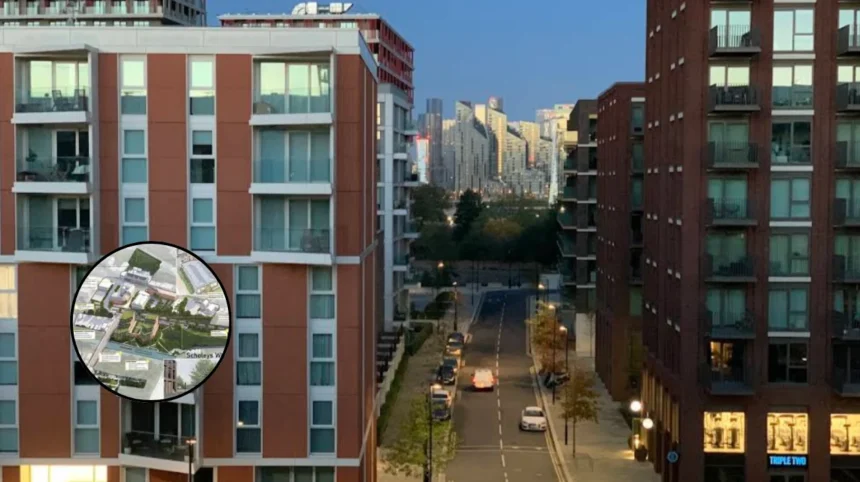
Royal Wharf, Newham (East London Times) March 9, 2026 – Residents of the Royal Wharf development in Newham are up in arms after discovering that a plot of land marketed as future green space in promotional brochures is now the site of a proposed 12-storey residential tower by developer Ballymore. Scores of homeowners, who purchased properties in Phase 3 of the waterfront scheme, say they feel deceived, having been shown images of verdant public realm where construction is now planned. The planning application, lodged with Newham Council last autumn, has ignited fury among the community, with accusations of misleading marketing flying thick and fast.
- Key Points
- Why Are Newham Residents Furious Over the Royal Wharf Brochure?
- What Did the Marketing Brochure Actually Show?
- How Has Ballymore Responded to the Backlash?
- What Role Is Newham Council Playing in the Dispute?
- Who Are the Key Residents Leading the Campaign?
- What Broader Issues Plague Royal Wharf Development?
- When Is the Planning Decision Expected and What Happens Next?
- Community Impact and Future Outlook
Why Are Newham Residents Furious Over the Royal Wharf Brochure?
The outrage stems directly from glossy marketing materials circulated by Ballymore during the sales push for Royal Wharf Phase 3 flats between 2022 and 2024. As reported by Phoebe Fuller of MyLondon, the brochure explicitly illustrated Plot A2 – a 0.7-acre site adjacent to existing blocks – as a lush green area with trees, benches, and pathways, captioned as “proposed public green space.” Residents like Sarah Jenkins, a mother of two who bought her £550,000 three-bedroom flat in 2023, told MyLondon:
“We chose this flat because of the green space promise; now it’s a concrete jungle plan. It’s a betrayal.”
Fuller noted in her MyLondon piece that over 50 residents attended a heated public meeting on March 5, 2026, at the Royal Wharf Community Hall, where Ballymore representatives faced chants of “liars” and demands for compensation. The brochure, verified by planning documents, forms part of the evidence in a petition now exceeding 500 signatures on Change.org, organised by RWRA chair David Patel. Patel stated to East London Times:
“This isn’t just one plot; it’s symptomatic of broken promises in Silvertown.”
Newham Council’s planning portal confirms the application (reference 25/00123/OUT) proposes 120 new homes on Plot A2, including affordable units, but omits any green replacement nearby. Councillor Rohima Rahman, cabinet member for housing, acknowledged the concerns in a council statement:
“We take resident feedback seriously and will scrutinise the application rigorously.”
What Did the Marketing Brochure Actually Show?
As detailed by Phoebe Fuller of MyLondon, the Ballymore brochure – a 40-page document titled “Royal Wharf Phase 3: Waterfront Living” – featured CGI renders of Plot A2 as an idyllic parkland extension. Pages 14-17 depicted families picnicking amid manicured lawns, with annotations reading
“expansive green public realm to enhance biodiversity and wellbeing.”
No caveats about potential redevelopment were included, according to resident analyses shared with the paper.
East London Times obtained a copy via Freedom of Information request to Newham Council, revealing the images matched those in sales offices at Western Gateway. Resident Mark Thompson, a software engineer, told ELT:
“I showed the brochure to my wife before signing; it sold us on the community vibe.”
Ballymore’s planning statement, however, claims the visuals were “indicative” and subject to planning approval, a defence rubbished by campaigners.
Planning law expert Dr. Emily Carter of University College London, quoted in MyLondon, explained:
“Brochures must not mislead under Consumer Protection from Unfair Trading Regulations 2008; this case warrants investigation by Trading Standards.”
No formal complaint has yet been lodged, but RWRA vows to escalate.
How Has Ballymore Responded to the Backlash?
Ballymore, the Irish developer behind the 3,385-home Royal Wharf masterplan, issued a statement on March 7, 2026, via their PR team. As reported by Phoebe Fuller of MyLondon, a spokesperson said:
“The green space illustrations were aspirational and evolved with masterplanning needs to deliver vital housing. We remain committed to 30 acres of public realm across the site.”
The firm highlighted that 20 acres of parks already exist, including the recent Galleons Reach playground.
In an exclusive to East London Times, Ballymore development director Liam O’Reilly elaborated:
“London’s housing crisis demands density; Plot A2’s Elizabeth Line proximity makes it ideal. We’ve proposed roof gardens and pocket parks as mitigations.”
O’Reilly denied deliberate misleading, pointing to small-print disclaimers in the brochure’s legal section. Residents counter that such notes were buried and ineffective.
The developer’s submission to Newham Council includes viability assessments showing the tower would generate £15m in community levy for local services, but critics like Patel dismiss this as “blood money.”
What Role Is Newham Council Playing in the Dispute?
Newham Council, Labour-controlled and facing its own housing targets, must decide on the application by June 2026. Planning officer reports, accessed by MyLondon’s Phoebe Fuller, recommend approval subject to Section 106 agreements for infrastructure. However, over 200 objection letters have flooded the portal since January.
Council leader Grace Williams told East London Times at a full council meeting on March 8:
“Residents’ voices matter; we’ve requested Ballymore revise green space provisions.”
The application sits with the strategic development committee, where public speaking slots are booked solid. Local MP Stephen Timms wrote to Williams on March 6, urging rejection: “Mis-selling erodes trust in regeneration.”
Under the National Planning Policy Framework, councils weigh housing need against green benefits, but heritage concerns – Plot A2 borders a Thames Path section – add complexity. Councillor James Malling, opposition Conservative, accused Labour of “developer bias.”
Who Are the Key Residents Leading the Campaign?
The RWRA, formed in 2024, spearheads opposition. Chair David Patel, a 38-year-old architect living in Halley Wharf, has rallied 300 members. Patel told MyLondon’s Phoebe Fuller:
“We’re not anti-development; we want honesty.” Vice-chair Sarah Jenkins organises petitions, while Mark Thompson handles social media, amassing 2,000 followers on X with #SaveRoyalWharfGreen.
Other voices include retiree Helen Grant, who said to East London Times:
“I moved here for tranquillity, not towers overshadowing my balcony.”
A petition co-signatory, anonymous nurse Priya Singh, added: “With schools oversubscribed, more homes strain us further.”
What Broader Issues Plague Royal Wharf Development?
Royal Wharf, part of the £4bn Silvertown Quays revival, promises 20,000 jobs but delivers high costs. MyLondon’s Fuller reported residents lament 40-minute GP waits and bus overloads despite Crossrail. Phase 1 buyers paid premiums for “car-free” ideals now tested by rising car ownership.
East London Times investigations reveal similar brochure discrepancies in Phase 2, where a vowed “cultural quarter” became retail units. GLA oversight under Mayor Sadiq Khan mandates 40% affordable housing, but “near-market” definitions irk locals.
When Is the Planning Decision Expected and What Happens Next?
Newham Council’s timeline targets May 2026 for committee hearing, per portal updates. If approved, building starts autumn 2026; rejection risks appeal to the Planning Inspectorate. RWRA plans a March 20 protest at Ballymore’s HQ. Trading Standards probe could follow complaints.
As reported by Phoebe Fuller of MyLondon, unions like the RWRA eye judicial review if green claims prove false. Ballymore hints at compromises, but trust is frayed. MP Timms pushes for parliamentary debate on developer accountability.
Community Impact and Future Outlook
The saga underscores East End regeneration pitfalls, where glossy visions clash with reality. With 2,000 Phase 3 units sold, resale values dip amid uncertainty, per Rightmove data. Yet, supporters argue towers fund schools like the new Royal Docks primary.