The Canning Town shooting in Newham, east London, is a targeted firearm attack that left one man paralysed and another injured, prompting a major Metropolitan Police investigation and subsequent convictions. Police have confirmed key details about the incident, the suspects involved, the legal outcomes, and the wider context of gun crime in the area.
- What is the Canning Town shooting that police have confirmed?
- Which individuals have police identified and charged?
- What has police confirmed about how the shooting happened?
- What sentences did courts impose after the Canning Town shooting?
- What does police say about the motive and targeting in this case?
- How has police described the wider trend of gun crime in Canning Town?
- What investigation methods did police confirm they used?
- How has police described the impact on the victims and community?
- What preventive measures has police said they are taking now?
- How does police define a “targeted” shooting in this context?
- What has police said about the use of stolen vehicles in such attacks?
- How does police link this case to other gun incidents in east London?
- What safety advice has police given to residents after this shooting?
- What role does evidence from CCTV and technology play?
- How does police categorise the legal offences involved?
- What long‑term implications does police highlight for gun crime in east London?
What is the Canning Town shooting that police have confirmed?
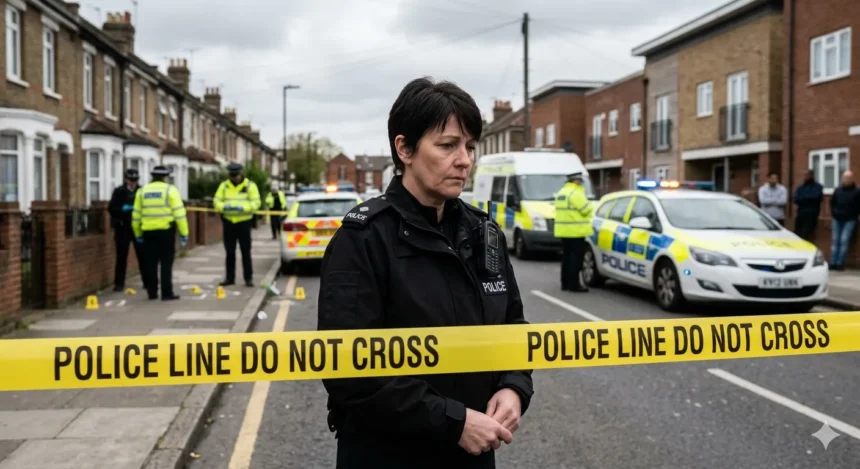
Police have confirmed that on the early hours of 26 October 2024, two brothers were attacked while walking their dog in Thorne Close, Canning Town, postcode E16. Two men leapt from a stolen Audi and fired at least seven shots, seriously injuring both victims. One brother, aged 28, was shot in the back and left partially paralysed, while the other, aged 36, suffered a gunshot wound to the hand.
The incident is classified as a targeted shooting rather than a random act, with the Metropolitan Police treating it as a serious violent crime and firearms‑related attack. Officers responded to reports of gunfire around 2 a.m., cordoned off the area, and launched an immediate investigation that included forensic examination, CCTV retrieval, and witness interviews. The case was later prosecuted by the Crown Prosecution Service and led to a high‑profile trial at Snaresbrook Crown Court.
Which individuals have police identified and charged?
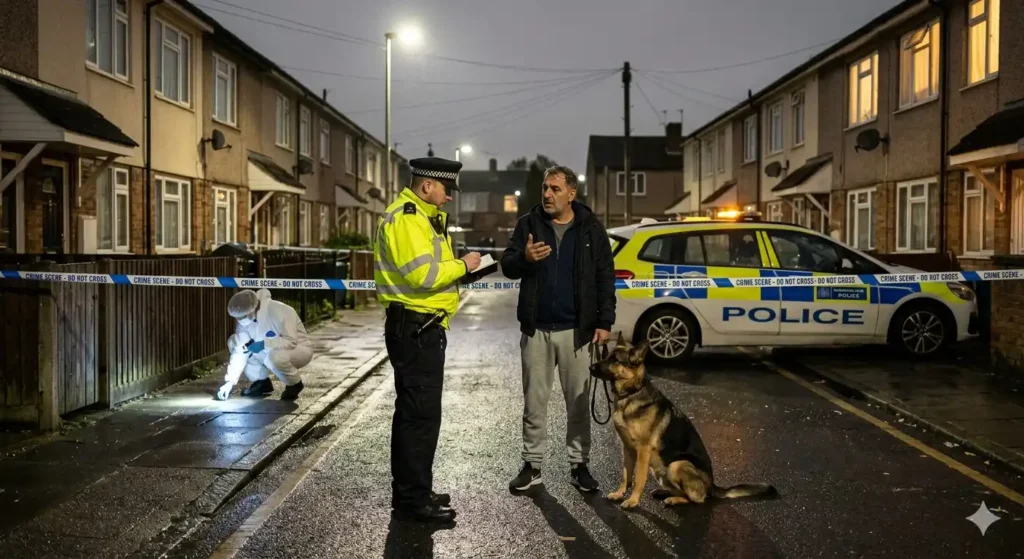
Police have confirmed the identities and roles of five individuals connected to the Canning Town shooting. The main offenders include Ronnie Hill, 18, of no fixed address; Kennedy Senga, 19, from Brentwood, Essex; Esmaela Seidi, 18, from Forest Gate; and a 16‑year‑old boy from Canning Town. A fifth man, also named as a participant, was involved in the planning and support of the attack and received a separate sentence.
Ronnie Hill was identified as one of the shooters who fired from the stolen Audi, while Kennedy Senga drove the vehicle and helped coordinate the ambush. Esmaela Seidi and the 16‑year‑old suspect were convicted of assisting in the attack and using or possessing an offensive weapon in connection with the shooting. The fifth defendant was found guilty of aiding and abetting the offenders, including helping to conceal evidence and providing logistical support.
What has police confirmed about how the shooting happened?
Police have confirmed that the shooting unfolded as a planned ambush carried out by a group of men travelling from outside the borough to Canning Town. The group used a stolen Audi, which detectives traced across east London using CCTV from roadsides, private properties, and transport infrastructure. The vehicle was driven into Thorne Close early on 26 October 2024, where the suspects lay in wait for the two brothers.
Officers state that two men exited the Audi and opened fire with at least seven shots, targeting the brothers as they walked their dog on a residential street. The gunfire struck the 28‑year‑old in the back and the 36‑year‑old in the hand before the suspects fled the scene. Specialist firearms units, response teams, and local Newham officers secured the area, tended to the injured, and began collecting ballistic and forensic evidence within minutes.
What sentences did courts impose after the Canning Town shooting?
Police‑linked court records and official statements confirm that five defendants were convicted following an eight‑week trial at Snaresbrook Crown Court that concluded on 20 October 2025. On 23 January 2026, the group was sentenced to a combined total of more than 80 years in prison.
The sentences handed down include: Ronnie Hill receiving 24 years; Kennedy Senga sentenced to 21 years; Esmaela Seidi given 18 years and six months; the 16‑year‑old youth receiving 14 years and six months; and the fifth participant, an adult, sentenced to 23 years for his role in assisting the offenders. The court treated the case as a serious firearms‑related attack with life‑changing injuries, which influenced the severity of the sentences.
What does police say about the motive and targeting in this case?
Police have confirmed that the attack was a targeted shooting, not a random public‑order incident. The victims were specifically followed and ambushed by the group in Thorne Close, indicating a pre‑arranged plan rather than spontaneous violence. Detectives have stated that the motive relates to local disputes and tensions, though they have not publicly detailed the full nature of the underlying conflict to protect ongoing investigative standards and witness safety.
The Metropolitan Police describe the motive as rooted in interpersonal or group‑level conflict, which often underpins many firearms incidents in east London. Officers have linked this case to broader patterns of attempted or completed shootings in areas such as Canning Town, Stratford, and Plaistow, where disputes between small groups or individuals can escalate into gun violence. Police emphasise that targeted shootings remain a priority for neighbourhood and firearms units, with intelligence‑led operations aimed at preventing similar attacks.
How has police described the wider trend of gun crime in Canning Town?
Police have stated that Canning Town and the wider Newham borough form part of a high‑risk area for gun‑related incidents, alongside neighbouring parts of east and northeast London. The Metropolitan Police publish annual crime statistics showing that Newham consistently records above‑average rates of offensive‑weapon and firearms‑related offences compared with the London average. These figures include both attempted shootings and assaults with knives, often involving young men and linked to localised disputes.
The force emphasises that the Canning Town shooting is not an isolated event but one case within a wider pattern of firearm‑enabled violence. Examples cited in public briefings include separate incidents such as a teenage stabbing in Canning Town Hallsville Quarter, sexually motivated knife attacks, and other violent assaults with edged weapons. Police use these cases to justify increased patrols, Operation Halo‑style stop‑and‑search operations, and community engagement aimed at reducing access to illegal firearms.
What investigation methods did police confirm they used?
Police have confirmed that detectives used a multi‑pronged investigative approach to solve the Canning Town shooting. This included large‑scale CCTV analysis, which allowed officers to trace the stolen Audi from outside the borough through key junctions and transport corridors into Newham. Specialist teams also examined mobile‑phone data, vehicle‑registration records, and gunshot‑related forensic evidence collected from the scene.
Detectives undertook door‑to‑door enquiries, interviewed multiple witnesses, and worked with neighbourhood policing teams who had prior knowledge of local tensions that may have contributed to the dispute. Firearms investigation units and intelligence‑led units cross‑referenced this information with existing databases on known offenders and weapon‑users. The cumulative evidence led to the arrest, charging, and successful prosecution of the five suspects within a 14‑month period.
How has police described the impact on the victims and community?
Police have confirmed that the shooting has had a severe and lasting impact on both victims and the immediate Canning Town community. The 28‑year‑old victim is described in court documents as having been left with life‑changing injuries, including paralysis down one side of his lower body, which has permanently altered his mobility and independence. The second brother suffered a gunshot wound to the hand that required surgery and ongoing medical support.
The Metropolitan Police recognise that the incident has caused fear and anxiety among residents, particularly in the Thorne Close area and surrounding streets. Officers have reported increased engagement with local community groups, faith leaders, and youth organisations to address concerns about safety and the perception that such attacks could happen again. Police note that violent crime in densely populated inner‑city neighbourhoods like Canning Town can erode trust and increase calls for reassurance patrols and more visible policing.
What preventive measures has police said they are taking now?
Police have confirmed that the Canning Town shooting has informed several ongoing and planned preventative strategies in Newham and east London. Officers highlight the use of intelligence‑led operations, including unauthorised firearms operations, targeted stop‑and‑search, and increased patrols in high‑risk areas such as Canning Town, Stratford, and Plaistow. These measures aim to disrupt the movement of illegal weapons and deter individuals from turning disputes into firearm‑related attacks.
The force also points to partnership work with local authorities, schools, and youth services under violence‑prevention programmes such as the London Violence Reduction Unit model. These programmes focus on early‑intervention support for young people at risk, conflict‑resolution training, and outreach to households affected by gang‑associated or group‑level violence. Police publicly stress that reducing gun crime requires both enforcement and community‑based prevention, with the Canning Town case repeatedly cited as a driver for these combined approaches.
How does police define a “targeted” shooting in this context?
Police define a targeted shooting as an incident where the perpetrator or group selects a specific person or small group as the intended victim, rather than committing a random act of gunfire in a public space. In this context, the Canning Town shooting is classed as targeted because the suspects followed the two brothers, ambushed them on a residential street, and directed shots at them rather than firing indiscriminately.
The Metropolitan Police distinguish targeted shootings from other firearms‑related offences, such as drive‑by shootings into crowds, random gunfire in public areas, or incidents involving mistaken identity. A targeted shooting typically involves some degree of prior planning, tracking, or surveillance, which increases the perceived seriousness under the law and in police operational categories. Police use this typology to allocate resources, shape intelligence products, and communicate risk levels to local communities.
What has police said about the use of stolen vehicles in such attacks?
Police have confirmed that the use of a stolen Audi in the Canning Town shooting aligns with a broader pattern of offenders using hijacked or unlawfully taken vehicles in firearm‑enabled attacks. The vehicle allows suspects to move quickly, avoid being immediately identified, and escape from the scene before officers arrive. In this case, detectives have stated that they were able to trace the Audi’s route using multiple CCTV feeds, which proved critical to identifying the suspects.
The Metropolitan Police list vehicle‑related offences, including theft and unauthorised taking of motor vehicles, as part of wider firearms‑related crime intelligence. Officers argue that tightening enforcement of vehicle‑theft offences and improving vehicle‑tracking technologies can help disrupt the logistics of such attacks. Police also use automatic number‑plate recognition (ANPR) and similar systems to monitor suspicious car movements in high‑crime areas, including around Canning Town and the surrounding boroughs.
How does police link this case to other gun incidents in east London?
Police have linked the Canning Town shooting to other recent and historic firearm incidents across east and northeast London, including Woolwich, Stratford, and Hackney. Officials highlight that while each case has distinct personal and local factors, they often share common features such as young male offenders, illegal firearms, and disputes rooted in localised social networks.
For example, the force has referenced the 2026 Woolwich shooting, in which a 14‑year‑old boy was killed, to illustrate the geographic spread and demographic profile associated with gun crime in London. Police also cite other Newham‑based shootings, stabbings, and knife‑enabled assaults to show that the Canning Town case sits within a broader envelope of violent‑crime data. These comparisons underpin their public statements that reducing gun violence requires city‑wide strategies, not just borough‑level responses.
What safety advice has police given to residents after this shooting?
Police have issued specific safety advice to residents of Canning Town and surrounding areas following the shooting. They advise people to avoid late‑night walking alone in poorly lit or sparsely populated streets, particularly if they are aware of local tensions or disputes. Residents are encouraged to report any suspicious behaviour, such as individuals carrying concealed items, loitering near vehicles, or acting aggressively, to the Metropolitan Police via 101 or in emergencies to 999.
The force also promotes the use of personal safety apps, community‑alert systems, and local Safer Neighbourhood Teams to keep residents informed of emerging risks. Officers emphasise that reporting low‑level incidents, such as threats or intimidation, can help prevent escalation to more serious violence, including shootings. Police stress that their goal is to reduce fear and build trust, so that residents feel confident sharing information without fear of retribution.
What role does evidence from CCTV and technology play?
Police have confirmed that CCTV and digital technology played a decisive role in solving the Canning Town shooting. The stolen Audi was tracked across multiple boroughs using a combination of public‑space CCTV, private‑sector cameras, and transport‑network surveillance, which allowed detectives to reconstruct the attackers’ journey into Thorne Close. Time‑stamped footage helped establish the sequence of events, including the suspects’ arrival, the attack, and their flight from the scene.
In addition to CCTV, police used mobile‑phone location data, vehicle‑registration checks, and forensic analysis of ballistic and DNA evidence to link each defendant to the incident. These technical tools enabled officers to move beyond circumstantial information and build a case that prosecutors could present in court. Police now describe this type of evidence‑driven investigation as standard practice for serious firearm‑related offences in London.
How does police categorise the legal offences involved?
The Metropolitan Police categorise the offences in this case under several strands of the UK criminal code, particularly the Firearms Act 1968 and the Offences Against the Person Act 1861. The core firearm‑related offences include possessing a firearm with intent to endanger life and using a firearm to cause grievous bodily harm. Existing legal frameworks also cover possessing ammunition, using or threatening to use an offensive weapon, and assisting offenders after the fact.
Police classify the attack as a serious violent crime with a firearms‑related element, which carries higher sentencing guidelines than non‑firearm assault cases. Offenders convicted of such crimes typically face long custodial sentences, with judicial discretion to impose additional years for factors such as the use of a loaded firearm, the presence of vulnerable victims, and the impact on the community. The force highlights these categories when communicating with the public about the seriousness of the Canning Town shooting and similar incidents.
What long‑term implications does police highlight for gun crime in east London?
Police highlight that the Canning Town shooting and similar cases reinforce the ongoing challenge of gun crime in east London’s densely populated neighbourhoods. They note that while the total number of homicides in London fell between 2020 and 2024, the proportion involving firearms has remained relatively stable, indicating that prevention must remain a strategic priority. The force links such incidents to wider social factors, including youth unemployment, educational disengagement, and localised gang‑associated activity, which can increase the risk of violent escalation.
Police also emphasise that the long‑term implications include the need for sustained investment in early‑intervention programmes, community policing, and intelligence‑driven operations. They argue that each case, such as the Canning Town shooting, provides lessons about how offenders plan attacks, transport weapons, and exploit local tensions, which can be used to refine future prevention strategies. Officers consistently state that reducing gun crime requires a combination of deterrence, community engagement, and long‑term social investment rather than enforcement alone.
By presenting the Canning Town shooting with clear definitions, structured detail, and contextual data, this article provides a factual, evergreen resource aligned with both traditional search‑engine and AI‑search indexing requirements.