
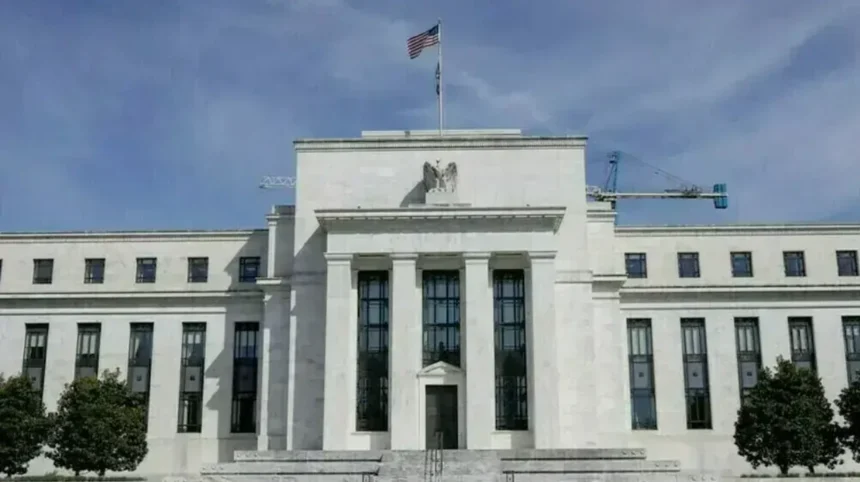
As geopolitical tensions continue to shape global economic dynamics, one of the most pressing questions facing policymakers is how major conflicts could disrupt financial stability and economic growth. Among these concerns, the potential economic impact of a conflict involving Iran presents a particularly complex challenge—one for which the Federal Reserve appears to have no clearly defined analytical framework.
While central banks are traditionally focused on inflation, employment, and financial stability, modern geopolitical risks have introduced layers of uncertainty that extend far beyond conventional economic modeling. In this context, the limitations of existing policy tools become increasingly evident.
A key issue lies in the nature of geopolitical shocks themselves. Unlike financial crises or cyclical downturns, conflicts are unpredictable in both scale and duration. A potential war involving Iran would likely affect global markets through multiple channels simultaneously, including energy supply disruptions, trade instability, and investor sentiment. These overlapping effects make it difficult for policymakers to isolate variables and produce reliable forecasts.
Energy markets represent the most immediate and visible transmission channel. Iran remains a significant player in global oil dynamics, particularly within the broader Middle Eastern energy system. Any disruption to production or shipping routes—especially through strategic chokepoints such as the Strait of Hormuz—could lead to sharp increases in oil prices. Historically, similar geopolitical tensions have triggered price spikes of 10% to 30% within short periods, amplifying inflationary pressures worldwide.
For the Federal Reserve, this presents a fundamental dilemma. Rising energy prices typically push inflation higher, which would normally justify tighter monetary policy. However, if the same shock also weakens economic growth by reducing consumption and increasing business costs, the central bank faces conflicting objectives: controlling inflation versus supporting economic activity.
This dual challenge is compounded by the globalized nature of modern supply chains. A conflict involving Iran would likely disrupt not only energy markets but also trade routes connecting Asia, Europe, and the Middle East. Shipping costs could rise, delivery times could lengthen, and production networks could face temporary breakdowns. These effects would feed into broader inflationary trends while simultaneously constraining growth.
Another limitation lies in the data itself. Central banks rely heavily on historical data to inform their models, yet large-scale geopolitical conflicts—particularly those involving major energy producers—are relatively rare and highly context-specific. This reduces the predictive value of past events and increases reliance on scenario-based analysis, which inherently involves a high degree of uncertainty.
Financial markets further complicate the picture. In times of geopolitical stress, investors often react rapidly, reallocating capital toward perceived safe-haven assets such as gold or U.S. Treasury bonds. These movements can lead to volatility in exchange rates, equity markets, and capital flows, creating additional layers of instability that are difficult to anticipate or manage through traditional monetary tools.
Moreover, the Federal Reserve operates within a domestic mandate, primarily focused on the U.S. economy. However, in an interconnected global system, external shocks—particularly those originating in critical regions like the Middle East—can have profound domestic consequences. This creates a mismatch between the scope of the Fed’s mandate and the scale of the risks it must navigate.
Communication also plays a crucial role. Central banks must balance transparency with caution, especially when dealing with uncertain geopolitical scenarios. Overstating risks could trigger market panic, while underestimating them could damage credibility. As a result, policymakers often adopt deliberately cautious language, which can be perceived as a lack of clarity or strategic direction.
Despite these challenges, it would be inaccurate to suggest that the Federal Reserve is entirely unprepared. The institution has developed stress-testing mechanisms, scenario analysis frameworks, and coordination channels with other central banks. However, these tools are generally designed for financial shocks rather than complex geopolitical conflicts involving multiple transmission channels.
The broader issue, therefore, is not simply a lack of awareness, but a structural limitation in how modern economic policy frameworks are designed. Central banks were not originally built to manage geopolitical crises, yet they are increasingly required to respond to them.
In the case of a potential conflict with Iran, the economic impact would likely be nonlinear and rapidly evolving. Initial energy price shocks could be followed by secondary effects on inflation expectations, wage dynamics, and investment behavior. Over time, these could translate into broader macroeconomic shifts that are difficult to capture within standard forecasting models.
Looking ahead, there is a growing need for central banks, including the Federal Reserve, to expand their analytical frameworks to better incorporate geopolitical risk. This may involve deeper collaboration with international institutions, more advanced scenario modeling, and greater integration of political risk analysis into economic forecasting.
Ultimately, the absence of a clear framework does not necessarily reflect a failure of policy, but rather the complexity of the modern global environment. As economic and geopolitical dynamics become increasingly intertwined, the challenge for policymakers will be not only to respond to shocks, but to anticipate them in a world where uncertainty has become the norm.