Key Points
- Reform UK won control of Havering Council for the first time, taking 39 of the 55 seats and securing a clear majority.
- The Conservatives were wiped out, failing to win a single seat in the borough for the first time in Havering’s 60-year history.
- Labour finished with two seats, both in Beam Park, after entering the election with eight councillors.
- The Havering Residents Association, previously the largest force on the council, dropped to 14 seats and moved into opposition.
- The Harold Wood Hill Park Residents Association held its three seats, while the Greens, Liberal Democrats and independents did not break through in the borough.
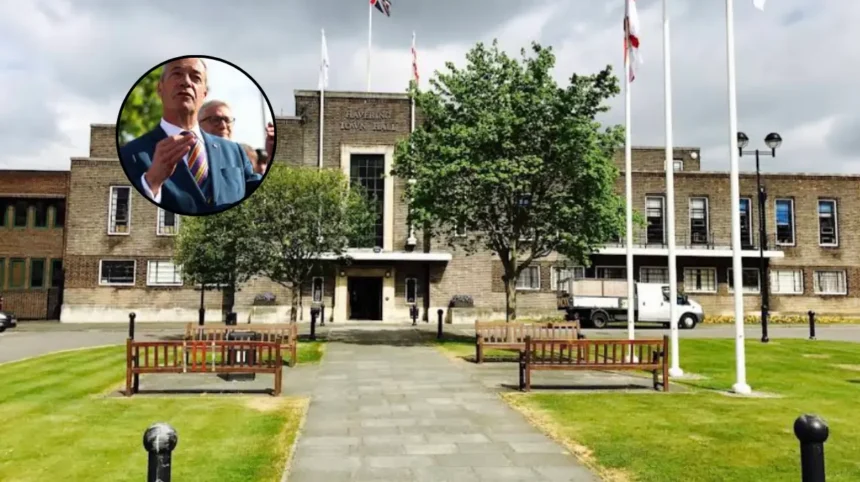
Havering (East London Times) May, 15 2026 local elections, with the party winning 39 of the 55 seats and removing the Conservatives from the chamber altogether. The result marks Reform’s first gain of a London council and one of the most significant political shifts in the capital’s borough politics this year.
What did Reform UK win in Havering?
As reported by The Standard, Reform UK achieved a “historic breakthrough” by winning a majority of 39 out of 55 seats on Havering Council.
The result gave the party overall control after the council had been run under no overall control, with local residents’ groups previously playing a major role in administration.
The party’s victory was described by other outlets as its first time taking a London borough, underlining the scale of the shift in east London politics.
The final seat total reported by different sources remained consistent on Reform’s control of the council, with the Standard and PollCheck both placing Reform on 39 seats.
Why was the Conservative result so severe?
The Conservatives suffered what multiple reports described as a complete wipeout, losing all representation on the council.
That outcome followed a steady decline in their position in Havering, where defections in previous years had already weakened the party’s standing before polling day.
The Standard said the Conservatives had been the official opposition in the borough but failed to secure a single seat in the new council. BBC reporting also noted that the Conservatives had previously held 23 seats in 2022 before dropping to 14 ahead of the election after defections and internal movement.
How did Labour and residents’ groups perform?
Labour ended the election with two councillors, both in Beam Park, after starting with eight. That left the party far short of any meaningful role in shaping the new administration.
The Havering Residents Association fell from 25 seats to 14, according to pre-election and results coverage, and is expected to become the official opposition.
The Harold Wood Hill Park Residents Association kept its three-seat presence, but smaller parties and independents did not win enough support to change the overall balance of power.
What were the wider political implications?
The result matters because Havering became the first London borough ever won by Reform UK, giving the party a symbolic breakthrough in a major urban area.
That makes the borough one of the most closely watched local election stories in the capital, especially because the result came amid wider losses for both Labour and the Conservatives across London.
Reporting from BBC and ITV also placed Havering within a broader night of change in London local politics, where several councils changed hands or shifted control.
In Havering, the result signals that local voters backed a major change in direction rather than the existing mix of residents’ groups and national parties.
Explore More Havering Council News
Reform UK Wins Havering Council; Hornchurch 2026
Reform UK Appoints New Havering Leaders After Election 2026
How was the election reported?
As reported by The Standard and The Independent, Reform’s win was presented as a historic moment because it gave the party control of a London council for the first time.
BBC reporting focused on the changing council arithmetic and the long-term decline of the Conservatives in the borough.
The outlets agreed on the central outcome: Reform won power, the Conservatives were wiped out, Labour was reduced to two seats, and the residents’ associations lost ground but remained represented.
ITV also highlighted Havering as one of the most notable local election gains for Reform on the night.
Background of this development
Havering has been politically unusual for years because residents’ associations, rather than the main national parties, have often dominated local politics.
BBC reporting said the council had previously shifted into an HRA minority administration after defections altered the balance following the 2022 elections.
The 2022 result still left the Conservatives as the largest single party at that stage, but defections and the collapse of the old alignment weakened that position before the 2026 contest. Reform’s rise in the borough built on that fragmentation and on its growing visibility in local campaigning across London and Essex.
What is the likely effect on residents?
For Havering residents, the immediate effect is a new administration with a clear majority, which should make decision-making simpler than under no overall control. That could mean faster progress on council priorities, but it also gives Reform full responsibility for delivery and scrutiny.
For voters who backed residents’ groups or the Conservatives, the result means a sharper shift in local leadership and a different political style at Town Hall. For the wider London audience, the result may encourage closer attention to whether Reform can repeat this kind of gain in other boroughs or whether Havering remains a one-off local breakthrough.