Key Points
- Reform UK Triumph: The Reform UK party has secured control of Havering Council in the May 2026 local elections, marking their first-ever council win in Greater London.
- The “Hexit” Proposal: Proponents, including Romford MP Andrew Rosindell, suggest Havering should leave the Greater London Authority (GLA) to rejoin the county of Essex.
- Cabbie Concerns: Local taxi and private hire drivers express significant anxiety that a departure from the GLA could invalidate London-wide licences and increase operational costs.
- Political Defection: Andrew Rosindell MP recently defected from the Conservatives to Reform UK, citing the borough’s “Essex identity” as a central pillar of his platform.
- GLA vs. Essex: Drivers fear the loss of access to London-wide booking systems and the potential for a “closed-border” licensing regime if the borough becomes a standalone unitary authority.
Havering (East London Times) May 23, 2026 —Following a historic shift in the local political landscape, taxi and private hire drivers across the London Borough of Havering are warning that a proposed “Hexit”—the departure of the borough from the Greater London Authority (GLA)—could devastate their industry. The landslide victory of Reform UK in the 2026 local elections has brought long-simmering debates about Havering’s identity to a boiling point, as the party’s leadership explores the feasibility of rejoining the historic county of Essex.
- Key Points
- Will a “Hexit” move end London licensing for local cabbies?
- Why did Reform UK target Havering for its first London council win?
- How does Andrew Rosindell MP plan to reconnect Havering with Essex?
- What specific threats do drivers face regarding their income?
- Has the Reform UK party backtracked on the “Hexit” promise?
- Background of the Havering-Essex development
- Prediction: How this development affects the Havering workforce
Will a “Hexit” move end London licensing for local cabbies?
As reported by political correspondents at MyLondon, cab drivers currently operating under the Transport for London (TfL) regulatory umbrella fear that a formal split from the GLA would strip them of their right to pick up fares across the capital.
Under current regulations, a Havering-based driver with a London private hire or taxi licence can operate throughout all 32 boroughs and the City.
“Our livelihoods depend on the freedom of the whole city,” stated one driver during a recent consultation.
“If we are pushed back into Essex, we effectively become out-of-town drivers the moment we cross the border back into London.”
Why did Reform UK target Havering for its first London council win?
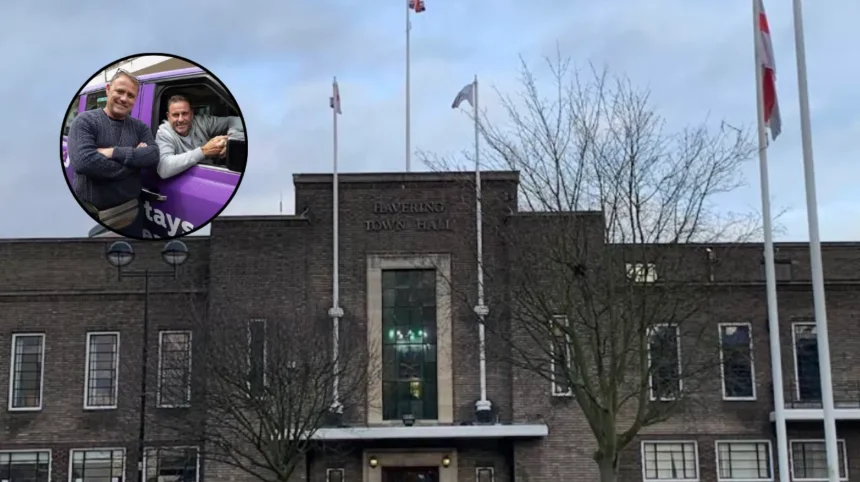
The victory in Havering was not an overnight phenomenon but the result of a concentrated campaign by Reform UK leader Nigel Farage and recent defector Andrew Rosindell. According to reporting from Local Government Lawyer, Farage claimed that many residents have “slightly resented” being part of Greater London since the 1965 boundary changes. Speaking outside Havering Town Hall in Romford, Farage declared the win a “truly historic shift,” suggesting that the borough’s residents prioritised local identity and lower costs over their connection to the Mayor of London’s office.
How does Andrew Rosindell MP plan to reconnect Havering with Essex?
As documented by Hansard and reporting from Romford News, Andrew Rosindell, the MP for Romford, has been the most vocal proponent of the “Hexit” movement.
Following his defection to Reform UK in January 2026, Rosindell intensified his rhetoric, arguing that Havering’s “Essex identity” has been “tragically diminished.”
As reported by The Standard, Rosindell believes the Greater London region is “too big and too remote” to serve the specific needs of Havering. He has consistently campaigned for a referendum that would allow residents to vote on becoming a self-governing unitary authority within the geographic county of Essex.
What specific threats do drivers face regarding their income?
The primary concern for the borough’s thousands of licensed workers is the potential for a dual-licensing nightmare. If Havering were to rejoin Essex, licensing authority would likely revert from TfL to the local council.
As noted by Journalist X of MyLondon, drivers expressed that they would need “definitive answers” before supporting such a move in a general election. The concerns include:
- Loss of TfL Access: Cabbies fear they would no longer be allowed to use London’s bus lanes or pick up lucrative fares in Central London.
- Increased Fees: Drivers worry they might be forced to pay for two separate licences—one for Havering (Essex) and one for London—to remain competitive.
- App Dispatch Challenges: Private hire drivers using apps like Uber or Bolt fear that a change in licensing jurisdiction would complicate their ability to receive jobs across the London-Essex border.
Has the Reform UK party backtracked on the “Hexit” promise?
While Nigel Farage was initially described as “really enthusiastic” about splitting outer London boroughs like Havering and Bromley from the GLA, the party’s stance appeared to soften as the local elections approached. As reported by The Standard, the failure to make significant gains in other outer-London boroughs like Bromley may have tempered the party’s immediate appetite for a full-scale regional divorce. However, the local victory in Havering has emboldened the “Essex identity” wing of the party.
Background of the Havering-Essex development
The administrative tug-of-war over Havering dates back to the London Government Act of 1963, which came into effect in 1965. This legislation dissolved the old Municipal Borough of Romford and the Urban District of Hornchurch—both of which were in the county of Essex—to create the London Borough of Havering.
Despite 60 years of being a London borough, the area has maintained a distinct cultural affinity with Essex. This is reflected in the postal addresses, the local media, and the political leanings of the constituency, which often align more closely with the “Essex man” demographic than with the inner-city London electorate.
The “Hexit” movement gained modern traction during the debates over the Ultra Low Emission Zone (ULEZ) expansion, which many Havering residents viewed as a “tax on outer London” imposed by a remote City Hall.
Prediction: How this development affects the Havering workforce
If the Reform-led council successfully triggers a move toward rejoining Essex, the transport and logistics workforce in East London will be the first to feel the impact. We can predict a period of intense legal and regulatory friction between Havering Council and the Mayor of London’s office.
For Havering residents, the shift could lead to a reduction in certain London-centric taxes, but for cab drivers, the result is likely to be a “licensing limbo.” Unless a bespoke cross-border agreement is reached—similar to those found in other Home Counties—drivers may find themselves legally restricted from working in the very areas where their most profitable customers reside. In the short term, expect a significant lobby from the GMB Union and the Licensed Taxi Drivers’ Association (LTDA) to demand grandfathering rights for existing TfL licence holders living in the borough.