
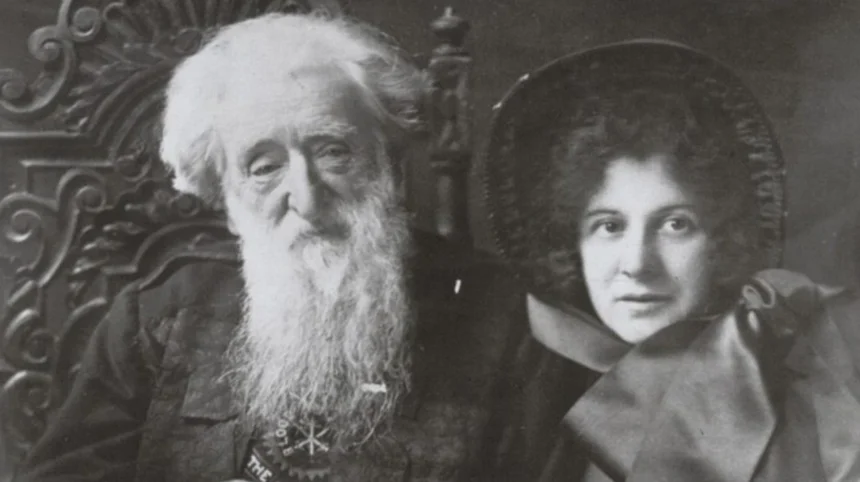
As Father’s Day is celebrated across the UK, the story of William and Catherine Booth serves as a reminder that parenthood can extend far beyond family ties. The couple, who founded The Salvation Army in East London more than 160 years ago, became spiritual parents to thousands of struggling families, dedicating their lives to helping the poor, the homeless, and the marginalised.
In 1865, William and Catherine Booth left traditional church ministry behind and began preaching on the streets of London’s East End, particularly around Whitechapel and Mile End. At the time, the area was among the poorest parts of Victorian Britain, marked by overcrowding, unemployment, disease, and severe social inequality. Rather than waiting for people to come to church, the Booths took their message directly to those in need.
Their work soon developed into what became the The Salvation Army, one of the world‘s most recognised charitable organisations. But their mission went far beyond preaching. William and Catherine believed that practical support and spiritual care should go hand in hand, leading to their famous philosophy of “Soup, Soap and Salvation.”
Under their leadership, the movement established soup kitchens, shelters for homeless people, rescue homes for women escaping abuse and prostitution, employment services, and programmes aimed at helping families living in poverty. They also campaigned for improved working conditions and created initiatives to help people gain skills and find jobs.
William Booth’s own experiences with poverty deeply shaped his mission. Having witnessed hardship from a young age, he developed a strong sense of social justice and became determined to reach people often ignored by society. His open-air preaching in Whitechapel eventually grew into a worldwide movement that now operates in more than 130 countries.
Catherine Booth was equally influential in shaping the organisation’s vision. Known affectionately as the “Army Mother,” she was a gifted speaker, social reformer, and advocate for women’s rights. At a time when female religious leaders were rare, Catherine defended women’s right to preach and championed equal opportunities within ministry. She also campaigned for better pay and working conditions for women employed in London’s exploitative industries.
Together, the Booths transformed the lives of countless East End residents. Their work provided hope and practical assistance to families struggling with hunger, homelessness, addiction, and social exclusion. They became trusted figures in communities where poverty often seemed inescapable.
Today, their legacy remains deeply connected to East London. Statues of both William and Catherine Booth stand near Mile End Road, close to the site where their mission first began, serving as lasting reminders of the couple’s extraordinary contribution to the East End and beyond.
As families mark Father’s Day, the story of William and Catherine Booth highlights a broader understanding of parenthood. Through compassion, service, and unwavering commitment to the vulnerable, they became spiritual parents to generations of people who found dignity, support, and hope through their work. More than a century later, their message continues to inspire communities across the world.