Key Points
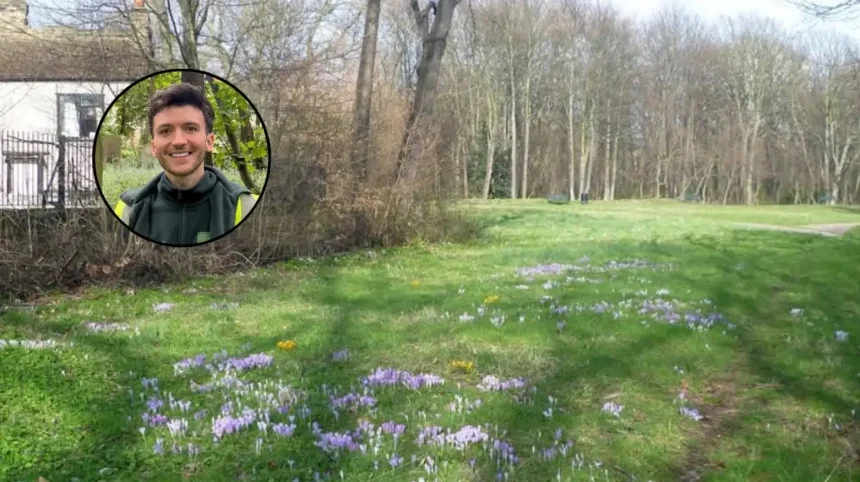
- New Appointment: Kit McKay has officially joined the Friends of Tower Hamlets Cemetery Park (FoTHCP) team as a new park ranger.
- Contract Duration: The appointment is set on a fixed-term contract that will run until December 2026.
- Core Responsibilities: McKay’s role involves providing additional operational support for upcoming summer events and managing community volunteer groups.
- Conservation Focus: A primary element of the position includes overseeing practical habitat and environmental conservation work within the park grounds.
- Professional Background: Originally from Ayrshire, Scotland, McKay has been operating within London since 2019, accumulating environmental experience across various sites in the capital.
Tower Hamlets (East London Times), June 20, 2026 — The Friends of Tower Hamlets Cemetery Park have officially expanded their conservation team with the appointment of Kit McKay as the site’s newest park ranger. According to official statements released by the environmental charity, McKay has been brought on board under a fixed-term contract structured to run until December 2026. The role has been specifically designed to reinforce the organisation’s operational capacity during peak periods, with a heavy focus on accelerating localized habitat preservation efforts and broadening community outreach.
- Key Points
- Who Is Kit McKay and What Is His New Role at Tower Hamlets?
- What Practical Conservation Duties Will the New Ranger Oversee?
- Volunteer Management and Community Impact
- How Does McKay’s Background Influence His Approach to London’s Green Spaces?
- Background of the Tower Hamlets Cemetery Park Development
- Prediction: How This Appointment Will Affect Local Residents and Park Visitors
The scope of McKay’s daily responsibilities centers on two critical pillars of the park’s urban ecology strategy. First, the new ranger will deliver necessary logistical and supervisory support for the park’s extensive schedule of summer public events. Second, McKay will directly lead and coordinate various volunteer groups. These teams consist of local residents, corporate groups, and environmental enthusiasts who visit the site to execute hands-on, practical conservation projects aimed at protecting the park’s unique biodiversity.
Bringing a wealth of regional expertise to the East London woodland, McKay originally hails from Ayrshire, a historic county in southwest Scotland, but has been deeply embedded in the English capital’s green spaces for several years.
Since relocating to London in 2019, McKay has worked across multiple ecological and community sites throughout the metropolis, developing specialized knowledge in managing delicate urban ecosystems and fostering public engagement.
Who Is Kit McKay and What Is His New Role at Tower Hamlets?
As reported by local environmental bulletins detailing recent staff developments within the borough, Kit McKay has transitioned into the management team at Tower Hamlets Cemetery Park to help address the growing demands of the historic site.
The position, which extends through the next eighteen months, places McKay at the forefront of the park’s interactive public programmes.
In a public introductory statement documenting the appointment, Kit McKay stated that
“I’ve joined the Friends of Tower Hamlets Cemetery Park team as a ranger on a fixed-term contract until December 2026.”
This timeline guarantees operational continuity for the charity through multiple seasonal cycles, a factor that organizers indicate is vital for long-term habitat monitoring.
The day-to-day operations of an urban cemetery park require a careful balance between preserving heritage architecture and maintaining wild, semi-natural woodland habitats.
Documentation from the Friends of Tower Hamlets organizational log outlines that McKay’s deployment will heavily reinforce their ability to host educational walks, wildlife workshops, and seasonal festivals without compromising the delicate terrain of the nature reserve.
What Practical Conservation Duties Will the New Ranger Oversee?
The mechanical and biological upkeep of the 27-acre site forms the operational backbone of the ranger’s mandate.
The woodland and glades require constant intervention to prevent invasive species from overtaking native flora, to maintain safe walking pathways for the public, and to optimize nesting conditions for local wildlife.
Expanding on the specific operational targets of the contract, Kit McKay stated that “I’ll be adding additional support for summer events and managing volunteer groups as they carry out practical conservation work.”
Volunteer Management and Community Impact
The management of volunteer labor is recognized by urban park authorities as a highly technical task. Under McKay’s supervision, volunteer cohorts are tasked with:
- Mowing and raking the historic wildflower meadows to encourage biodiversity.
- Managing the canopy layer by pruning branches to allow sunlight to reach the woodland floor.
- Constructing deadwood hedges and beetle hotels to support insect and bird populations.
- Conducting routine wildlife surveys to track the health of mammalian and avian species inside the park.
How Does McKay’s Background Influence His Approach to London’s Green Spaces?
The intersection of rural Scottish conservation practices and complex urban forestry management defines McKay’s professional trajectory. Navigating London’s distinct environmental landscape requires an understanding of how high-density human populations interact with isolated pockets of wilderness.
Reflecting on personal background and geographical relocation, Kit McKay stated that
“I’m from Ayrshire in Scotland but have lived in London since 2019.”
Since moving to the capital, McKay’s tenure across various London green sectors has focused on adapting traditional countryside conservation methodologies to fit the constraints of the inner city. Colleagues in the environmental sector note that this diverse geographical background provides a balanced perspective on how to manage highly frequented public nature reserves.
Explore More Tower Hamlets News
Father’s Day Reflection: Inside Tower Hamlets Cemetery Park’s Family Memorials and Monuments
Katie Hopkins Booted From Pub During World Cup: Bethnal Green 2026
Background of the Tower Hamlets Cemetery Park Development
To fully understand the significance of hiring a dedicated ranger, one must look at the unique status of Tower Hamlets Cemetery Park.
Opened originally in 1841 as one of London’s “Magnificent Seven” private cemeteries, the site stopped operating as a burial ground in 1966. It was subsequently designated as a Local Nature Reserve and a Conservation Area, transitioning from a formal Victorian cemetery into a thriving, wild urban woodland.
The Friends of Tower Hamlets Cemetery Park, established as an independent charity in 1990, took over the management of the land to protect it from urban development and neglect.
Over the decades, the charity has relied heavily on thin margins of funding and immense community volunteer hours to keep the park safe, accessible, and ecologically diverse.
In recent years, urban green spaces across London have faced unprecedented foot traffic, combined with the accelerating pressures of climate change, such as prolonged summer droughts and shifting seasonal patterns. The decision to secure a dedicated ranger on a fixed-term basis through late 2026 reflects a strategic push by the FoTHCP to scale up their professional oversight.
This ensures that the influx of visitors during summer events does not cause ecological degradation, and that volunteer efforts remain scientifically directed and highly efficient.
Prediction: How This Appointment Will Affect Local Residents and Park Visitors
The introduction of Kit McKay to the ranger team is projected to have a direct, tangible impact on the local community of Tower Hamlets, particularly regular park users, families, and environmental volunteers.
For the general public and local families, McKay’s presence means a noticeable upgrade in the quality, safety, and frequency of the park’s public programming.
With a dedicated professional anchoring the logistics of summer events, visitors can anticipate highly organized educational walks, open-air cultural gatherings, and interactive nature workshops that run smoothly and cause minimal disruption to the quiet spaces of the cemetery.
The enhanced supervision will also likely translate to better-maintained pathways, clearer educational signage, and a safer environment altogether.
For the park’s extensive volunteer network, McKay’s appointment will significantly optimize their hands-on experience. Rather than working through generalized directions, volunteer cohorts will benefit from structured, expert-led conservation sessions.
This targeted management ensures that the hours donated by corporate teams and local residents result in measurable ecological improvements. Over the course of the contract ending in December 2026, this steady guidance is expected to result in healthier wildflower meadows, better-protected wildlife habitats, and a more robust urban forest, securing the park’s status as a vital green sanctuary for the people of East London.