A train driver has died and around 100 people have been injured following a major rail collision near Bedford, in one of the UK‘s most serious railway incidents in recent years.
The driver has been named as Shaun Burton, 60, an experienced railway professional who worked for East Midlands Railway. His family described themselves as devastated by the loss and said their thoughts were also with everyone affected by the tragedy.
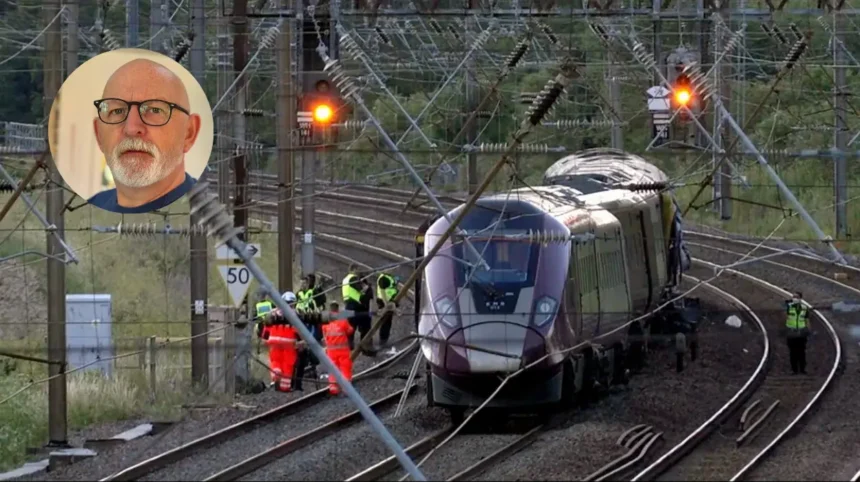
The crash happened on Friday afternoon near Bedford, approximately 60 miles north of London. According to initial reports, a southbound train travelling from Corby collided with the rear of a stationary service that had departed Nottingham and was also heading towards London St Pancras. Both trains were operated by East Midlands Railway.
Emergency services responded rapidly to the scene, with firefighters, ambulance crews, and police carrying out a large-scale rescue operation. More than 80 people required hospital treatment, while dozens of others were assessed for minor injuries. Authorities later confirmed that 28 people remained in hospital, including several passengers who were in critical condition.
Images and videos from the scene showed the front of one train heavily damaged after becoming entangled with the rear carriage of the other service. Despite the severity of the impact, both trains remained largely upright on the tracks, which likely prevented an even greater loss of life.
Tributes have poured in for Shaun Burton, who was widely respected within the railway industry. Before becoming a train driver seven years ago, he had worked in the bus and coach sector and was known for his professionalism and commitment to public service. Colleagues and friends described him as a kind and dedicated individual who was admired by both passengers and fellow railway workers.
Investigators are now working to determine exactly what caused the collision. The Rail Accident Investigation Branch and the British Transport Police have launched comprehensive investigations, examining black box data, signalling systems, CCTV footage, and train control mechanisms. Officials have stressed that it is too early to speculate about the cause.
Early reports indicate that the Nottingham service had stopped after reporting a potential issue with its automatic warning system shortly before the collision occurred. Investigators are examining whether signalling failures, technical problems, or other factors may have contributed to the incident.
The crash has also caused significant disruption across the rail network. Services between Bedford and London are expected to remain heavily affected for at least a week while damaged trains are removed and investigators continue their work. Replacement bus services have been introduced, and passengers have been advised to check for travel updates before making journeys.
The tragedy has renewed discussions about railway safety in Britain. While the UK maintains one of the safest rail networks in Europe, the Bedford collision has raised fresh questions about how modern signalling systems and safety procedures can prevent such incidents from happening in the future.