
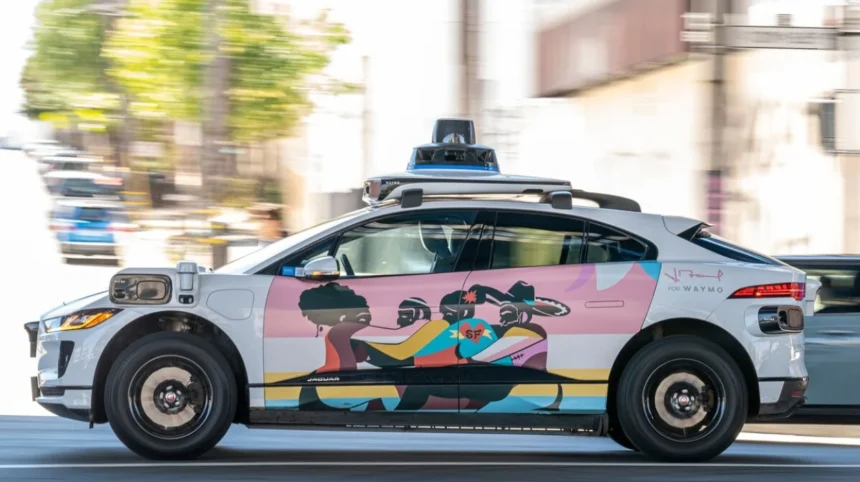
Waymo is preparing for a potential commercial robotaxi launch in London, but before fully rolling out its autonomous ride-hailing service, the company says it must first adapt its technology to far more than just left-hand driving.
The Alphabet-owned self-driving division has been conducting extensive testing across the capital since last autumn, gradually increasing the capabilities of its autonomous systems on public roads. In recent months, the vehicles have begun operating with their self-driving software actively in control, although trained safety specialists remain inside the cars during testing phases.
According to Waymo chief product officer Saswat Panigrahi, the company’s London expansion requires close coordination with a wide range of local stakeholders, including emergency services, police, and ambulance operators. He explained that successful deployment of a fleet—potentially scaling to around 100 vehicles depends heavily on months of preparation and integration with city infrastructure and response systems.
Waymo, part of Alphabet Inc., already operates fully autonomous ride-hailing services in multiple US cities and reports millions of autonomous miles driven every week. The company says it has accumulated more than 170 million autonomous miles globally, using this data to refine its driving systems.
London represents its first major European testing ground, and engineers say the city presents a unique set of challenges compared with US environments. Differences in traffic behaviour, road layouts, and even emergency vehicle signals require additional training for its AI systems. Panigrahi noted that siren patterns, light signals, and road rules can vary significantly between cities, meaning vehicles must be able to interpret local conditions accurately.
The company’s autonomous system is trained to recognise pedestrians, police officers, emergency vehicles, and even human hand gestures used to direct traffic. In more complex or unclear situations, vehicles can request clarification from remote human operators before taking action, such as deciding whether it is safe to proceed through a junction or obey a traffic signal override from emergency personnel.
Waymo has also been working directly with UK emergency services ahead of any potential commercial rollout, ensuring that autonomous vehicles can safely interact with real-world incidents. This includes training scenarios involving roadside emergencies, road closures, and unpredictable urban events.
As part of its development process, the company collects detailed behavioural data from London roads, including passenger drop-off preferences and traffic flow patterns. Engineers say this helps improve the system’s decision-making, particularly in dense urban areas where passenger needs and road conditions can change rapidly depending on time of day and location.
However, early testing has not been without issues. Residents in areas such as Shoreditch previously reported repeated late-night manoeuvres from test vehicles navigating narrow residential streets, including reversing movements that caused disruption. In some cases, the behaviour was linked to mapping and data-collection runs rather than passenger trips. Waymo later adjusted its testing routes after gathering sufficient data from those areas.
The company says its AI models improve continuously through exposure to diverse driving environments, with data from multiple cities feeding into large-scale machine learning systems designed to enhance safety and efficiency.
Waymo’s London expansion comes as Alphabet increases investment in artificial intelligence and automation technologies, with the parent company planning major spending on AI infrastructure. The UK government has also opened applications for self-driving passenger services, with companies including Uber and British startup Wayve also preparing for possible launches in the capital.
Any future deployment will still require approval from Transport for London, which continues to assess the impact of autonomous vehicles on congestion, safety, and the broader transport network. The introduction of robotaxis has also sparked public debate, including concerns from groups representing private hire drivers and local residents.
Despite the controversy, Waymo says its approach will remain gradual, starting with limited operations in carefully selected areas before expanding the service more widely across the city.