Key Points
- Residents on Rosebank Avenue, Elm Park, have lodged multiple objections to a planning application to convert a three-bedroom house into a Children’s Residential Care Home.libguides.
- Objections cite the property’s location on what residents describe as one of the borough’s quietest residential roads, the small size of existing dwellings, and concerns over noise and suitability.
- Local Hacton Ward Councillor Julie Wilkes has called in the application and expressed support for residents’ concerns about location and suitability.libguides.
- The application will now proceed through Havering Council’s planning process, with no decision date yet announced.
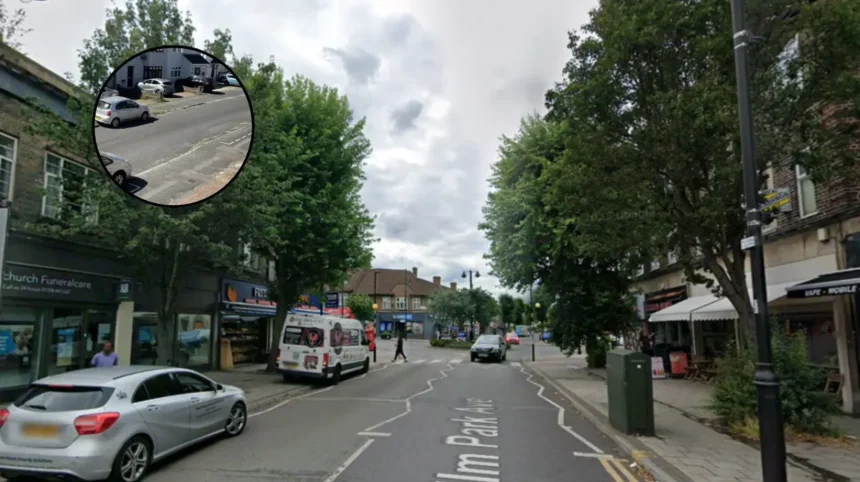
Elm Park (East London Times) July 7, 2026 –Residents living on Rosebank Avenue in Elm Park have objected in large numbers to a planning application that would see a three-bedroom residential property converted into a Children’s Residential Care Home, according to reporting by the Havering Daily. The proposal involves a change of use of an existing residential dwelling, situated among other residential homes, to operate as a children’s care home, a move that has prompted a coordinated local response.
- Key Points
- Why are residents opposing the children’s care home plan?
- Who has supported residents’ objections to the care home?
- What happens next in the Havering Council planning process?
- Background: What is the context of children’s care home planning in Havering?
- Prediction: How could this decision affect Elm Park residents and future care home proposals?
Why are residents opposing the children’s care home plan?
Residents have told the Havering Daily they believe the proposal is completely unsuitable for what they describe as one of the quietest residential roads in the borough. One resident, speaking to the Havering Daily, said:
“This is one of the quietest roads across the borough. The planning application is for the change of use of a residential property that is next to all residential homes, where mainly pensioners live, to turn it into a Children’s Care Home. We have all objected to this application. It is completely unsuitable here. There are only residential homes and there is not enough space to place a children’s care home here.”
The resident also raised concerns about the size of the property and the impact on neighbouring homes. They continued:
“Where are you going to fit all these people? These are small dwellings. There is not enough space for two children in separate bedrooms and two adults. These houses are small. Plus, they were built a long time ago and the walls are paper thin. We can hear exactly what room our neighbours are in. If you place children in a property like this, the noise levels will be very high. It is completely the wrong location and we have all objected to it.”
Residents say their concerns centre on whether the property is suitable for this type of use, given its location within a quiet residential area and the size of the existing homes.
Who has supported residents’ objections to the care home?
The application has also been called in by local Hacton Ward Councillor Julie Wilkes, who has added her support to residents. Councillor Wilkes told the Havering Daily:
“I have been contacted by many residents who are worried about this planning application. As a Hornchurch Residents’ Association councillor, I am here to support residents and always do my best for those in my Hacton Ward in any way I can.”
Councillor Wilkes agreed that she believes the property is not in the correct location for this type of residential care provision, stating that it sits in the middle of a quiet residential family.
What happens next in the Havering Council planning process?
The planning application will now be considered through Havering Council’s planning process, with residents hoping their objections will be taken into account before a decision is made. No further details on timelines or committee dates have been provided in the available reporting.libguides.
Background: What is the context of children’s care home planning in Havering?
Planning applications for children’s residential care homes in existing residential properties often trigger local debate over suitability, noise, and the character of neighbourhoods. In Havering, such proposals are assessed under the council’s planning policies, which weigh factors including the impact on neighbouring amenity, highway safety, and whether the use is appropriate in a given location.
Councillors can “call in” applications to ensure heightened scrutiny, particularly where there is significant local objection or where ward members raise concerns about consistency with local planning guidance.
The Rosebank Avenue case follows this pattern, with a ward councillor formally supporting residents and questioning the fit of the proposed use within a quiet, family-oriented street.
National guidance on children’s homes emphasises the need for suitable, safe accommodation while also recognising the importance of integrating such provision into communities without undue disruption. Local authorities must balance these objectives against specific site constraints, including property size, layout, and potential impacts on neighbours.
In practice, this means that even where a need for children’s placements exists, individual properties may still be refused if planners conclude the location or building is unsuitable.
Prediction: How could this decision affect Elm Park residents and future care home proposals?
If Havering Council refuses the Rosebank Avenue application, it is likely to reinforce residents’ expectations that similar proposals in comparable quiet residential streets will face strong scrutiny and may be rejected on grounds of location and amenity impact.
For households on and around Rosebank Avenue, a refusal would preserve the existing residential character they describe and address their stated concerns about noise and overcrowding in small, older dwellings.
Conversely, if the application is approved, it could set a precedent that encourages further bids to convert similar three-bedroom homes in the area into children’s care homes, potentially increasing local anxiety about future planning rounds.
More broadly, the outcome will be watched by other Hornchurch and Elm Park residents who may face analogous proposals, as well as by providers seeking to establish children’s homes in Havering.
A decision that emphasises location and property size as determinative factors could steer future applications toward different sites or larger properties, while a decision that approves the current scheme may lead to more attempts to use comparable homes in quiet residential roads.
In either scenario, the case underlines the importance of early consultation, clear evidence on noise and occupancy, and close engagement with ward councillors when children’s care home proposals are advanced in established residential areas.